Druckenmiller Warns Bessent’s Treasury Is Undermining “the Only Fiscal Disciplinarian the U.S. Has Left”
Stanley Druckenmiller turned on his former protégé in a Wall Street Journal op-ed, accusing Treasury Secretary Scott Bessent of silencing the one market signal Congress cannot ignore. The bond market's response, once the expanded buyback program launched in September, confirmed…

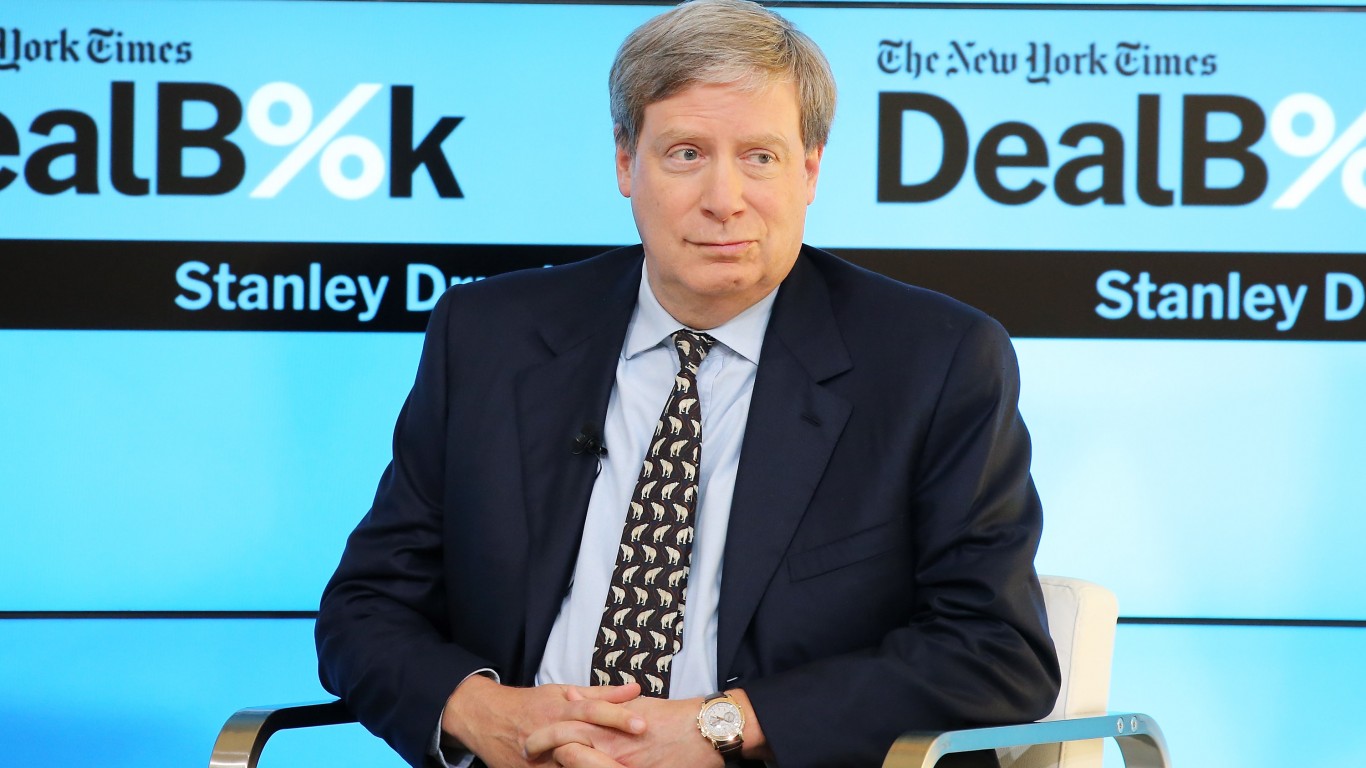
Stanley Druckenmiller went public against his former protégé this week. In a Wall Street Journal op-ed titled “Let the Bond Market Speak,” published Monday, August 24, 2026, the billionaire investor accused Treasury Secretary Scott Bessent of undermining what he called “the only fiscal disciplinarian the U.S. has left”: the long-term Treasury yield. The immediate target was Bessent’s decision to double the size of the government’s long-dated bond buybacks. In a notable postscript, Druckenmiller acknowledged the following day that the column was drafted with the help of artificial intelligence, telling a reporter, “I write everything using AI now.”
What Treasury Did
On August 19, 2026, Treasury announced it would at least double the maximum size of its long-dated buyback operations, from $2 billion to $4 billion per operation, covering the 10-to-20-year and 20-to-30-year sectors. The expanded purchases were scheduled to begin September 9, and when the first operation under the new mandate landed, it came in at $6 billion, above the announced floor. Longer-term yields rose after that September 9 announcement, a result that bore out Druckenmiller’s skepticism before a single bond had yet traded hands under the program.
The policy shift followed a $25 billion 30-year auction on August 14 that cleared at 5.216%, the costliest government bond sale since 2001. Behind it sits an ugly backdrop: the national debt crossed $40 trillion around August 19, and the Congressional Budget Office’s February 2026 baseline projects the current fiscal year deficit at $1.9 trillion, or about 5.8% of GDP at full employment. That is a deficit level historically associated with recessions, not expansions. Federal debt now stands at roughly 122% of GDP on the FRED series.
Druckenmiller’s Argument
When Treasury buys back its own long-dated bonds, it lifts prices and pushes yields down. The effect is to mute the borrowing signal even as the debt pile keeps growing. “This wasn’t liquidity management, it was price management,” Druckenmiller wrote. “Every basis point of artificial yield suppression is a subsidy to procrastination.” His bottom line: “If the 30-year must trade at 5.5% to clear, that isn’t a crisis. It is an invoice.” Suppress the invoice, and Congress never pays it.
Druckenmiller opened the essay with a principle drawn directly from his decades of macro trading: governments that defend prices against fundamentals always lose. He urged Bessent to abandon the buyback scheme and allow the market to set the proper price for government debt without intervention. The argument drew wide attention on Wall Street, where skeptics had already questioned whether Treasury had enough firepower to manage a market that saw nearly $4.8 trillion in debt issued in 2025 alone.
Mentor Versus Protégé
Druckenmiller, founder of the Duquesne Family Office, and Bessent worked together at Soros Fund Management in the early 1990s. Both were part of the 1992 trade that famously broke the Bank of England by shorting the British pound as the U.K. government tried to defend sterling within Europe’s exchange-rate mechanism. The lesson Druckenmiller drew from that episode, that governments defending prices against fundamentals always lose, is the same one he is now directing at Bessent’s department.
The dispute also carries a broader dimension. Druckenmiller served as mentor to both Bessent and Federal Reserve Chair Kevin Warsh, meaning the two officials now running U.S. monetary and fiscal policy both learned the trade sitting beside him. The rebuke from that shared mentor, applied to fiscal policy, lands with unusual weight.
Market Response
On Treasury’s official constant-maturity series, the 30-year yield sat at 5.28% on August 18, the last reading before the announcement, then fell to 5.19% on August 19 as the news landed, before recovering to 5.23% on August 20 and 5.27% on August 21. Yields then drifted to 5.23% on August 24 and 5.17% on August 25. Treasury officials, when the initial move failed to stick, signaled they could deploy the Treasury General Account for an even more powerful intervention. Druckenmiller’s op-ed argued that crossing that line would damage Treasury’s credibility, not restore the market’s confidence. When the expanded program’s first actual operation ran on September 10 at $6 billion, the market’s answer was the same: longer-term yields rose.
24/7 Wall St. laid out the initial policy stakes in its August 19 explainer and the market pushback in its August 24 follow-up.
Fiscal Picture in Focus
Apollo chief economist Torsten Slok’s Daily Spark, published alongside the op-ed, added its own numbers. Since 2006, federal gross debt has grown by roughly $32 trillion while nominal GDP has grown by about $19 trillion. Debt has compounded at roughly 1.7 times the pace of the economy over that stretch. Debt held by the public has risen from under 40% of GDP two decades ago to about 99% at the end of fiscal 2025.
The CBO’s February 2026 extended baseline projects that ratio climbing to 108% by 2030, 129% by 2040, and 175% by 2056 under current law. For context, 108% would already surpass the post-World War II record. Interest payments alone are projected to more than double, from roughly $1 trillion in 2025 to $2.1 trillion by 2036, consuming an ever-larger share of every federal dollar collected. That is the fiscal trajectory Druckenmiller says the bond market is the last institution left willing to honestly price.
Editor’s note: This article has been updated to add Druckenmiller’s post-publication acknowledgment that he wrote the op-ed using artificial intelligence, to reflect that the expanded buyback program launched September 9 with the first operation settling at $6 billion (above the $4 billion floor) and that yields rose in response, to correct the FY2026 deficit figure to the CBO’s $1.9 trillion baseline, to note Treasury officials’ signals about potential Treasury General Account intervention, and to include Druckenmiller’s role as mentor to both Bessent and Fed Chair Kevin Warsh.
Contact [email protected] for any questions or corrections.
AJ spent 10 years writing about financial markets at The Motley Fool. His coverage centers on technology stocks and the broader macroeconomic trends, from interest rates to geopolitics, that shape where markets are headed next. AJ is drawn to the stories where big-picture economics and individual companies collide.