OpenAI’s Custom Chip Embarrasses Nvidia, While Company Vows to Keep Buying From It
OpenAI's new chip posted a stunning benchmark win against Nvidia hardware drawing nearly twice the power, yet the same announcement contained a sentence that no Nvidia replacement story can explain.

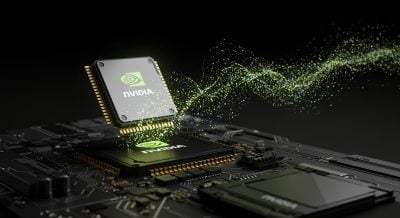
OpenAI published a newsroom post on August 25, 2026, announcing its first custom inference chip, called Jalapeño. On a public benchmark, a 700-watt part from OpenAI outperformed Nvidia (NASDAQ:NVDA | NVDA Price Prediction) accelerators rated at 1,200 and 1,400 watts. The obvious read is that OpenAI has begun replacing its largest supplier.
The document says something narrower. Buried in the same post is a line committing OpenAI to keep buying from Nvidia for both training and inference. That gap between what the headlines suggest and what OpenAI actually wrote is the story worth spending time on, especially with Nvidia set to report fiscal Q2 results after the close on August 26, 2026. Shares closed at $213.05 on August 25, 2026, up 2.19% in that session.

The Benchmark Result Is Real
OpenAI tested Jalapeño on InferenceX, a public benchmark from SemiAnalysis, across three publicly available models: GPT-OSS 120B, DeepSeek R1 670B, and Kimi K2.5 1T.
OpenAI reported 1.5 to 1.9 times more AI work per watt at peak throughput and 1.7 to 3.6 times lower end-to-end latency against Nvidia’s GB200 and GB300. For highly interactive workloads, the figure was 2.1 to 4.1 times higher performance.
A 700-watt part that outperforms systems rated at over a kilowatt is a genuine engineering achievement, and the models used are open enough for external engineers to inspect.
The benchmark belongs to SemiAnalysis, but OpenAI ran the tests and published the numbers. That sits between an invented internal metric and an independent audit, so the honest description is a vendor-run test on a public benchmark using public models.
The Normalization Question
OpenAI states it normalized results “using each accelerator’s published chip power rating.” That choice matters more than it sounds.
Jalapeño is rated at 700 watts, but OpenAI notes its measured sustained power “remained at or below 550 watts on the workloads tested.” The chip was credited in the per-watt math with using more power than it actually drew.
Nvidia’s GB200 and GB300 were credited with their full rated power. Whether those parts also ran below their labels on these workloads is not addressed in the post.
The direction is straightforward. Using rated power rather than measured power makes Jalapeño look less efficient than it apparently was in the room, so the underlying performance-per-watt story is likely stronger than the published numbers suggest. The comparison to Nvidia is harder to size without matching measured numbers on the other side.
The Line About Continuing To Buy Nvidia
The sentence to underline is OpenAI’s own: “We will continue to widely deploy accelerators from NVIDIA and other partners for both training and inference workloads.” A customer that had displaced its supplier does not write that line.
Jalapeño is described as an inference-only part, and OpenAI plans to begin deploying it inside its own compute infrastructure by the end of the year. This is a cost program for a single customer’s workloads, and OpenAI remains a major Nvidia buyer.
The context on Nvidia’s side supports that framing. Data Center revenue reached $75.25 billion in Q1 FY2027, up 92% year over year, on the May 20, 2026 report (SEC filing). Supply-related commitments stood at $119.0 billion. Jensen Huang told analysts that with the addition of Anthropic to “our existing partners, OpenAI, XAI, MetaMSL, Gemini, and many others, our share of frontier AI is growing.”

What would actually threaten Nvidia is specific and worth watching for: outside customers buying Jalapeño, a training-capable generation when today’s chip is explicitly not one, or a change in OpenAI’s stated purchasing posture toward Nvidia. Absent those, this is a cost program at one large customer, and NVDA’s Q2 report tonight will speak to demand from a much wider list of buyers than one. The traits that tend to show up early in a compute franchise like this one are the same ones we cataloged in a free playbook you can grab here.
Contact [email protected] for any questions or corrections.
Omor Ibne Ehsan is a writer at 24/7 Wall St. He is a self-taught investor with a focus on growth, cyclical, and dividend equities that have strong fundamentals, value, and long-term potential. He also has an interest in high-risk, high-reward investments such as penny stocks.