Nike Walked Away From Foot Locker. It Never Got That Shelf Space Back.
Nike made a calculated bet that shoppers would follow the swoosh wherever it led, and for a while the margin math looked brilliant. What happened inside those emptied retail fixtures reshaped the entire competitive landscape in ways Nike is still…


Nike (NYSE:NKE | NKE Price Prediction) shares opened at $37.67 on Friday, a small gap up from the prior close. The stock is up 8.5% over the past week. No specific reason for that move has been reported. Over longer periods, shares are down 40.9% year to date, 43.7% over one year, and 76.2% over five years.
On the October 14, 2026, episode of The Investor’s Podcast (TIP853), co-host Kyle Grieve tied the decline to one choice: “Nike pulled its products from Foot Locker, and when they tried to reverse that decision, Foot Locker realized these other brands could sell just as well in that same prime real estate historically reserved only for Nike.” He also said Nike found that customers “were not as devoutly loyal to their products as they thought.”
Why Selling Direct Looked Like the Smarter Play
Nike had real reasons to go direct. When it sells through its own stores, Nike.com, and its app, it keeps the margin a retailer would take, collects first-party customer data, and controls pricing and presentation. Grieve described the goal as owning the customer relationship and cutting out the wholesaler — the model Lululemon (NASDAQ:LULU) and Aritzia run.
The weak point was the assumption that shoppers would follow the swoosh wherever it went. As Nike cut back its wholesale orders, retailers filled the open wall space with rival brands, and those brands sold. Once a retailer has its own sell-through data on a competitor in a prime fixture, Nike must now negotiate for shelf space it once received by default.
Wholesale Is Back in the Numbers
The channel mix has now turned. In fiscal Q2 2026, wholesale revenue rose 8% to $7.5 billion while Nike Direct fell 8% to $4.6 billion. In fiscal Q1 2027, reported on October 1, 2026, wholesale slipped 1% to $6.80 billion, Nike Direct fell 8% to $4.14 billion, and Nike Brand Digital dropped 13%. North America wholesale grew 9%.
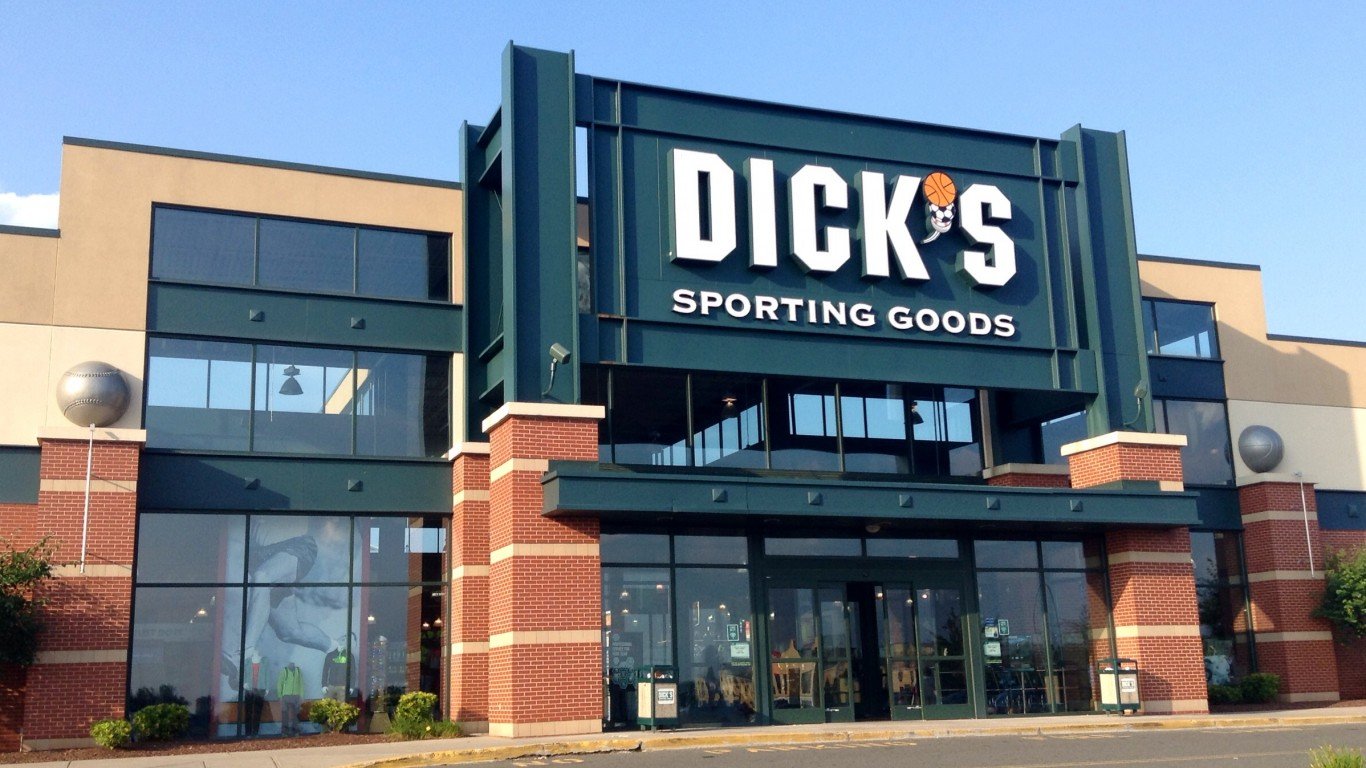
The retail side has consolidated too. Dick’s Sporting Goods (NYSE:DKS) completed its acquisition of Foot Locker. On the October 1 call, Nike’s chief executive, Elliott Hill, described the company as “rebuilding our wholesale partnerships” and said, “performance product is selling” at accounts that include Dick’s and Foot Locker.
Total revenue came in at $11.21 billion, down 4.3% and below the $11.32 billion consensus. EPS of $0.48 beat the $0.44 estimate. Nike’s earnings release noted more work to do in Nike Sportswear, Jordan Brand, and Greater China, where revenue fell 22%.

A Moat Built Only on Brand Is Thinner Than Investors Assume
Grieve’s co-host Shawn O’Malley was talking about Aritzia, but his point covers the whole category: “Brand is really Aritzia’s one competitive advantage. There are no switching costs, no network effects, no cost advantages. Retail is a place where things can go from great to bad very quickly, and there are very few instances of clothing brands being durable compounders.” He added, “Retail stocks can be like playing with fire. Things can worsen very quickly in retail. But on the flip side, when a brand is surging, returns can be explosive.”
Nike has scale and a large roster of athlete endorsements. A retailer deciding how to use a fixture, though, looks mostly at how fast the product sells. With no switching costs for shoppers, Nike’s spot on the shelf depends on how well its products sell.
What Has to Change Before Nike’s Next Report
Management expects fiscal 2027 revenue to decline high single digits, with adjusted EPS of $1.15 to $1.35. That range excludes about $0.15 in costs from the Pace restructuring. The chief financial officer warned of revenue pressure “for the remainder of fiscal 27 and into 28.”
Rebuilding Nike’s shelf position would take three things:
- Wholesale growth in North America that holds up without excess inventory, as Nike works with partners to clear excess inventory
- Signs that Sportswear and Jordan are stabilizing, since they were a “high single-digit drag” on results
- Gross margin holding near 42.8% as Nike cuts supply to improve full-price sales
The next test is Nike’s fiscal Q2 2027 report. It is expected on December 16, 2026, after the close, but the company has not confirmed the date. Watch whether wholesale gains in that report come with healthy sell-through. That would show whether Nike is winning back prime shelf space or just shipping more product into it.

Contact [email protected] for any questions or corrections.
Trey has been an editor and author at 24/7 Wall St. for more than a decade, where he has published thousands of articles analyzing corporate earnings, dividend stocks, short interest, insider buying, private equity, and market trends. His comprehensive coverage spans the full spectrum of financial markets, from blue-chip stalwarts to emerging growth companies.
Beyond 24/7 Wall St., Trey has created and edited financial content for Benzinga and AOL's BloggingStocks, contributing additional hundreds of articles to the investment community.
Trey's editorial expertise extends across multiple publishing environments. He served as production editor at Dearborn Financial Publishing and development editor at Kaplan, where he helped shape financial education materials. Earlier in his career, he worked as a writer-producer at SVE. His freelance editing portfolio includes work for prestigious clients such as Sage Publications, Rand McNally, the Institute for Supply Management, the American Library Association, Eggplant Literary Productions, and Spiegel.
Outside of financial journalism, Trey writes fiction and has been an active member of the writing community for years, moderating workshop sessions at regional conventions.