Cramer Says This Software Giant Is Fighting a Takeover With a $4 Billion Buyback
Silver Lake wants Workday, but Workday just fired back with $4 billion and a packed calendar of public commitments. Jim Cramer says the company is fighting its own takeover, and Q2 results showing 12.8% revenue growth and a 31.1% non-GAAP…


Workday (NASDAQ:WDAY | WDAY Price Prediction) stock still carries a takeover premium from reported Silver Lake acquisition talks, and the company’s own recent moves read like a business arguing it doesn’t need a buyer. Workday authorized a $4 billion open-ended repurchase on August 27, scheduled its annual financial analyst day for October 13, and issued a release claiming it now signs a new state or local government customer nearly every week. All three moves landed inside two weeks of the deal chatter first hitting the wires.
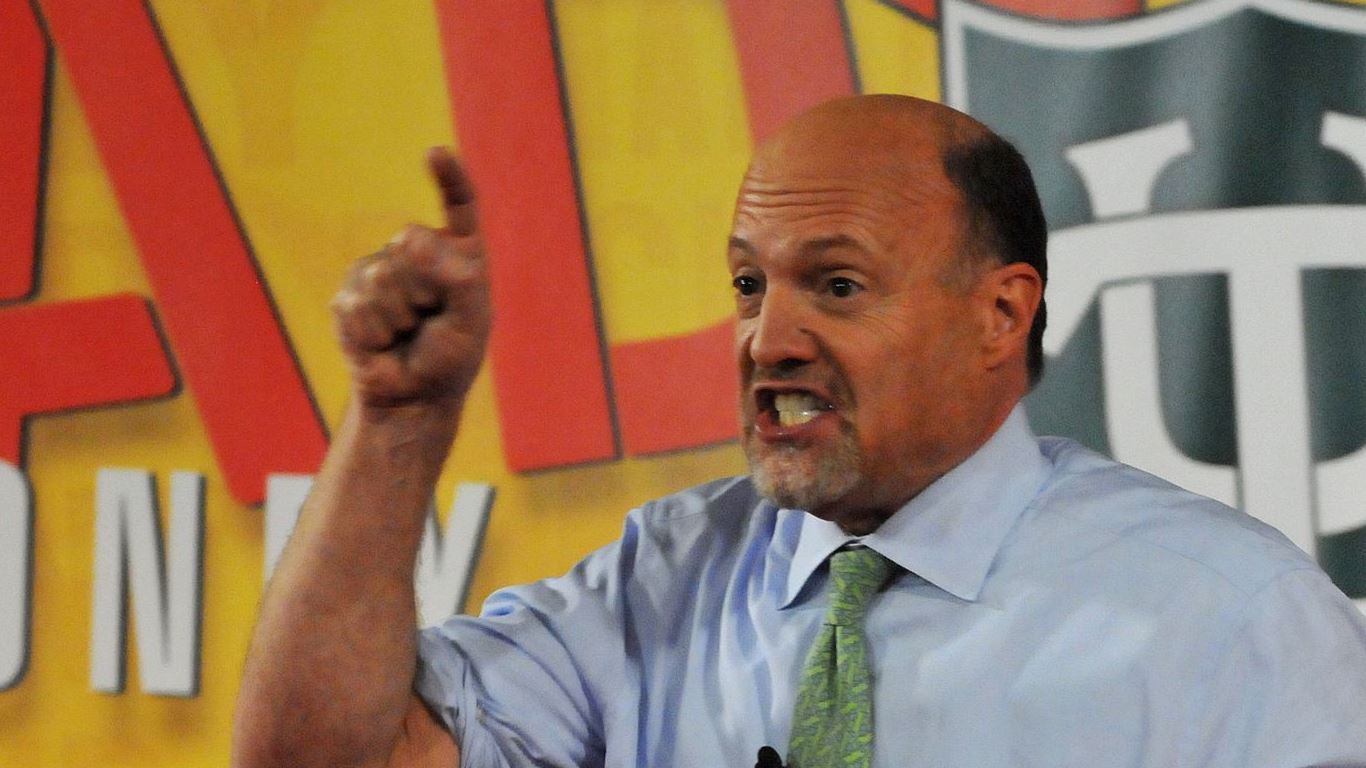
Mad Money host Jim Cramer flagged the tension on air, first the night the Silver Lake report hit and Workday stock jumped 18%, and again in late August after the buyback disclosure. Cramer’s read, paraphrased, is that Workday is fighting a takeover with capital return. The split between the deal premium and the underlying trajectory is what investors have to price right now. Adding context: co-founder Aneel Bhusri returned as CEO in March 2026 after Carl Eschenbach stepped down, and the leadership change has sharpened the company’s public posture toward staying independent.
The scoreboard tells that story starkly. Workday stock surged 24% over the month following the Silver Lake report, which Reuters first published on August 13, 2026. The stock had been down roughly 13% over the prior year before the deal pop, and is down more than 25% over the past five years. Silver Lake’s potential interest, meanwhile, would rank among the largest software buyouts ever. The firm took video game company Electronic Arts private in a roughly $55 billion deal in 2025 and is reportedly capable of tapping additional investors for a Workday transaction. For context, Thoma Bravo agreed in 2026 to acquire Workday rival Dayforce for about $16 billion, underscoring that private equity appetite for enterprise software remains strong.
For peer comparison over the past year, Salesforce (NYSE:CRM) stock is up roughly 1%, ServiceNow (NYSE:NOW) stock is down about 25%, and the iShares Expanded Tech-Software Sector ETF (NYSEARCA:IGV) is down roughly 4%. Anyone who bought the August takeover pop owns a business worth less than a year ago and considerably less than five years ago, while betting on a transaction the company’s own conduct is arguing against.
Cramer’s Read on the Buyback
The new $4 billion authorization sits on top of a previously announced $5 billion program that Workday completed six months ahead of its original target. Management framed buybacks as a permanent feature of its capital allocation strategy and reported $1.3 billion of repurchases during the most recent quarter alone. Stacking a fresh open-ended authorization on top of a program it just retired early is the move of a company positioning to stay independent, not one in serious negotiation over its own sale.
The August 27 earnings report added a complementary signal. Workday posted Q2 fiscal 2027 total revenues of $2.649 billion, up 12.8% year over year, with subscription revenues reaching $2.471 billion, up 13.9%. Non-GAAP operating margin came in at 31.1%, and management raised full-year fiscal 2027 subscription revenue guidance to approximately $9.95 billion. CEO Bhusri noted on the earnings call that AI was driving more than 25% of new annual contract value and that more than 5,500 customers were already using at least one of Workday’s organic agents. Those numbers describe a platform with real forward motion, not one conceding ground to a buyer.
The scheduled analyst day compounds the standalone-confidence signal. Booking a full day of forward strategy discussion on October 13 signals that management expects to be running a public company on that date. TD Cowen, updating its model after the Q2 results, trimmed its price target on Workday from $220 to $210 while keeping a Hold rating, citing mixed results and an initial fiscal 2028 revenue outlook that came in below expectations. That adjustment communicates how far the standalone story stretches on its own merits, separate from deal speculation.

What the Government Book Really Buys
Workday’s public-sector release names concrete wins. New customers include the State of Delaware, the Commonwealth of Massachusetts, New Jersey Transit Authority, Bexar County, the New York State Unified Court System, and the Utah Transit Authority. Recent go-lives include the City of Akron, the State of Georgia, the City of San Mateo, and Sandy City.
Workday says more than 100 state and local government entities have selected the platform over the past two years. The Georgia deployment alone covers more than 200 agencies and more than 70,000 employees, completed in roughly 30 months. Government contracts are durable, slow-moving, and sticky, which is a genuine competitive strength. The trade-off is that they don’t reprice a stock quickly. The government book strengthens the standalone case without moving the near-term tape, and it also frames what a private-equity owner would inherit if a deal did close.
As of mid-September 2026, CNBC’s David Faber reported that financing efforts for a potential Silver Lake take-private were actively continuing, suggesting the deal conversation had not collapsed in the weeks since the initial report. That update keeps a live floor under the shares even as the standalone fundamentals do the slower work of reasserting themselves.
Standalone Verdict
The five-year return is the hardest fact for the standalone case to answer. A window that long isolates execution rather than sentiment, and Workday stock down more than 25% over that stretch says the platform has not consistently converted its scale into shareholder returns without help from a deal narrative. The buyback supports the share count. Growth still has to come from the platform itself, and Q2’s 12.8% top-line expansion and improved margin profile are the most credible evidence that the business can deliver it.
At current levels, the stock price reflects a mix of deal premium and improving fundamentals. Workday’s government pipeline and the buyback program anchor a structural floor. The takeover premium pulled the stock sharply higher in August, and if the Silver Lake talks eventually produce no transaction, the stock would need to be valued on its standalone trajectory alone. The five-year chart is the clearer read on what supports the shares without a deal, and the Q2 results are the most recent evidence that the trajectory may be improving.
Editor’s note: This update corrects the TD Cowen price target on Workday from $220 to $210 following the firm’s post-Q2 model revision, adds Workday’s Q2 fiscal 2027 results (revenue of $2.649 billion, up 12.8%; non-GAAP operating margin of 31.1%; and raised full-year subscription guidance), incorporates CEO Aneel Bhusri’s disclosure that AI drove more than 25% of new ACV with 5,500-plus agentic customers, notes CNBC’s September 17 report that Silver Lake financing efforts were continuing, adds Thoma Bravo’s roughly $16 billion acquisition of Workday rival Dayforce as sector context, and corrects the iShares Expanded Tech-Software Sector ETF exchange designation from CBOE to NYSEARCA.
Contact [email protected] for any questions or corrections.
David Moadel is financial writer specializing in stocks, ETFs, options, precious metals, and Bitcoin. David has written well over 1,000 articles for leading online publications, helping investors understand markets, income strategies, and risk.His work has appeared in The Motley Fool, InvestorPlace, U.S. News & World Report, TipRanks, ValueWalk, Benzinga, Market Realist, TalkMarkets, Finmasters, 24/7 Wall St., and others.With a master’s degree in education, David has taught at the elementary, high school, and college levels. That teaching background shapes his writing style: clear, educational, and practical. David has also built a loyal social-media audience by providing trustworthy financial content on YouTube, X/Twitter, and StockTwits.