3 Dividend Kings Built to Keep Raising Your Income When Rates Rise
Treasury yields near a one-year high are punishing most dividend stocks, but a handful of Dividend Kings kept signing bigger checks every single quarter without missing a beat. The question is whether their balance sheets can keep that streak alive.

This post may contain links from our sponsors and affiliates, and Flywheel Publishing may receive compensation for actions taken through them.

Rising rates create a specific, mechanical problem for dividend stocks: when risk-free yields climb, a payout has to fight bonds for the same investor dollar, and share prices of income names often slide even when the underlying business is fine. That backdrop is live right now. The 10-Year Treasury yield closed at 4.79% on September 2, 2026, sitting in the 99.2 percentile of its trailing one-year range. Against that competition, three US-listed Dividend Kings kept declaring higher payouts through every quarterly cycle from 2022 forward. Their dividend records tell the real story here.
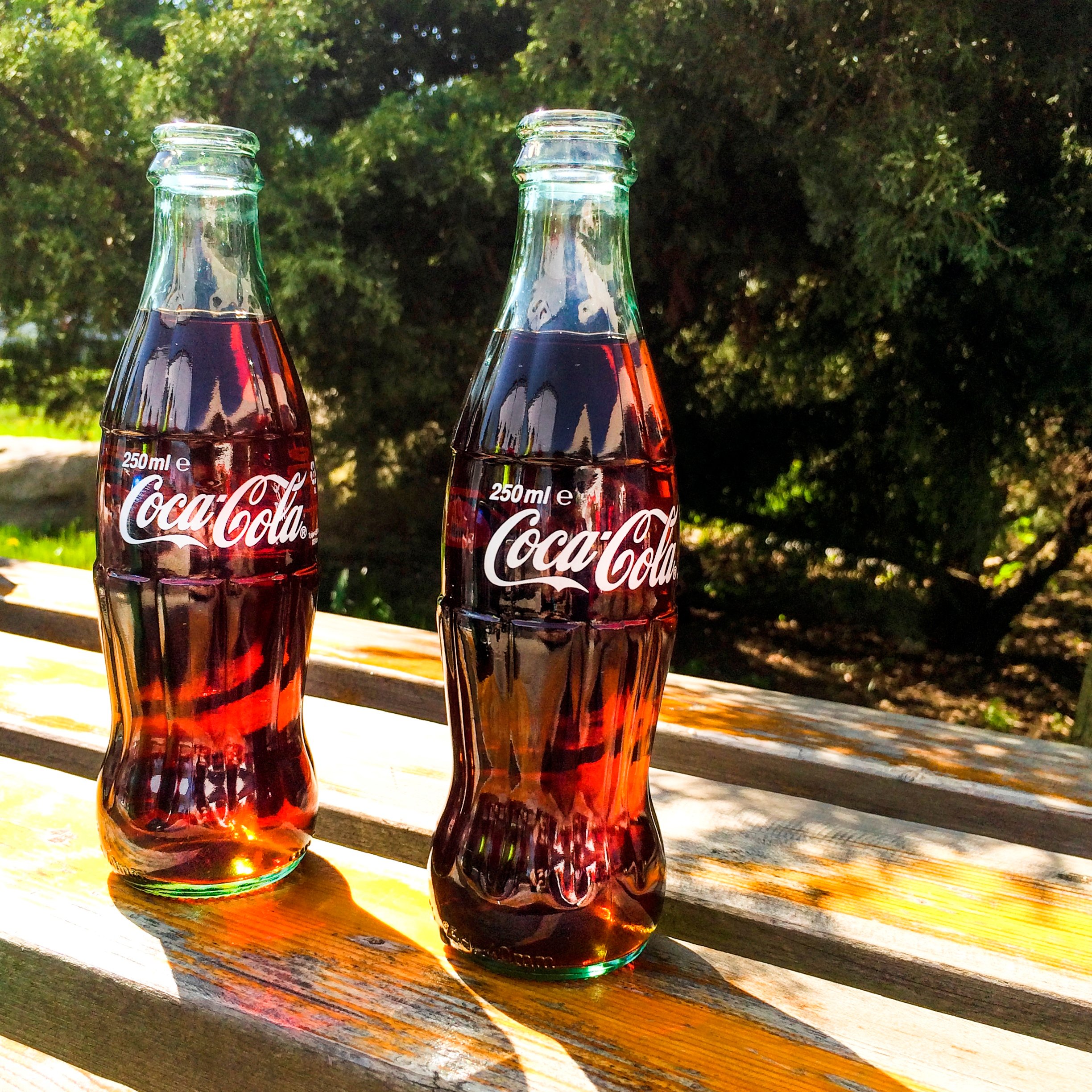
Coca-Cola Kept Ratcheting the Payout Higher Every Year
Coca-Cola (NYSE:KO | KO Price Prediction) owns the world’s largest branded beverage system, with a portfolio that includes Coca-Cola, Sprite, Fanta, Dasani, smartwater, fairlife, Costa, and BODYARMOR. Market cap sits at roughly $382.2 billion, and shares trade at 29 times earnings with a dividend yield of 2.30%.
The quarterly dividend was $0.44 across the 2022 declarations, $0.46 across 2023, $0.485 across 2024, $0.51 across 2025, and $0.53 on the three declarations available in 2026. The annualized forward payout is $2.12.
Coca-Cola raised its 2026 free cash flow guide to approximately $12.4 billion on roughly $14.6 billion in operating cash flow. Second-quarter organic revenue grew 6%, unit case volume grew 5%, and management flagged first-half free cash flow of approximately $6.9 billion. Net debt leverage is 1.4 times EBITDA, below the company’s stated target range of 2 to 2.5 times. On the July call, CFO John Murphy said the balance sheet delivers “increased flexibility and optionality to continue to both reinvest in our business and return capital to share owners.”
Here is the price-versus-payout gap for income investors. Across the custom rate-hike window from March 17, 2022 to July 27, 2023, KO’s adjusted price moved from $53.03 to $57.16, a 7.8% gain, while the quarterly declaration stepped from $0.44 to $0.46. The stock advanced modestly while the check kept getting bigger.
One of the main risks facing the company is that the Asia Pacific price/mix ran negative 9% in the quarter, and the company still faces ongoing IRS tax litigation and higher input costs that could pressure margins.
Procter & Gamble Delivered a Seven-Decade Streak Under Pressure
Procter & Gamble (NYSE:PG) owns a staples portfolio built on Tide, Pampers, Gillette, Bounty, Charmin, Crest, Dawn, Downy, Olay, Pantene, SK-II, Head & Shoulders, and Oral-B. Market cap is around $341.2 billion, and the current share price is $146.92.
Filings confirm 70 consecutive years of dividend increases and 136 consecutive years of dividend payments since incorporation in 1890. The declared quarterly amount stepped from $0.8698 to $0.9133 on the April 12, 2022 declaration, then to $0.9407 on April 11, 2023, to $1.0065 on April 9, 2024, to $1.0568 on April 8, 2025, and to $1.0885 on January 13, 2026. The three declarations in 2026 have all been at $1.0885, with an annualized forward payout of $4.354.
Fiscal 2026 delivered $15.84 billion of free cash flow on $87.03 billion of revenue, with adjusted free cash flow productivity of 100%. On the July 29 call, CFO Andre Schulten laid out the capital return: “We increased our dividend by 3% and returned over $15 billion of value to shareholders, over $10 billion in dividends, and $5 billion in share repurchase.” The company committed to over $10 billion in dividends and approximately $5 billion in buybacks for fiscal 2027.
PG shares are down 4.42% over the trailing one-year period, moving from $153.71 to $146.92, while the declared payout stepped from $1.0568 to $1.0885 inside that same year. The stock fell. The dividend rose. For an income holder collecting the check, the business kept its promise even as the market marked the shares lower.
In terms of the risk, management flagged an approximately $1 billion after-tax commodity, energy, and transport headwind in fiscal 2027, plus $150 million of higher interest expense, alongside tariff uncertainty and pockets of volume weakness in Greater China.
Johnson & Johnson Raised Every April Through the Cycle
Johnson & Johnson (NYSE:JNJ) runs the largest diversified pharma-plus-MedTech operation in the world. Filings confirm 64 consecutive years of dividend increases, cementing Dividend King status. Market cap is roughly $671.0 billion, with shares at $278.43.
The quarterly dividend stepped from $1.06 on the January 4, 2022 declaration to $1.13 on April 19, 2022, to $1.19 on April 18, 2023, to $1.24 on April 16, 2024, to $1.30 on April 15, 2025, and to $1.34 on April 14, 2026. Trailing 12-month dividends total $5.28, with an annualized forward of $5.36.
Fiscal 2025 free cash flow reached $19.7 billion on $94.19 billion of revenue, and management’s full-year free cash flow outlook is approaching $21 billion. CFO Joe Wolk restated the priority on the second-quarter call: “We also remain committed to returning capital directly to shareholders, primarily through our dividend.” The balance sheet holds roughly $21 billion of cash and marketable securities against $49 billion of debt, and CEO Joaquin Duato pointed to 28 platforms each generating more than $1 billion in annual revenue.
DARZALEX grew 22.5% to $3.96 billion, TREMFYA grew 68.3% to $1.61 billion, and 2026 guidance was raised to $100.3 to $101.3 billion in reported sales with adjusted EPS of $11.45 to $11.65.
The bears were quick to note that STELARA revenue dropped 59.7% to $656 million on biosimilar competition, and litigation charges hit $330 million in Q1, on top of a planned Orthopaedics separation that carries execution risk.
What This Stress Test Tells Income Investors
The lesson is separation. Three Dividend Kings faced the sharpest run-up in benchmark yields in a generation, watched bonds crowd their yield story, and still declared higher payouts every year. PG’s stock actually fell over the trailing year while the declared quarterly rose to $1.0885. That gap between the stock price and the treasurer’s decision is the whole point of owning coverage-first blue chips (we ranked ten Dividend Kings by valuation right now in a free report you can grab here). For a retiree living on the check, dividend safety came from free cash flow and balance sheets, and the rate spike never touched it.
Contact [email protected] for any questions or corrections.
Chris Lange is a writer for 24/7 Wall St., based in Houston. He has covered financial markets over the past decade with an emphasis on healthcare, tech, and IPOs. During this time, he has published thousands of articles with insightful analysis across these complex fields. Currently, Lange's focus is on military and geopolitical topics. Lange's work has been quoted or mentioned in Forbes, The New York Times, Business Insider, USA Today, MSN, Yahoo, The Verge, Vice, The Intelligencer, Quartz, Nasdaq, The Motley Fool, Fox Business, International Business Times, The Street, Seeking Alpha, Barron’s, Benzinga, and many other major publications. A graduate of Southwestern University in Georgetown, Texas, Lange majored in business with a particular focus on investments. He has previous experience in the banking industry and startups.