Nearly $350 Million in Bloom Energy Options Traded in One Session. Pelosi’s Household Bought In Six Weeks Earlier.
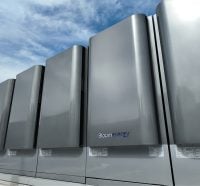
Bloom Energy's options market erupted with a frenzy rarely seen on Wall Street, and weeks before the chaos, a high-profile congressional household had quietly taken a position in the fuel cell company for the very first time.


Bloom Energy (NYSE:BE) stole the options tape on September 8, when CNBC Halftime Report’s Oliver Renick, reporting from the Cboe in Chicago, flagged the fuel cell name as the day’s standout in the options pits.
His verbatim call: “Options there are booming, with 50% more calls likely bought versus puts and $350 million almost in options traded today already.” Renick preserved the word “likely” for a reason. Volume counts both sides of every trade, so that figure describes gross activity, not net capital committed to bullish bets. He also noted the stock was up 11% that day.
The chain reflected the frenzy. The $300 call expiring September 11 traded 17,296 contracts against open interest of just 1,795, and the $280 call moved 9,140 contracts. Puts churned too, with the $272.50 put trading 4,541 lots on open interest of 63.
What the Pelosi Filing Actually Discloses
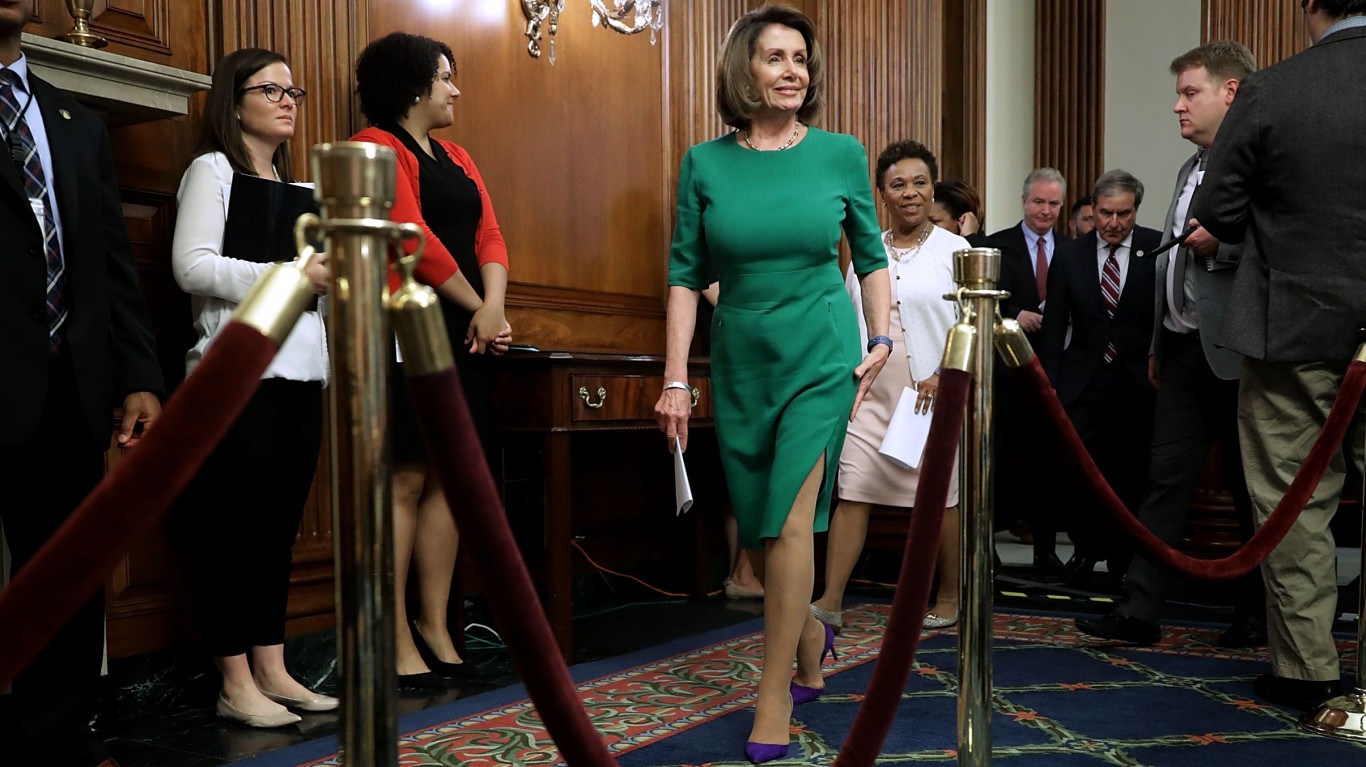
A House Clerk periodic transaction report filed in August discloses that Nancy Pelosi’s spouse purchased Bloom Energy Class A shares and call options in late July, the household’s first disclosed position in the name. Congressional filings report only broad dollar bands, never execution prices. Any round-number total attached to the trade is the sum of band floors, and the true commitment could be several multiples larger. The second tranche date has been reported inconsistently across outlets; the filing itself is the authoritative record. The trade is legal and was disclosed under House rules governing spousal transactions. No evidence ties it to advance knowledge of any index committee decision.
Index Inclusion Sat Between the Two Events
Between that late-July purchase and the September 8 options surge came a public catalyst: Bloom Energy was named to the S&P 500 in the quarterly rebalance announced by S&P Dow Jones Indices, according to CNBC. Index-inclusion buying is mechanical, driven by passive funds resizing to the benchmark rather than any fresh judgment on fuel cell economics.
What the Tape Has Done Since
Bloom closed at $269.28 on September 9, then traded near $260.60 early on September 10, down 3.22% on the session. Zoom out and the run is striking: up 199.92% year to date and 373.82% over one year, with a market cap near $76.93 billion.
Fundamentals support part of the enthusiasm. Q2 revenue reached $1.065 billion, up 165.52% year over year, and CEO KR Sridhar told analysts: “Bloom will not be your bottleneck. We deliver power at AI speed and enable our customers to grow.”

Inclusion-driven demand typically clears around the rebalance auction, and run-ups into effective dates often give back part of the move. What Renick described is aggregate market activity with no disclosed participants. What the filing documents is a spousal purchase weeks before a public index announcement. Everything in between belongs to the reader.
Contact [email protected] for any questions or corrections.
After two decades of patrolling the dark corners of suburbia as a police officer, Rich Duprey hung up his badge and gun to begin writing full time about stocks and investing. For the past 20 years, he’s been cruising the markets looking for companies to lock up as long-term holdings in a portfolio while writing extensively on the broad sectors of consumer goods, technology, and industrials. Because his experience isn’t from the typical financial analyst track, Rich is able to break down complex topics into understandable and useful action points for the average investor. His writings have appeared on The Motley Fool, InvestorPlace, Yahoo! Finance, Money Morning, and, of course, 24/7 Wall St. He has been featured in both U.S. and international publications, including MarketWatch, Financial Times, Forbes, Fast Company, and USA Today.