Bridgewater Founder Dalio Urges Investors to Dump Bonds for Gold Allocation
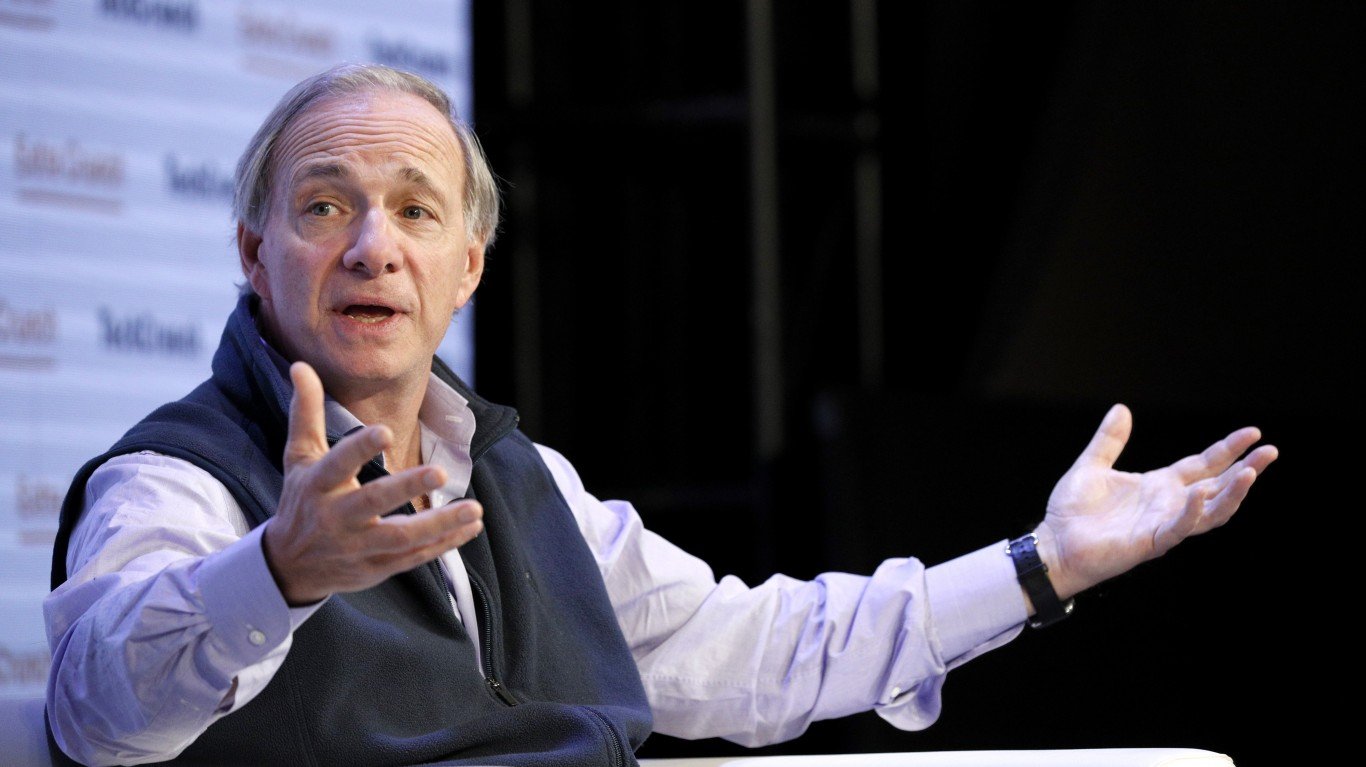
Ray Dalio just told millions of LinkedIn readers to rethink the role bonds play in their portfolios, but the advice that sounds like protection from one angle looks like a serious trade-off from another.

This post may contain links from our sponsors and affiliates, and Flywheel Publishing may receive compensation for actions taken through them.

According to yellow.com, Ray Dalio, the founder of Bridgewater Associates, told LinkedIn readers on August 21, 2026 that investors should tilt away from bonds and toward gold. His specific number, per yellow.com’s August 23 writeup: Ray Dalio suggested 10% to 15% of a portfolio in gold, saying that allocation could reduce risk and potentially improve returns, alongside a smaller sleeve in Bitcoin (CRYPTO:BTC).
That is a real allocation instruction aimed at exactly the kind of reader who might act on it. It deserves a serious look before anyone does.
Debt-Cycle Logic in Plain Language
Dalio’s framework starts with the arithmetic of government borrowing. When a country’s debt grows faster than its economy, interest payments consume a larger share of the budget every year. Rising interest costs squeeze out other spending. To keep issuing new bonds at prices buyers will accept, the government has to offer higher yields, cut spending, or lean on the central bank to absorb supply through money creation.
The last option is where gold enters. Once investors sense that a currency’s issuer is monetizing debt to keep the machine running, confidence in that currency, and in the bonds denominated in it, begins to slip. Assets whose supply cannot be expanded by a policy decision, gold most of all, become the relative winner in his framing. Bitcoin plays a comparable role.
What Bonds Actually Do for a Portfolio
Bonds carry two specific jobs in a retirement portfolio: predictable income and dampened volatility during equity drawdowns. Gold pays nothing. It has no coupon, no earnings, and no board returning capital.
The 10-year Treasury yield sat at 4.83% on September 9, 2026, its highest reading of the past year, up from a low of 3.97% on February 27, 2026, according to yellow.com. Investors buying today lock in a coupon that beats most of the past decade’s rates. Following Dalio’s advice means trading away that contractual income and the ballast bonds provide, in exchange for protection against a scenario he expects but has not put on a timetable.
Who This Fits and Who It Does Not
A retiree drawing 4% a year from a portfolio needs cash flows that arrive on schedule. Gold does not deliver them. Selling ounces to fund living expenses in a bad year for the metal is exactly the sequence-of-returns risk retirees try to avoid. For that reader, moving to a double-digit gold weight requires shrinking either the equity sleeve or the bond sleeve, and each choice has a cost.
An accumulator in their 30s or 40s with 20-plus years of contributions ahead has more room. Volatility in a gold allocation matters less when the withdrawal date is decades away, and the debt-cycle scenario Dalio describes could plausibly unfold within their investing lifetime. For this reader, a gold sleeve at the low end of Dalio’s range is defensible without abandoning bond exposure entirely.
A Committed View and What to Watch
Do not restructure a portfolio around a single LinkedIn post, even one from Dalio. His debt-cycle read is coherent and worth respecting. The commitment it demands, giving up contractual income and volatility damping today for a hedge against a monetary regime shift on an unspecified schedule, is large.
Signals worth tracking before making the trade:
- Federal interest expense as a share of revenue. Rising is the setup for his thesis.
- Foreign central bank Treasury holdings. Sustained declines signal the confidence problem Dalio flags.
- The Consumer Price Index, which read 332.8 in July 2026, up 0.1% from a month earlier, according to yellow.com. A reacceleration would strengthen the case for scarce assets.
- Fed balance sheet direction. A return to expansion under duress is the money-creation step in his chain.
A gold sleeve at the low end of his range, funded by trimming rather than eliminating bonds, is a measured response for investors who find the argument persuasive. Anything larger is a directional bet on Dalio’s timeline being right.
Contact [email protected] for any questions or corrections.
Chris Lange is a financial and geopolitical writer with more than a decade of experience covering a myriad of topics. He has published thousands of articles for 24/7 Wall St., with past coverage focused heavily on stocks, IPOs, healthcare, defense, global affairs, and technology.
His work has been quoted, or referenced by a number of outlets including Business Insider, USA Today, Yahoo Finance, MSN, The Motley Fool, and many other publications. A graduate of Southwestern University, he studied business with a focus on investments and has previous experience in banking and startups.
When not reading or writing the news, he is following his passion for Lacrosse, playing chess, or building solar projects with his dad.