Billionaire Ray Dalio: ‘We’re On the Brink’ of Major Problems Within 2 Years
Ray Dalio is compressing his timeline. On a recent Prof G Markets episode with Ed Elson titled "Ray Dalio: The World Order Has Unraveled," the Bridgewater founder said "We're on the brink of some of these problems" and pegged the…

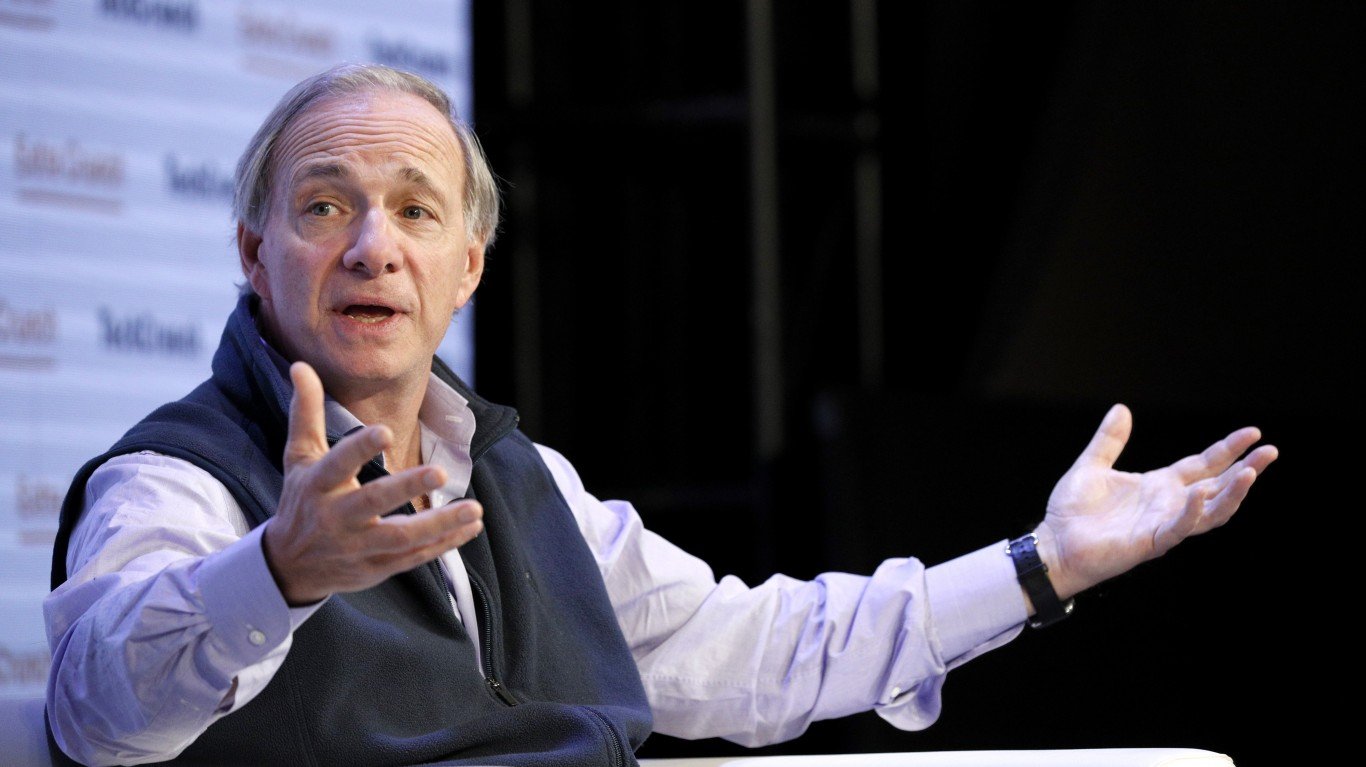
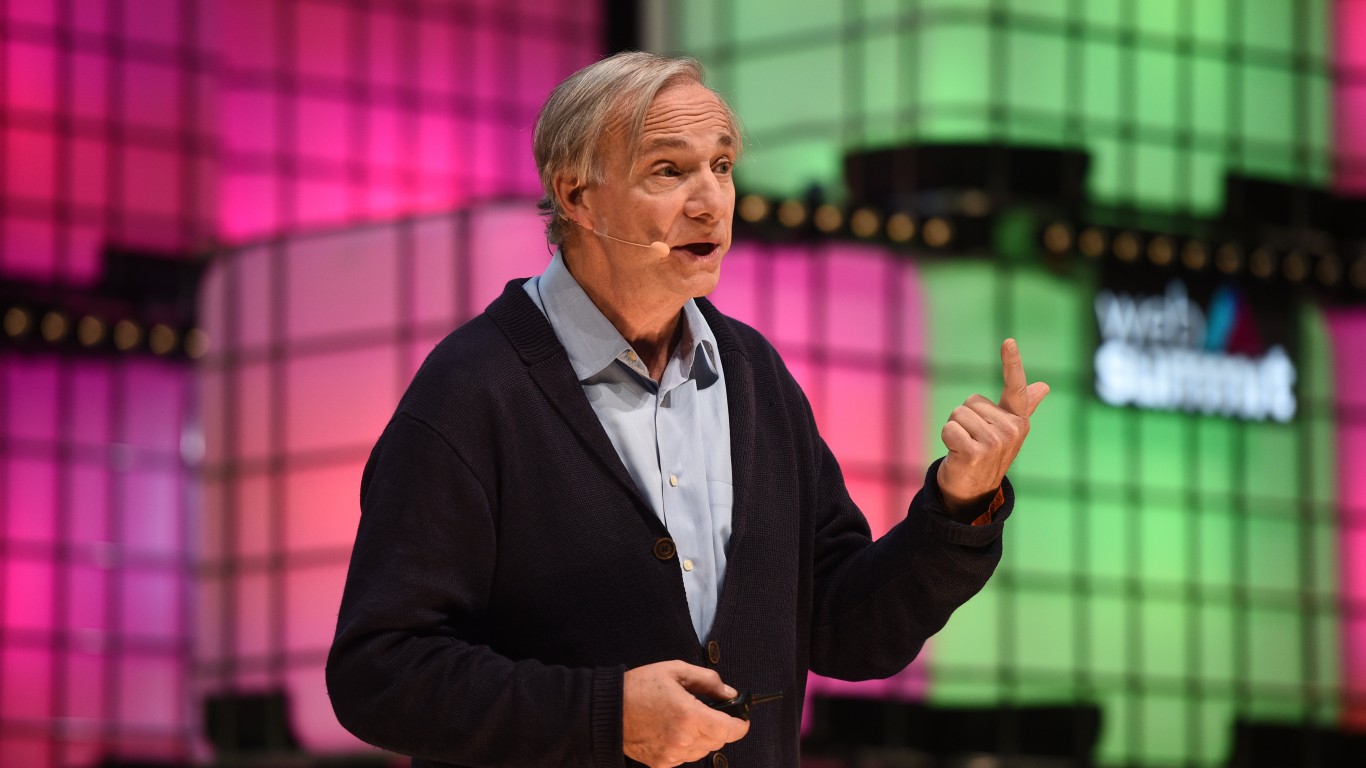
Ray Dalio is compressing his timeline. On a recent Prof G Markets episode with Ed Elson titled “Ray Dalio: The World Order Has Unraveled,” the Bridgewater founder said “We’re on the brink of some of these problems” and pegged the window at “particularly in the vicinity of, you know, two years away from what obviously is a confluence of more, more risks.” Coming from a macro investor whose commentary has historically pointed years or even a decade out, that tightening of focus is worth taking seriously.
The Convergence Thesis
Dalio’s argument centers on multiple forces arriving at roughly the same moment: declining demand for U.S. debt, rising U.S. debt issuance, accelerating technological disruption, and escalating international conflict. Ed Elson pressed him on what to actually do about it, characterizing these as “very, very large forces that are very difficult to sort of wrap your head around.”
The fiscal arithmetic at the center of Dalio’s thesis is stark. The U.S. government spends roughly $7 trillion annually while taking in closer to $5 trillion in revenue, a gap Dalio has described as squeezing the economy “like plaque in the arteries.” In fiscal year 2025, federal spending reached $7.1 trillion against $5.3 trillion in revenue, producing a $1.79 trillion deficit, according to USAFacts. Annual interest on the national debt came to $970 billion in FY2025, a figure the Congressional Budget Office projects will reach $1.039 trillion in 2026. The total national debt surpassed $40 trillion on August 18, 2026, according to the Bipartisan Policy Center, up from roughly $28.5 trillion just five years ago. Debt as a share of GDP now stands at 123% as of the first quarter of 2026, per USAFacts. Dalio has called this trajectory a potential “debt death spiral,” where the government must borrow just to cover the interest on what it already owes.
This borrowing math intersects with a demand problem Dalio has flagged repeatedly. The supply of U.S. Treasuries keeps growing, but foreign appetite to absorb that supply is softening. “There’s a supply-demand issue,” he has said, noting that in times of geopolitical friction, “even allies do not want to hold each other’s debt.” That concern has concrete data behind it: China’s Treasury holdings dropped to $652.3 billion in March 2026, the lowest level since September 2008, according to Treasury International Capital Data. Meanwhile, Chinese accumulation of dollars through trade surpluses has coincided with rising sanctions anxiety that makes recycling those dollars back into U.S. debt less certain.
Dalio added a new layer to his warning in late April 2026, telling CNBC: “We are certainly in a stagflationary period.” Persistent inflation running above the Federal Reserve’s 2% target, paired with slowing growth, creates the classic policy trap: cutting rates risks fanning inflation, while holding them high restrains activity. The dilemma grew more acute after Kevin Warsh was confirmed as the new Fed chair on May 13, 2026, in a 54-45 Senate vote described by CNBC as the most divisive confirmation in Fed history. Warsh subsequently raised rates at the Fed’s September 2026 meeting, emphasizing that inflation remains elevated. Dalio had cautioned well before that decision that prematurely cutting rates in this environment “would cause the Federal Reserve to lose its credibility.”
The Diversification Response
When pressed on the practical playbook, Dalio emphasized the need for well-diversified portfolios but declined to prescribe a specific asset allocation. That deliberate vagueness carries its own signal: when the forces at work are too large and entangled to forecast cleanly, concentration becomes the dominant risk.
Dalio has separately noted that gold, hard assets, and reduced exposure to long-dated U.S. debt form the broad outline of his personal positioning. He has publicly suggested allocating between 10% and 15% of a portfolio to gold as a hedge against currency devaluation, arguing that “80% of the world’s money has disappeared” in real terms since 1750. In a conversation with The New York Times’ Ross Douthat, he escalated his language further, saying the U.S. is entering a period of “great turbulence” so severe the country could be “almost unrecognizable” in five years. At the Forbes Iconoclast Summit in early June 2026, he described the U.S. as “past the point of no return” on its debt trajectory and raised the prospect of a 1930s-style financial repression, in which the Fed and Treasury coordinate to suppress yields below the inflation rate.
Markets have not priced in much of this alarm, though the picture has shifted considerably since early summer. The 10-year Treasury yield has climbed to roughly 5% as of mid-September 2026, up sharply from the 4.55% level cited in early June, as a Federal Reserve rate hike and Chair Warsh’s pointed inflation commentary rattled bond investors. The yield is now near its highest level since 2007. The complacency gap between Dalio’s two-year clock and where assets are trading has narrowed on the rates side, even as equity markets have struggled to find their footing.
What to Watch
Three signals will tell you whether Dalio’s clock is running fast or slow. First, Treasury auction demand: bid-to-cover ratios on long-duration paper will show whether foreign and domestic buyers are quietly stepping back, a trend already visible in China’s shrinking holdings. Second, the 10Y-2Y yield curve spread, which compressed to roughly 26 basis points as of mid-September 2026 as both maturities repriced higher after the Fed’s rate increase. A sustained move toward zero or outright inversion would signal that bond markets share Dalio’s near-term concern. Third, consumer sentiment: the University of Michigan index fell to 47.8 in September 2026, its weakest reading since a record low earlier in the year and now below the index’s value at the start of every prior recession since the series began. Year-ahead inflation expectations jumped to 4.6% in the same survey, the highest since June. That combination of collapsing confidence and rising inflation expectations adds political and economic pressure on top of the fiscal strain Dalio has been describing for months. The full conversation is available on the Prof G Markets feed. Treat it as one prominent macro investor’s view and weigh it accordingly against the broader consensus.
Editor’s note: This pass updated the national debt figure to more than $40 trillion (surpassed August 18, 2026), corrected the FY2025 interest expense to $970 billion and the CBO’s 2026 projection to $1.039 trillion, raised the 10-year Treasury yield to roughly 5% reflecting the Fed’s September 2026 rate hike under Chair Warsh, updated the 10Y-2Y spread to approximately 26 basis points, refreshed the University of Michigan consumer sentiment index to 47.8 in September 2026 with year-ahead inflation expectations at 4.6%, added China’s March 2026 Treasury holdings figure of $652.3 billion (an 18-year low), and identified the source of Dalio’s “almost unrecognizable” comment as a conversation with The New York Times’ Ross Douthat.
Contact [email protected] for any questions or corrections.
Joel South covers large-cap stocks, dividend investing, and major market trends, with a focus on earnings analysis, valuation, and turning complex data into actionable insights for investors.
He brings more than 15 years of experience as an investor and financial journalist, including 12 years at The Motley Fool, where he served as an investment analyst, Bureau Chief, and later led the Fool.com investing news desk. He has also co-hosted an investing podcast and appeared across TV and radio discussing market trends.