The UPS Dividend Yield Is Unusually High and That Is Not the Compliment It Sounds Like
UPS carries a yield above 6%, but the math behind that number tells a very different story than a healthy payout raise. Before adding it to an income portfolio, understand what actually pushed the yield this high.

What Actually Produced the Yield
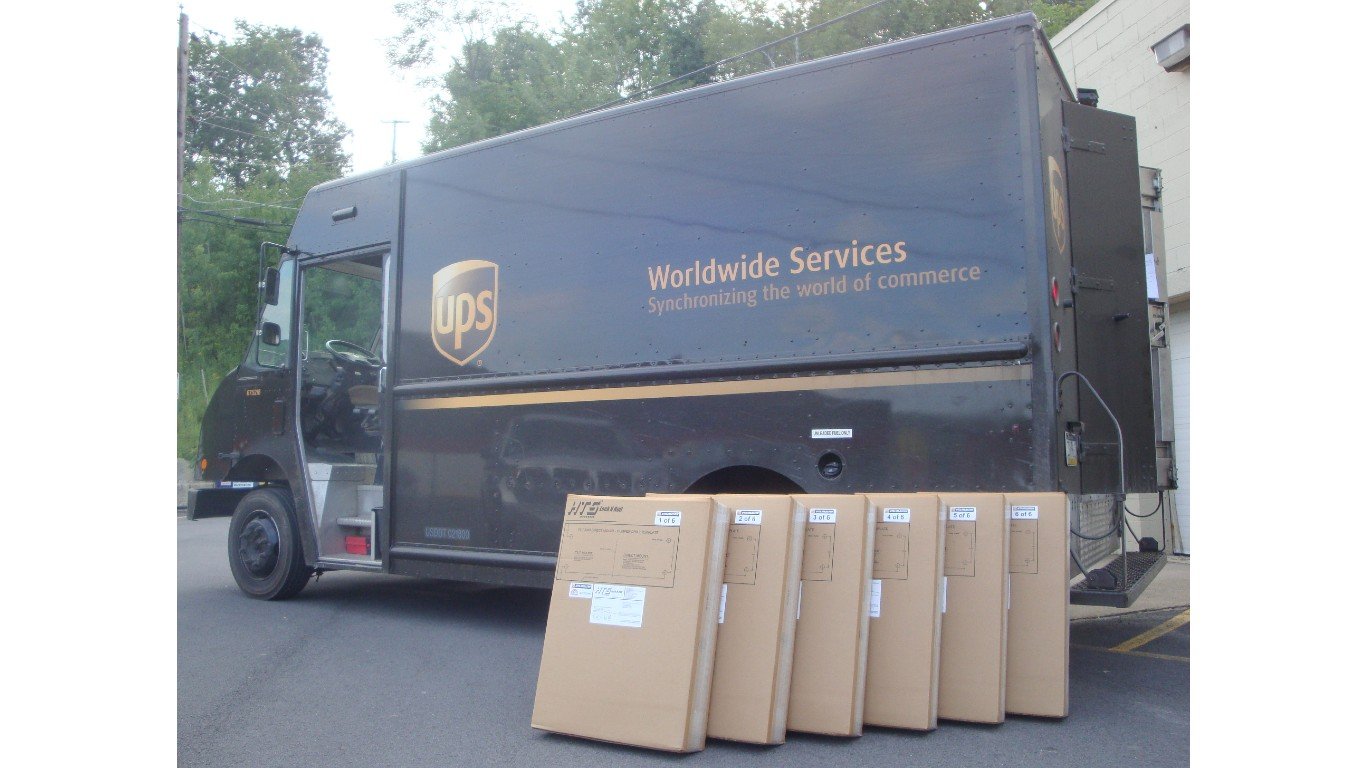
United Parcel Service (NYSE:UPS | UPS Price Prediction) carries a headline dividend yield of 6.56%. The real question for an income investor is what produced it.

A yield rises for one of two reasons. The company raised the payout, or the share price fell. The verified data points overwhelmingly to the second.
The quarterly dividend has held at $1.64 per share for the seven most recent listed quarterly payments. The prior step-up carried the quarterly rate from $1.02 to $1.52. The payout has effectively been static since.
Price tells the other side of the story. UPS settled at $100.28, versus $152.62 on a five-year lookback, a return of -34.3%. The ten-year price return sits at just +38.49%. Price erosion is why the yield screens rich.
Coverage Belongs on Free Cash Flow
For a fixed-network parcel carrier, reported earnings understate the real cost of the business. Aircraft, sortation buildings, and vehicles demand constant reinvestment. Coverage belongs on free cash flow after capex.
Reported full-year results: operating cash flow of $8.450 billion, capex of $3.685 billion, and dividends paid of $5.398 billion. Free cash flow came in at $5.470 billion, down 11.96%. The dividend consumed essentially all discretionary cash.
Forward guidance offers no more breathing room. Management targets roughly $5.5 billion in free cash flow, $3 billion in capex, a $1.3 billion pension contribution, and around $5.4 billion in dividends.
Volume, Costs, and Management’s Commitment

The pressure in this case is structural. Consolidated volume fell 3.6% in the reported quarter, U.S. Domestic average daily volume dropped 3.3%, and the deliberate Amazon glide-down eliminated approximately 2 million pieces per day of lower-quality Amazon volume. Amazon now represents 9% of total UPS revenue. Interest expense climbed to $272 million, up 14.3%.
CEO Carol Tomé framed the reset directly:
“We now have a leaner, more automated, more agile network that will deliver operating leverage as volume grows. And importantly, incremental volume today carries materially better economics than before because of the structural changes we’ve made.”
On the payout itself, CFO Brian Dykes offered the operative commitment, saying UPS is “still planning to pay out around $5.4 billion in dividends in 2026, subject to Board approval.”
Committed View on Whether the Payout Holds
The dividend is covered by free cash flow, but by a thin margin, and the board has held the quarterly rate flat rather than lift it. That is the tell. Management is defending the payout while a reconfigured network waits to deliver operating leverage on rising revenue per piece and a lower structural cost base.
The specific number to watch is quarterly free cash flow against the roughly $1.35 billion quarterly dividend obligation. Two consecutive quarters below that line would move the payout from tight to unsustainable, and would put the board’s next declaration into play. A 6%-plus yield sitting on flat coverage is exactly the profile we flagged in a free guide to the seven warning signs a big dividend is about to be cut.
Contact [email protected] for any questions or corrections.
Chris Lange is a financial and geopolitical writer with more than a decade of experience covering a myriad of topics. He has published thousands of articles for 24/7 Wall St., with past coverage focused heavily on stocks, IPOs, healthcare, defense, global affairs, and technology.
His work has been quoted, or referenced by a number of outlets including Business Insider, USA Today, Yahoo Finance, MSN, The Motley Fool, and many other publications. A graduate of Southwestern University, he studied business with a focus on investments and has previous experience in banking and startups.
When not reading or writing the news, he is following his passion for Lacrosse, playing chess, or building solar projects with his dad.