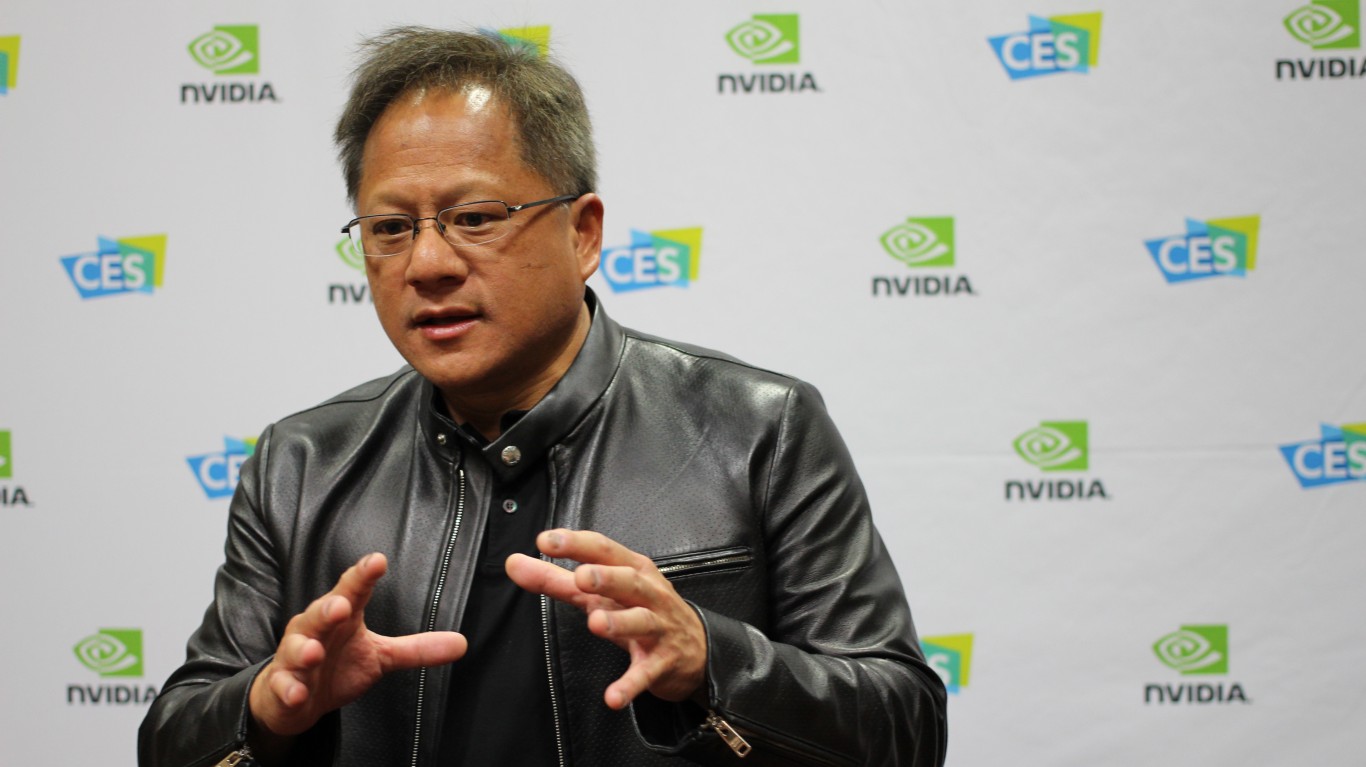
Princeton Economist: “Main Street Millionaires” Hold 10X More Wealth Than The Entire Forbes 400 Billionaire List
A Princeton economist's back-of-the-napkin calculation reveals a class of American business owners so wealthy they make the Forbes 400 look like a rounding error, and almost none of them run tech companies.

This post may contain links from our sponsors and affiliates, and Flywheel Publishing may receive compensation for actions taken through them.

On Marketplace Morning Report, economist Owen Zidar delivered a number that reframes how investors should think about American wealth. Asked how much the country’s hidden business-owner class actually holds, he answered: “We estimate that there are around 3 million everywhere millionaires who are business owners outside of tech and finance who have at least $5 million” and “Collectively it’s around $50 trillion, which is enormous. The Forbes 400 only has about a tenth of that.”
That comparison lands with force in the current market. A tenth of $50 trillion is roughly $5 trillion, the estimated combined net worth of every name on the Forbes 400. One single company, NVIDIA (NASDAQ:NVDA | NVDA Price Prediction), carries a market capitalization of $5,271,048,421,000. One chip designer in Santa Clara is worth about as much as every billionaire on the Forbes list combined, and still only about a tenth of what flooring, rubber-mat, and toilet-paper business owners quietly hold.
Why NVIDIA Became the Public Face of AI Wealth
NVIDIA’s scale reflects genuine operating performance. Over the last five years, the stock has returned 853.99%, and over the last decade it has climbed 13,663.8%. That performance minted a generation of retail millionaires whose portfolios rode a single ticker.
The fundamentals continue to support the valuation. In the Q2 FY2027 report filed August 26, 2026, NVIDIA posted revenue of $96.22 billion, up 105.8% year over year, with Data Center revenue reaching $89.02 billion. Non-GAAP EPS came in at $2.22 against a $2.09 consensus. Management guided Q3 revenue to $108.0 billion, plus or minus 2%, and expects to grow fiscal 2028 revenue by approximately 70%, a figure CEO Jensen Huang described as “a supply-constrained outlook.” Full disclosure is in the Q2 FY2027 8-K.

Huang framed the moment on the earnings call: “AI has reached its inflection point. It’s doing useful work. Its tokens are productive and profitable. Now, compute is revenue.” He also flagged that cloud industry backlog now exceeds $2 trillion, with the top five hyperscalers projected to spend nearly $800 billion in 2026 and $1.3 trillion in 2027.

Where the Money Actually Sits
The Zidar and Eric Zwick thesis reframes the wealth map. Their “stealthy wealthy” are private business owners in industries most investors never think about: elementary-school carpet replacement, automotive rubber mats, toilet-paper distribution. Co-author Zwick has pointed to figures like Dick Portillo, who built a suburban Chicago hot dog stand into a nine-figure enterprise, and Terry Taylor, a car dealer with an estimated $2 billion net worth who avoids press coverage entirely [Source: Stealthy wealthy podcast explainer].
Altrata’s Billionaire Census 2026 corroborates the concentration story from the top down: the global billionaire population reached 3,795 individuals in 2025 with total wealth of $15.1 trillion, and billionaires comprise just 0.07% of the world’s roughly 5.9 million individuals with more than $5 million in net worth. The vast majority of wealth sits below the billionaire tier, in private company equity that never trades on a public exchange.
Contact [email protected] for any questions or corrections.
AJ spent 10 years writing about financial markets at The Motley Fool. His coverage centers on technology stocks and the broader macroeconomic trends, from interest rates to geopolitics, that shape where markets are headed next. AJ is drawn to the stories where big-picture economics and individual companies collide.