Eisman: Tesla’s Multiple Is Crazy Unless You “Believe that Tesla’s Robotaxi Business will Conquer the World.” “Count Me As a Skeptic”
Steve Eisman, the investor who called the 2008 housing collapse, says Tesla's valuation only makes sense if you accept one enormous assumption about robotaxis, and he wants no part of it.

This post may contain links from our sponsors and affiliates, and Flywheel Publishing may receive compensation for actions taken through them.
Steve Eisman, the Neuberger Berman senior portfolio manager made famous by The Big Short, laid out the math on his weekly wrap podcast: “The consensus estimate for Tesla for 2026 is $1.66, so the 2026 PE is 220 times. Auto stocks by contrast, have very low multiples. GM’s 2026 P E is 6.5 times. The only explanation for Tesla’s crazy multiple is that some investors believe that Tesla’s robotaxi business will conquer the world. Now I have no skin in this game, just count me a skeptic.”
That framing puts Tesla (NASDAQ:TSLA | TSLA Price Prediction) and General Motors (NYSE:GM) on opposite ends of an autonomy bet with a surprising scoreboard.
Eisman’s Fundamental Case
Eisman’s skepticism starts with earnings. Tesla’s EPS peaked in 2022 at $4.07, and the 2026 consensus of $1.66 sits 59% below that peak. His conclusion: “the people who were short were right on the fundamentals.”
Tesla trades at a P/E of 381, price-to-book of 17.6, and price-to-free-cash-flow of 232.5, with return on equity of just 4.9% and an operating margin of 4.6%. In its Q2 2026 8-K filed July 22, 2026, Tesla posted revenue of $28.24 billion (up 25.5% year over year), but non-GAAP EPS of $0.33 missed the $0.54 estimate by 38.5%, operating income fell 56.9% to $398 million, and free cash flow flipped to negative $1.09 billion.

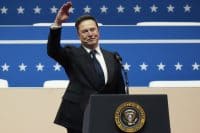
Eisman also noted Tesla’s stock fell 6% on the day of its robotaxi event, citing Elon Musk’s “history of overpromising and under delivering.”
Robotaxi Bull Case Tesla Is Selling
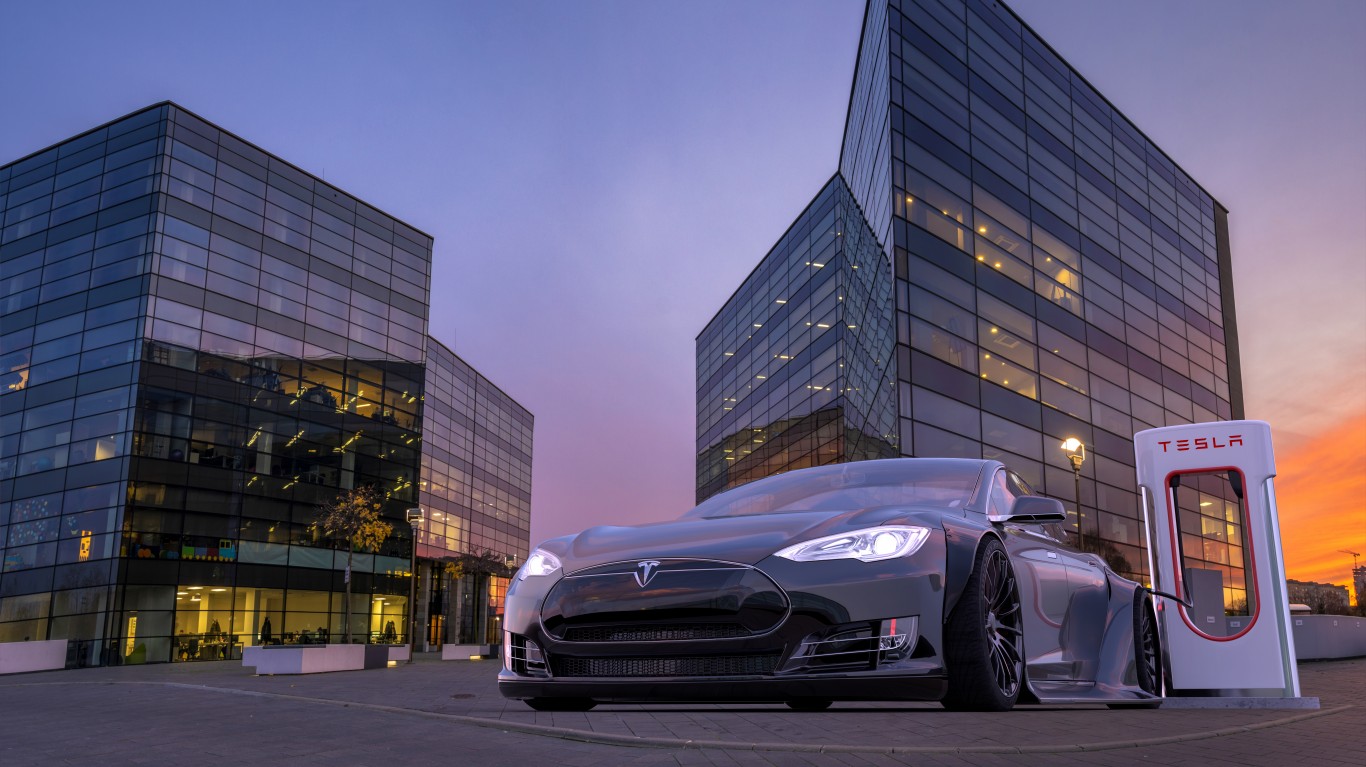
Tesla is executing on autonomy. Per the Q2 report, Robotaxi service has expanded to seven U.S. metros, including unsupervised rides in Austin, Dallas, Houston, Miami, Orlando, and Tampa, and active FSD subscriptions reached 1.48 million, up 56% year over year. VP of AI Ashok Elluswamy said Tesla had “driven more than 380,000 miles of unsupervised Robotaxi” with “zero notable incidents.” Musk described the pace as “going as fast as humanly possible in scaling Robotaxi” while managing reliability.
CFO Vaibhav Taneja said CapEx for 2026 would exceed $25 billion and continue growing for “the next two or three years,” with debt facilities being lined up to borrow up to $30 billion.
GM Counterpoint Investors Missed
Over the same five-year window, the 6.5x automaker has outrun the 220x robotaxi story. GM is up 80.47% over five years and 47.09% over the past year, while Tesla is up 48.66% over five years and down 1.07% over the past year. Live pricing confirms the pattern: GM has returned 43.13% over the past year against Tesla’s -14.81% one-year performance and -19.33% year-to-date.
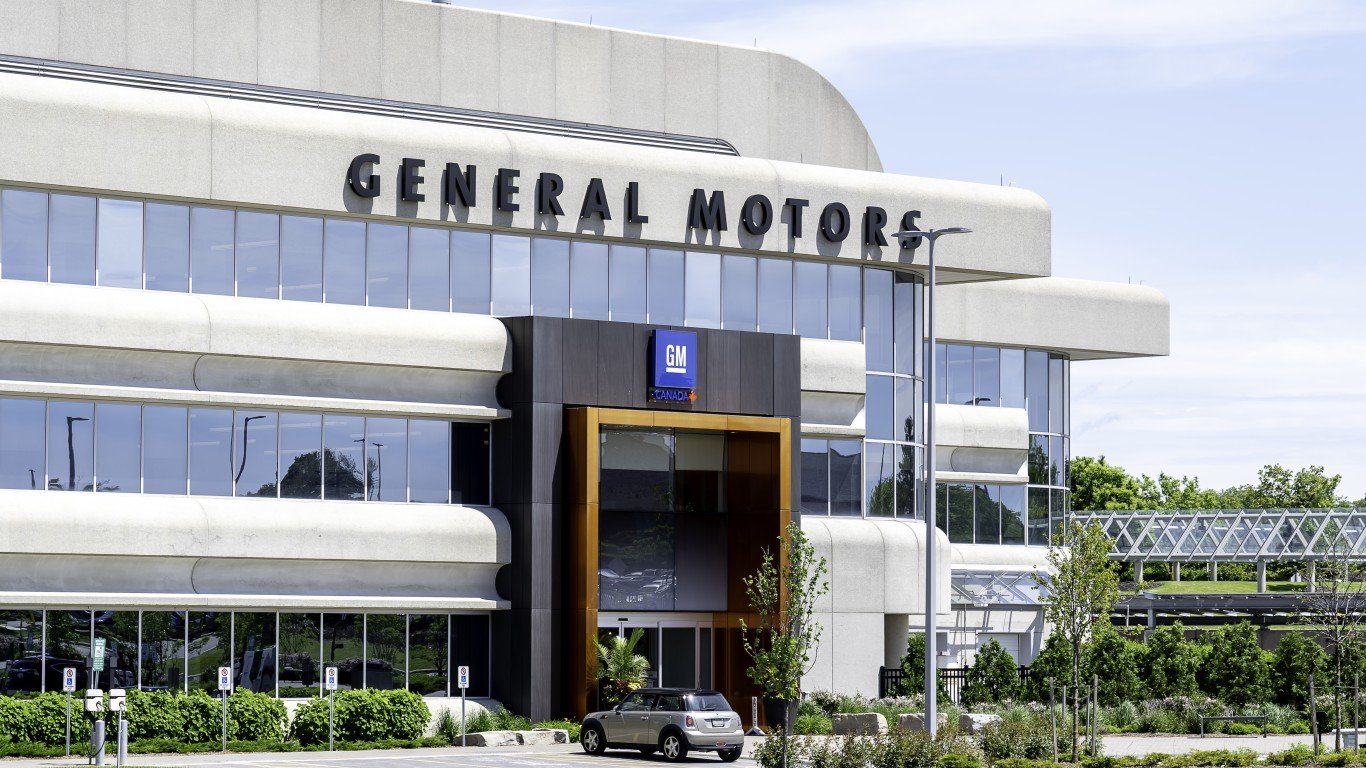
GM’s fundamentals justify the re-rating. The company posted Q2 2026 adjusted EPS of $3.57, beating the $3.18 estimate by 12.1% (a fifth consecutive beat), and raised full-year guidance to EBIT-adjusted of $14.0B to $16.0B and adjusted EPS of $12.00 to $14.00. Mary Barra emphasized “multiple engines of margin expansion and growth” spanning trucks, OnStar, Super Cruise, GM Defense, and insurance. GM trades at a P/E of 29, price-to-book of 1.28, and free cash flow yield of 14.1%.

What to Watch
Eisman’s skepticism rests on one question: does Tesla’s robotaxi network compound fast enough to justify a multiple roughly 13x GM’s on 2026 numbers? The next signposts are unsupervised mileage growth, FSD attach rates above the current 55% North American level, and whether operating margins recover. The cheap automaker has been the better stock.
Contact [email protected] for any questions or corrections.
AJ spent 10 years writing about financial markets at The Motley Fool. His coverage centers on technology stocks and the broader macroeconomic trends, from interest rates to geopolitics, that shape where markets are headed next. AJ is drawn to the stories where big-picture economics and individual companies collide.