Why ONEOK’s Dividend Raise Matters More Than Its Eye-Catching Yield
ONEOK just raised its dividend again and the yield looks generous on paper, but the cash story behind that payout runs through billions in acquisition debt, a thinning free cash flow margin, and a commodity market that is starting to…


ONEOK’s dividend looks like the kind of income line retirees dream about. ONEOK (NYSE:OKE | OKE Price Prediction) trades at $91.67 after a 29.53% year-to-date run, and management raised the quarterly payout 4% to $1.07 per share in January 2026, bringing the annualized rate to $4.28. That headline number is the easy part. The harder question, and the one that matters for anyone underwriting this as an income holding, is whether the cash behind the check is real.

How the Midstream Model Actually Pays You
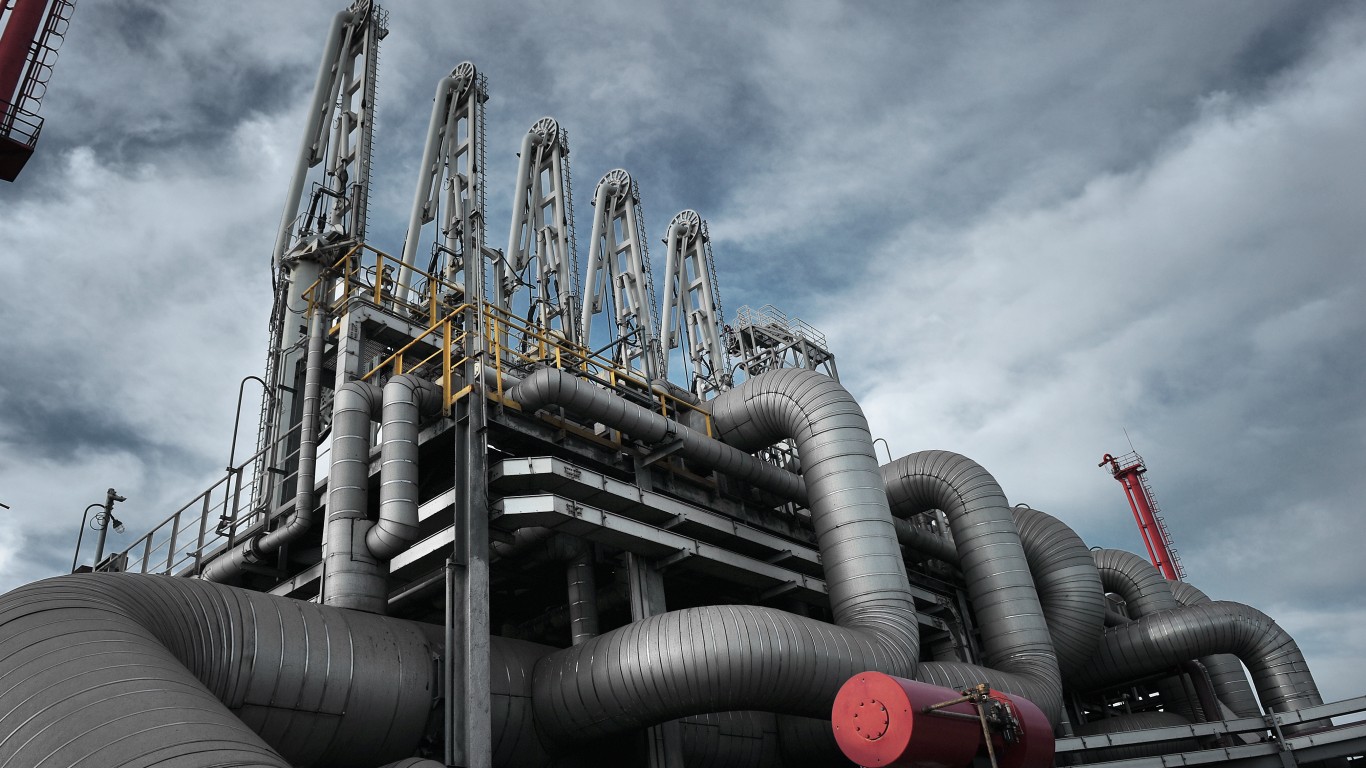
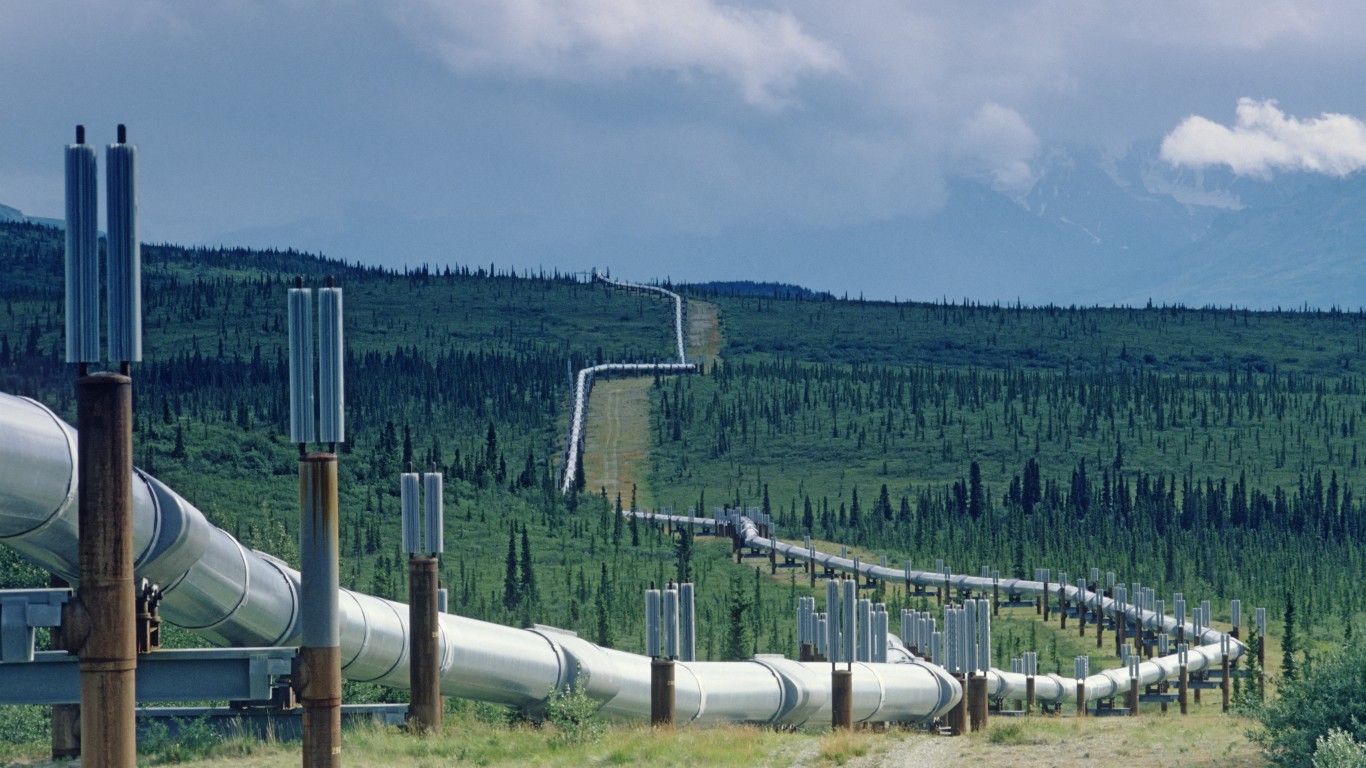
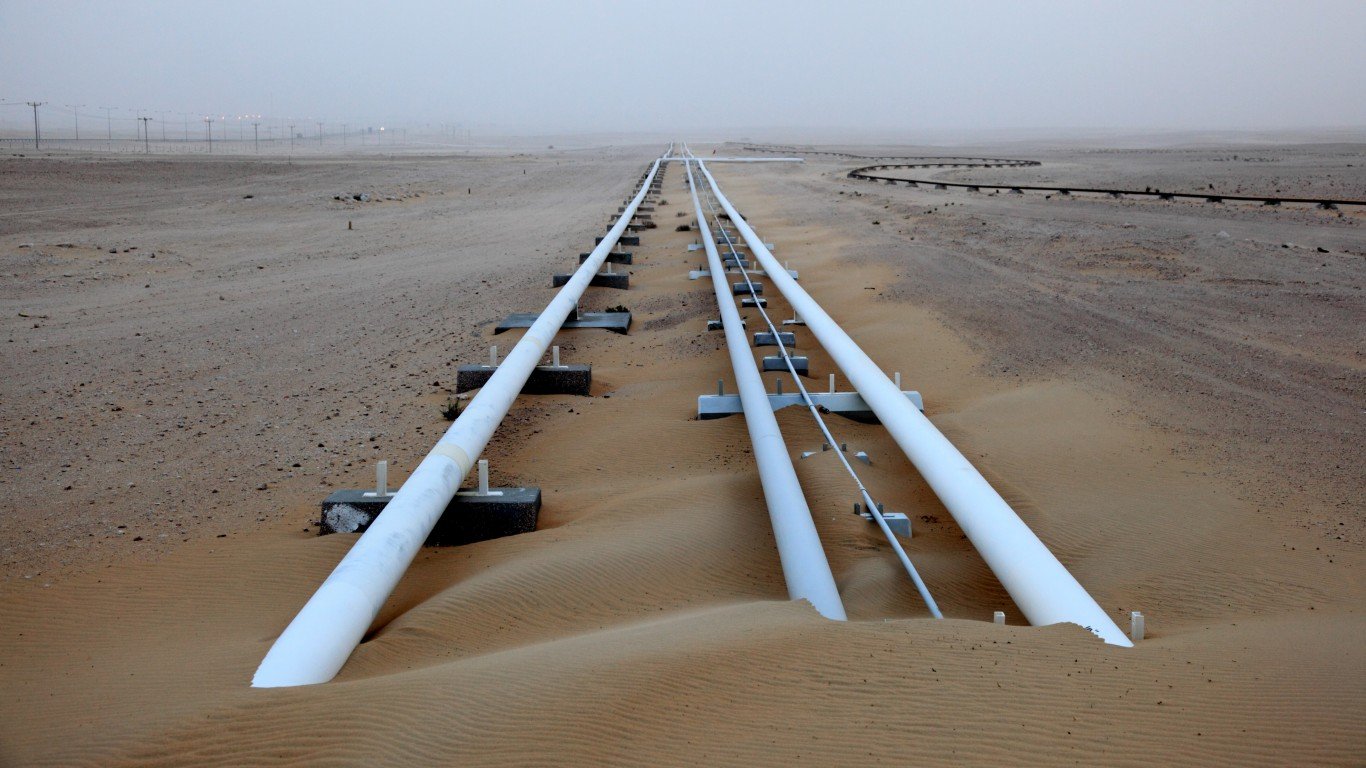
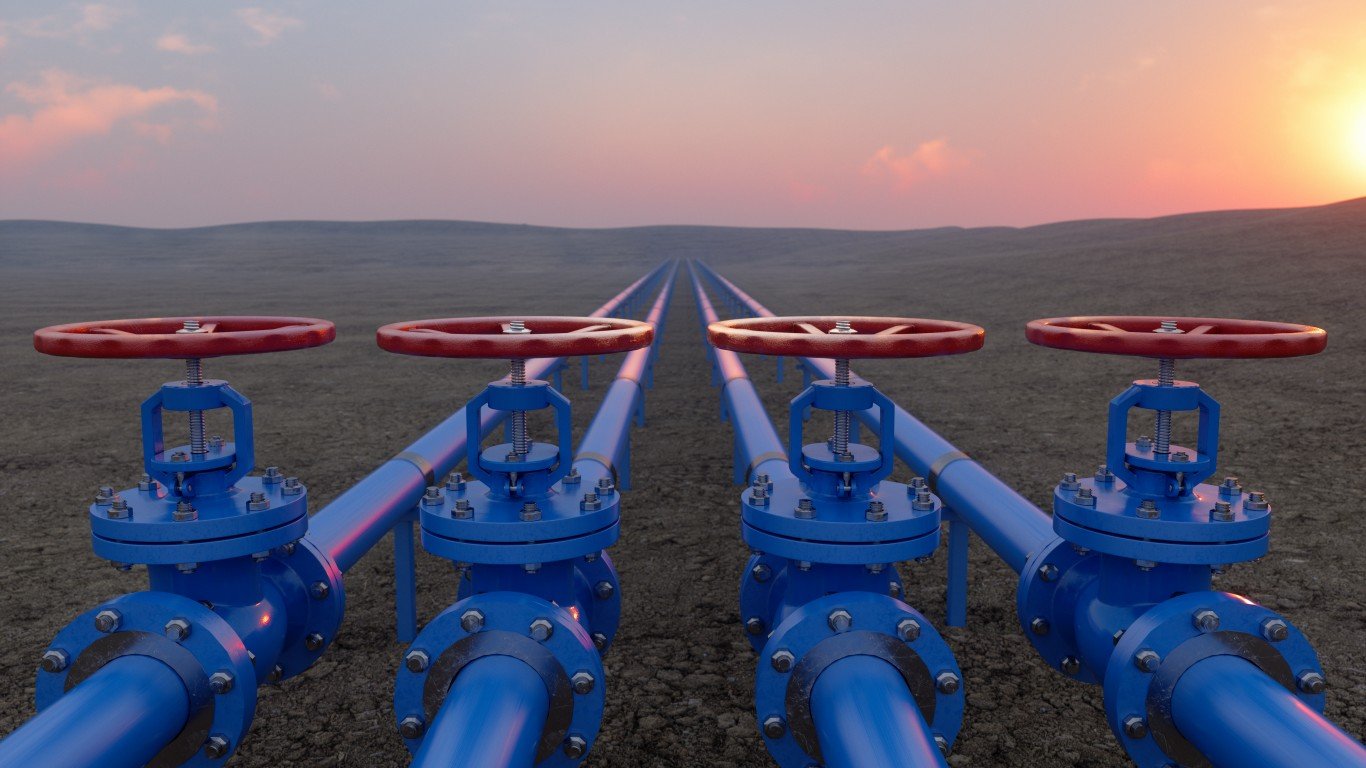
ONEOK gathers, processes, transports, fractionates, and exports natural gas liquids, natural gas, refined products, and crude. The economics are largely toll-road: roughly 90% of 2025 earnings were fee-based, insulating cash flow from spot commodity swings but leaving it exposed to the volumes moving through the pipes. That distinction matters. When the Permian slows, so do fees, even if West Texas Intermediate holds. Management’s 2026 guidance assumes WTI at roughly $55 to $60 per barrel and flags moderating producer activity as a headwind.
Coverage Read
Start with earnings. Full-year 2025 diluted EPS came in at $5.42 against dividends paid of $2.583 billion. Management’s original 2026 midpoint EPS was $5.45, and on the August 4, 2026 earnings call, guidance was raised for the second time this year to a $5.68 diluted EPS midpoint and an $8.35 billion adjusted EBITDA midpoint. Against a $4.28 payout, the earnings cushion is intact.
Cash tells a tighter story. 2025 operating cash flow of $5.599 billion had to cover $3.152 billion of capital expenditures before a nickel reached shareholders. The dividend is comfortably covered by operating cash flow, but free cash flow after the growth build is thinner than the raw OCF number suggests (the same stress test we run in a free guide to the seven warning signs a big yield is about to be cut, here). CFO Walt Hulse addressed exactly this on the second-quarter call, saying the capital run rate should moderate toward approximately $2 billion to $2.5 billion going forward, which should leave “some very significant free cash flows still coming to the bottom line.”
Peer Yardstick
Investors comparing ONEOK to Enterprise Products Partners (NYSE:EPD), Kinder Morgan (NYSE:KMI), or Williams Companies (NYSE:WMB) are choosing between different tradeoffs of yield, fee mix, and growth capex intensity. ONEOK’s payout is heavier on C-corp dividend growth than distribution yield, with a quarterly progression from $0.935 in 2020 to $0.99 in 2024, $1.03 in 2025, and $1.07 in 2026. That is a durable raising cadence, though not the double-digit growth from earlier in the last decade.

Balance Sheet and Interest Load
The EnLink and Medallion deals scaled the business and the debt stack together. Annual interest expense climbed from $845 million in 2023 to $1.351 billion in 2024 and $1.783 billion in 2025. Management is working the leverage down toward a 3.5 times debt to EBITDA long-term target, aided by the extinguishment of nearly $3.1 billion of long-term debt in 2025 and approximately $2.6 billion of cumulative cash tax benefits that defer meaningful cash tax payments until 2031.
Verdict
The yield is earned. Fee-based cash flow covers the dividend, the raise cadence is intact, and the cash tax runway buys years of flexibility. The risks are specific and worth naming: moderating producer activity, integration risk from the EnLink and Medallion acquisitions, and elevated capex intensity. CEO Pierce Norton framed the durability case bluntly on the second-quarter call: “Our integrated system enables us to create value across multiple demand drivers.” Income investors watching this name should track Permian volumes and the 2027 capex glide path more closely than the yield quote.
Contact [email protected] for any questions or corrections.
Chris Lange is a financial and geopolitical writer with more than a decade of experience covering a myriad of topics. He has published thousands of articles for 24/7 Wall St., with past coverage focused heavily on stocks, IPOs, healthcare, defense, global affairs, and technology.
His work has been quoted, or referenced by a number of outlets including Business Insider, USA Today, Yahoo Finance, MSN, The Motley Fool, and many other publications. A graduate of Southwestern University, he studied business with a focus on investments and has previous experience in banking and startups.
When not reading or writing the news, he is following his passion for Lacrosse, playing chess, or building solar projects with his dad.