P&G vs. Hershey: One Dividend Has a Major Advantage When Costs Surge
Both P&G and Hershey have paid dividends for decades, but one of them proved dangerously vulnerable when a single commodity turned against it, and that difference matters enormously for any retiree counting on steady income growth.

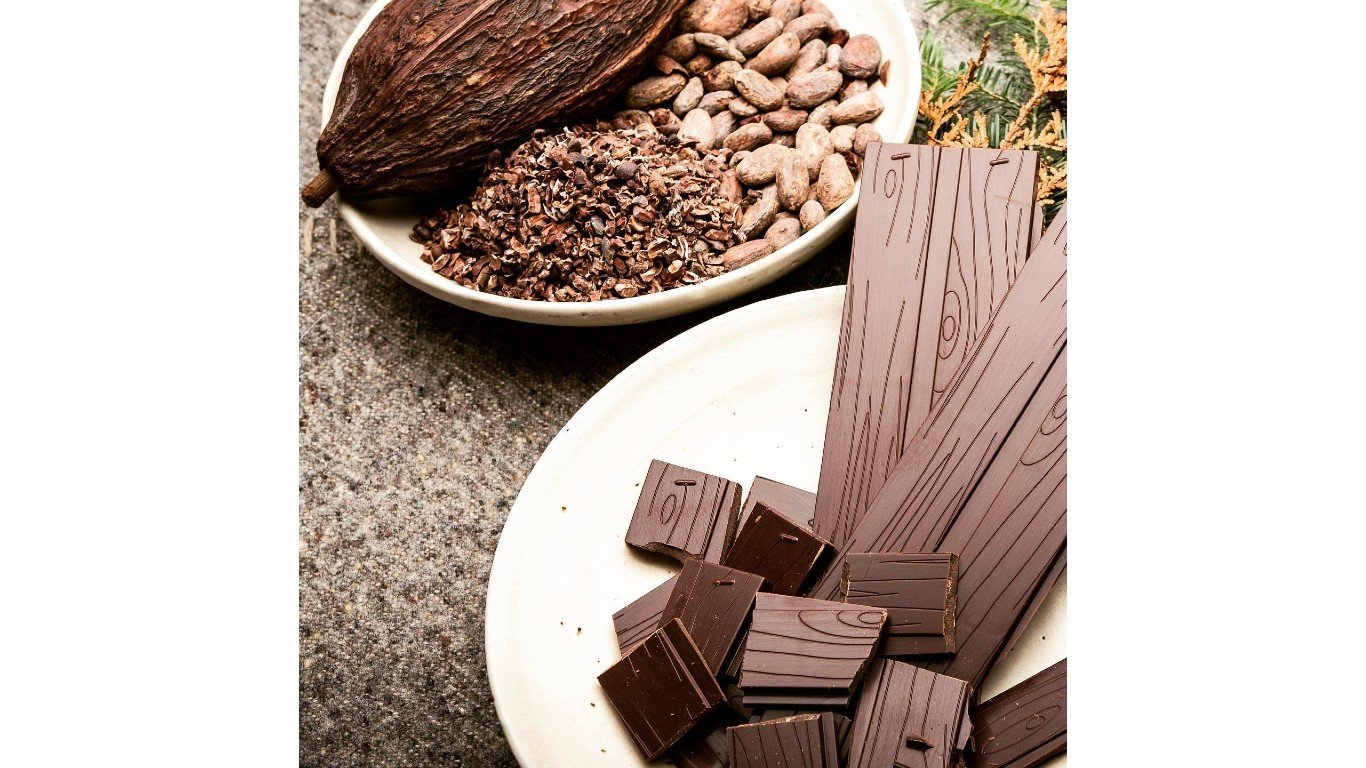
For a retirement portfolio choosing between Procter & Gamble (NYSE:PG | PG Price Prediction) and Hershey (NYSE:HSY), the question is simple: which blue chip dividend is more likely to keep growing through the next cost cycle? Both carry household-name status and multi-decade payment records, but they are structurally different animals. P&G sells across five reporting segments and roughly 70 countries. Hershey is a confectioner with concentrated exposure to a single agricultural input: cocoa. That difference decides this comparison.
Yield and Payout Coverage
Hershey wins on headline yield. Its annualized forward dividend of $5.808 against a $166.84 share price runs well above P&G, whose forward annualized payout of $4.354 sits on a $145.73 stock.
Coverage is the more useful lens. P&G produced core EPS of $6.89 in FY2026 and generated free cash flow of $15.835B, funding a planned $10 billion in dividends and $5 billion in buybacks. Hershey guides FY2026 adjusted EPS of $8.36 to $8.52, comfortable coverage on paper, but that number is a rebound off 2025’s depressed $6.31 base. Winner: P&G, on coverage stability.

Raise History and Behavior in Cost Cycles
P&G is a Dividend King in the truest sense: 70 consecutive years of dividend increases and 136 consecutive years of payments dating to 1890. The company held that streak through every commodity shock of the modern era, and the quarterly rate moved from $0.9407 in 2023 to $1.0885 in 2026.
Hershey has raised as well, most recently from $1.37 to $1.452 quarterly with a February 2026 ex-date, and its payment record in the provided data extends back to 1999. But the raise cadence is less mechanical and the company is not in the Dividend King club. When inflation hit hardest, Hershey’s 2025 operating income fell 50.26% and net income fell 60.24%. P&G, over the same environment, still increased its dividend by 3%. Winner: P&G.

Margin Structure and Input Cost Exposure
This is the real differentiator. P&G’s FY2026 core operating margin decreased 70 basis points against a roughly $1 billion after-tax cost headwind from commodities, energy, transportation, and geopolitical premiums. Painful, but absorbed across categories from Tide to Pampers to SK-II.

Hershey has nowhere comparable to hide when cocoa moves. Q2 FY26 showed the recovery in action: adjusted gross margin expanded 350 basis points to 41.6% as commodity pressure eased. Management said cocoa deflation should be “a help for 2027,” while cautioning that “continuing to grow the business and have margin improvement is not solely resting on cocoa deflation by itself.” The margin whiplash cuts both ways, and retirement capital does not enjoy whiplash. Winner: P&G.

Risk to Each Dividend
P&G’s risk is slow-growth stagnation: FY2027 guides core EPS in-line to +3%, and a prolonged flat-volume period would eventually compress raise size. Hershey’s risk is a second cocoa spike before the 2027 deflation shows up, which would restart the margin compression Hershey just spent 2025 absorbing.
Verdict
For a retirement-focused investor whose portfolio needs a dividend that keeps rising through cost shocks, P&G wins. The 70-year raise streak, diversified cash flow, and 100% adjusted free cash flow productivity are exactly the profile a retiree should anchor with. Hershey still suits a different investor: one willing to accept confection-cycle volatility in exchange for a higher current yield and a credible cocoa-deflation rebound story into 2027. That investor is not the retiree drawing income from the portfolio.
Contact [email protected] for any questions or corrections.
Chris Lange is a financial and geopolitical writer with more than a decade of experience covering a myriad of topics. He has published thousands of articles for 24/7 Wall St., with past coverage focused heavily on stocks, IPOs, healthcare, defense, global affairs, and technology.
His work has been quoted, or referenced by a number of outlets including Business Insider, USA Today, Yahoo Finance, MSN, The Motley Fool, and many other publications. A graduate of Southwestern University, he studied business with a focus on investments and has previous experience in banking and startups.
When not reading or writing the news, he is following his passion for Lacrosse, playing chess, or building solar projects with his dad.