America’s Cars Keep Getting Older. These 4 Auto Parts Stocks Get Paid
The average American car is now 13 years old, and four distributors quietly profit every time one breaks down. Which of these stocks offers the steadiest ride through a high-rate, high-repair economy?

Cars break on their own schedule. The U.S. has more than 293 million light vehicles and light trucks on the road, with an average age of 13 years, according to management at O’Reilly Automotive (NASDAQ:ORLY | ORLY Price Prediction). When rates are high and new and used cars are expensive, households keep the car they already own. Every extra year on an older vehicle brings another round of brakes, batteries, and filters. Four U.S.-listed distributors sit between the parts makers and the people doing the repairs.
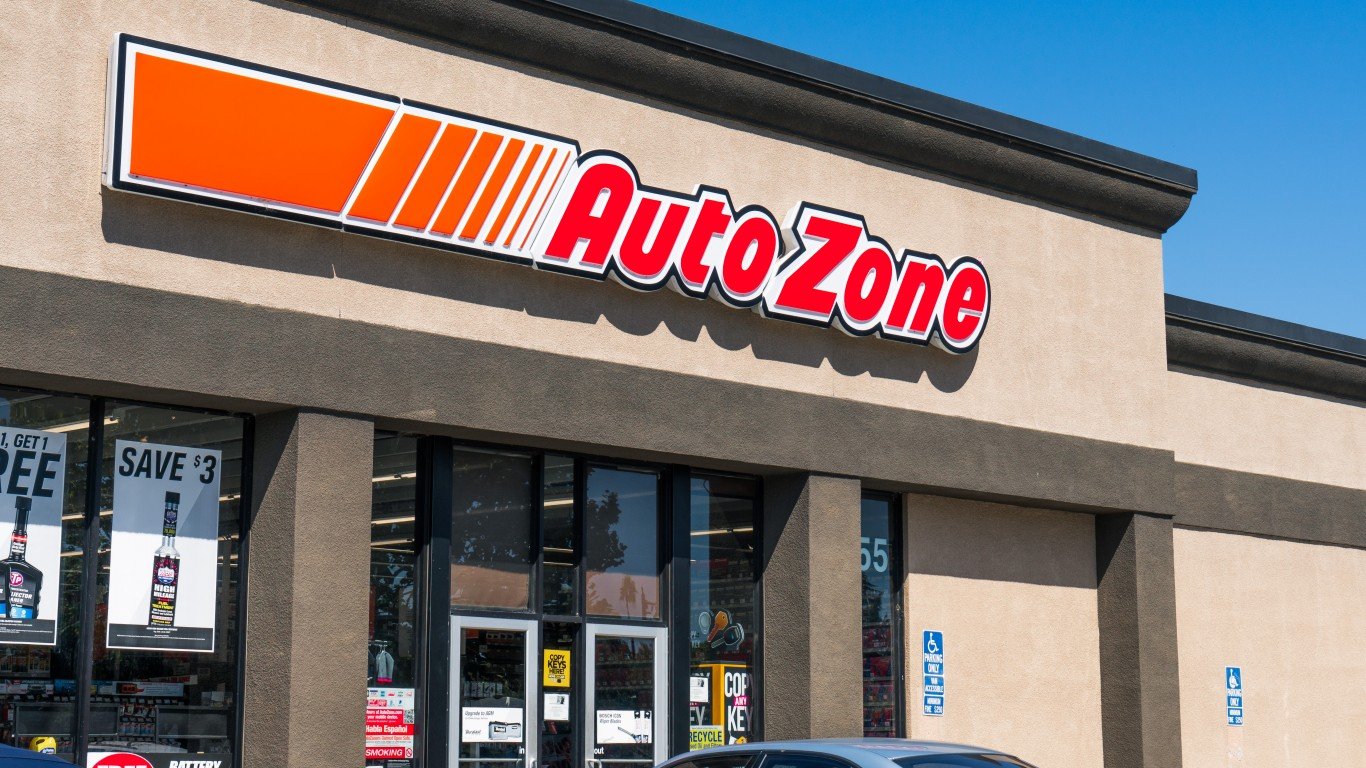
AutoZone: Repair Shops Are Carrying a Soft DIY Year
AutoZone (NYSE:AZO) is the largest U.S. retailer of aftermarket auto parts. Most of its business is still the walk-in customer replacing a battery in the parking lot, but a growing share goes out the back door to professional repair shops. Domestic commercial sales were 34% of domestic auto parts sales and 29% of total company sales in the fiscal fourth quarter, and commercial programs now operate in 94% of domestic stores. The two channels have different economics. DIY customers pay retail and trim spending when budgets tighten. Shops need fast delivery and deep inventory, and a higher commercial mix pressures gross margins.
The latest quarter is a live test of the thesis. Management described a DIY customer facing high inflation and softer transactions, and said it sees “evidence of deferrals and trade down in DIY, particularly with the most financially challenged DIY customers.” Domestic DIY same-store sales declined 0.6%, while domestic commercial sales grew 8.6% in the quarter and nearly 11% for the year. Management explained how the squeeze turns into sales later: “Maintenance, people will tend to push them a little as they get under pressure from an inflationary perspective. But over time, you have to replace those parts.” It expects customers to keep older cars longer and said repair frequency “will likely increase in 2027.”
Pricing power shows up in ticket size. Average ticket grew around 5% for both DIY and commercial, and management said the industry remains disciplined and rational in passing through cost inflation. Gross margin reached 53.3%, up 182 basis points, though that includes a $96 million tariff refund and a smaller LIFO charge. Excluding the LIFO comparison, gross margin rose 76 basis points.
AutoZone pays no dividend. It returns cash through buybacks: $2 billion bought back during fiscal 2026, with $1.6 billion left on its authorization. Decades of repurchases have left shareholders’ equity at negative $2.50 billion, a long-standing feature of the model. The adjusted share price rose 268.41% over 10 years but is down 30.56% over the past year, even after the stock posted its best day in more than two years following the report.
The main risk is DIY traffic. Management called a transaction decline of 5% or north of that irregular and is counting on it moderating. Its fiscal 2027 outlook for domestic same-store sales is flat to up low single digits.
O’Reilly Automotive: Steady Professional Growth, Rising Leverage
O’Reilly runs 6,695 stores across North America and splits its business almost equally between the two channels. Second-quarter sales to professional service providers were $2.47 billion and DIY sales were $2.34 billion. Management estimates it holds about 10% of the market, leaving a fragmented field of smaller competitors to take share from.
The professional side has been the steadier engine. Professional comparable sales grew right at 10%, the fourth consecutive quarter of double-digit comps. Management said professional ticket counts have held in the mid-single-digit range every quarter since the business normalized coming out of the pandemic. DIY comps rose in the low single digits while transaction counts fell in the low single digits. Management said customers have adjusted to current economic conditions and continue to prioritize maintenance and repair of existing vehicles, because keeping an older, higher-mileage car is the financially reasonable choice.
The pricing evidence is in the margins. Tariff-driven price increases began raising comparable sales in the third quarter of 2025, and second-quarter gross margin held at 51.4%, unchanged from a year earlier, even as faster professional growth weighed on mix. Full-year operating margin guidance stands at 19.3% to 19.8%.
O’Reilly pays no dividend. Since its buyback program began in 2011, it has bought back 1.50 billion shares for $30.42 billion at an average of $20.32, and the diluted share count fell from 858 million to 829 million year over year. The adjusted share price rose 353.97% over 10 years and is down 17.66% over the past year.
The main risk is balance-sheet growth. Adjusted debt-to-EBITDA rose to 2.17 times from 2.03 times at the end of 2025 as the company moves toward a target of 2.5 times, and management said recent buybacks reflect additional borrowings as well as cash flow.
Genuine Parts: A Dividend Record That Ran Through 2008 and 2020
Genuine Parts (NYSE:GPC) owns NAPA, and its automotive customer is mostly the professional installer. In the U.S., comparable sales to commercial customers rose approximately 4% in the second quarter while retail comparable sales fell approximately 3%. Non-discretionary repair, maintenance, and service categories account for approximately 85% of its U.S. business. Its industrial parts distributor, Motion, posted $2.41 billion in second-quarter sales next to $2.54 billion from North America Automotive.
The dividend history is the clearest record of how the company handled past downturns. The quarterly payment rose from $0.39 in 2008 to $0.40 in 2009 during the financial crisis, and from $0.7625 in 2019 to $0.79 in 2020 during the pandemic. The available record, running from 1999 through September 2026, shows no break in quarterly payments and an amount that climbed from $0.26 to $1.0625. That streak puts GPC in the Dividend Kings club, and ten of them are ranked by current valuation in a free report you can grab here.
Pricing evidence is modest and steady. U.S. price contribution was approximately 2.5%, and management said it expects to pass through many supplier cost increases. The annualized forward dividend is $4.25, a yield of 3.24%. That is a reasonable payout, and the stronger case rests on the consistency of the record. The adjusted share price rose 73.3% over 10 years and is up 8.36% year to date.
The main risk is the breakup. Genuine Parts plans to split its automotive and industrial businesses into two public companies in the first quarter of 2027. Restructuring pushed GAAP EPS guidance down to $5.90 to $6.40, and management expects the standalone automotive company to carry an additional $250 million of costs between allocated corporate expenses and dis-synergies.
LKQ: A Collision Specialist Still Under Repair
LKQ (NASDAQ:LKQ) distributes alternative and aftermarket parts, mostly for collision repair, along with salvage, mechanical parts in Europe, and a Specialty segment. Its customer is the body shop, from large multi-shop operators to independents, but the insurance company paying the bill often shapes the order. That ties demand to collision claims more than to fleet age.
The cost-conscious insurance company is LKQ’s structural support. Alternative parts use topped 40% in the second quarter, a record, as carriers look for cheaper repairs. North America returned to positive organic growth for the first time in nine quarters, driven primarily by pricing, including tariff pass-through, even though repairable claims were still in the negative 1% to 3% range.
LKQ pays a quarterly dividend of $0.30, which the available record shows rising from $0.25 to $0.275 to $0.30. The yield of 5.22% is the highest in this group, partly because the adjusted share price is down 48.76% over five years and 24.31% over 10.
The main risk is execution. A German ERP rollout cost roughly $140 million in quarterly revenue, and LKQ cut its adjusted EPS outlook to $2.60 to $2.90 from $2.90 to $3.20. First-half free cash flow was negative $36 million, net leverage is 2.8 times EBITDA, and a strategic review with Bank of America and Goldman Sachs remains open.
What Could Wear Down This Business Over Time
Electric vehicles are the long-term risk for all four, since fewer moving parts means a different maintenance profile over time. O’Reilly’s latest call offered no quantified EV forecast, and the fleet on the road today is large, old, and still logging more than 3.3 trillion miles a year. AutoZone and O’Reilly are the steadiest version of this business, Genuine Parts adds a long dividend record and a pending breakup, and LKQ remains a repair job in progress.
Contact [email protected] for any questions or corrections.
Chris Lange is a financial and geopolitical writer with more than a decade of experience covering a myriad of topics. He has published thousands of articles for 24/7 Wall St., with past coverage focused heavily on stocks, IPOs, healthcare, defense, global affairs, and technology.
His work has been quoted, or referenced by a number of outlets including Business Insider, USA Today, Yahoo Finance, MSN, The Motley Fool, and many other publications. A graduate of Southwestern University, he studied business with a focus on investments and has previous experience in banking and startups.
When not reading or writing the news, he is following his passion for Lacrosse, playing chess, or building solar projects with his dad.