Nokia Is The Networking Juggernaut AI Investors Should Watch Right Now
Nokia has survived more near-death experiences than almost any company in tech history, and now it sits at the crossroads of AI infrastructure and global telecom. Whether its latest reinvention actually sticks is a far more complicated story than the…

This post may contain links from our sponsors and affiliates, and Flywheel Publishing may receive compensation for actions taken through them.

NOKIA
This year marks 161 years since the foundation of the Finnish technological giant NOKIA. The company started as a simple wood pulp mill, and diversified to produce industrial goods. In the 60s, the company started researching electronics. By the early 90s it had refocused its business on telecommunications, divesting its rubber, cable and consumer electronics units. The first GSM network call was performed in 1991 over NOKIA’s infrastructure. By the mid-2000s the company had become the world’s best selling phone brand, shipping more than 250M units a year. At its peak in 2000, Nokia reached a market value of around €200B and represented nearly 70% of the Finnish stock market.
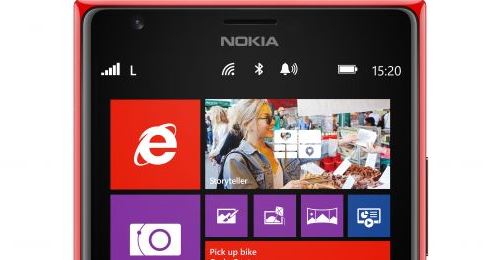
After the popularization of the iPhone and the smartphone transition that followed, NOKIA lost its dominance. By 2014 the company lost 90% of its peak market value and sold its phone division to Microsoft. The company then focused its business as a B2B network and telecom infrastructure provider. Base stations, also known as RAN, became its main business.
Mandatory shift
In 2024 the company announced the acquisition of Infinera, closed in February 2025, implying a major shift to NOKIA’s business model. The acquisition closed a gap for NOKIA as a missing piece for the networking company. Infinera’s manufacturing expertise in photonic integrated circuits and its vertical integration were key for NOKIA’s development of the DSPs and optical engines used for datacenter interconnects, in ranges from a few kilometers to thousands of kilometers.
Today the company is a communications powerhouse, covering both telecom and data center business. In addition, the company’s revenue stream comes from product sales and patents. NOKIA is modernizing its product catalogue and increasing the industries it serves. Military applications and robotics are both more relevant for the company’s future. NOKIA occupies a strategic position as the link between data center infrastructure and telecom networks. That role should grow in importance as edge computing and physical AI become more relevant.
Quick facts
NOKIA is a networking powerhouse, with presence in all segments related to information transportation. Radio networks, optical and IP are the most important.
In radio access networks (RAN), NOKIA ranks third worldwide by revenue, behind Huawei and Ericsson and ahead of ZTE and Samsung. The top five suppliers accounted for 96 percent of revenue, and Huawei and Ericsson alone hold nearly two-thirds. In addition, the RAN market itself has stagnated. It is not expected to increase significantly before the 6G rollout begins around late 2028 or 2029.
Optical is where NOKIA is gaining ground. For the four quarters ending in Q2 2026, the top optical transport vendors were Huawei, Ciena, NOKIA, and Cisco. Ciena and NOKIA are the leading suppliers of disaggregated WDM optical line systems, a segment that grew 80 percent year over year. The optical transport market is forecast to grow 16 percent in 2026, surpassing $18 billion for the first time since 2000, driven by AI data centers.
In IP routing, NOKIA competes mainly with Cisco and Huawei. Across the broader telecom equipment market, Huawei and Cisco gained share in the first half of 2026, while NOKIA’s combined share fell.
Smaller than it was in 2022
As for size and profitability, NOKIA is a roughly €20 billion revenue company with around 78,000 employees. It typically runs a comparable operating margin between 10 and 13 percent, which translates into €2.0 billion of comparable operating profit in 2025 at a 10.2 percent margin. Net sales peaked at €24.9 billion in 2022, then fell to €22.3 billion in 2023 and €19.2 billion in 2024, before recovering 3 percent to €19.9 billion in 2025. In other words, four years into the ChatGPT era, NOKIA is still a smaller company than it was when the AI boom started, although, as explored in this article, the balance may be shifting.
Products
Under CEO Justin Hotard, who took over in April 2025, the company has repositioned itself around AI infrastructure. The acquisition of Infinera positions NOKIA as a vertically integrated indium phosphide photonics player. It increases its presence across communication infrastructure, whether based on radio or photonics technologies.
NOKIA foresees the importance of photonics as part of its portfolio. The company already has a photonics manufacturing site in San Jose, inherited from the Infinera acquisition. And a second fab is scheduled to begin production toward the end of 2026. To increase capacity further, NOKIA is expanding its advanced test and packaging operations in Pennsylvania tenfold starting in Q3 2026, and has agreed to acquire NXP’s Chandler semiconductor site in Arizona, which it will convert to indium phosphide production.
Optical Solutions
Infinera originally produced photonic integrated circuits (PIC) used mainly for optical transport and networking systems over fiber optics. The company also integrated technologies such as DSPs, coherent optics and optical engines.
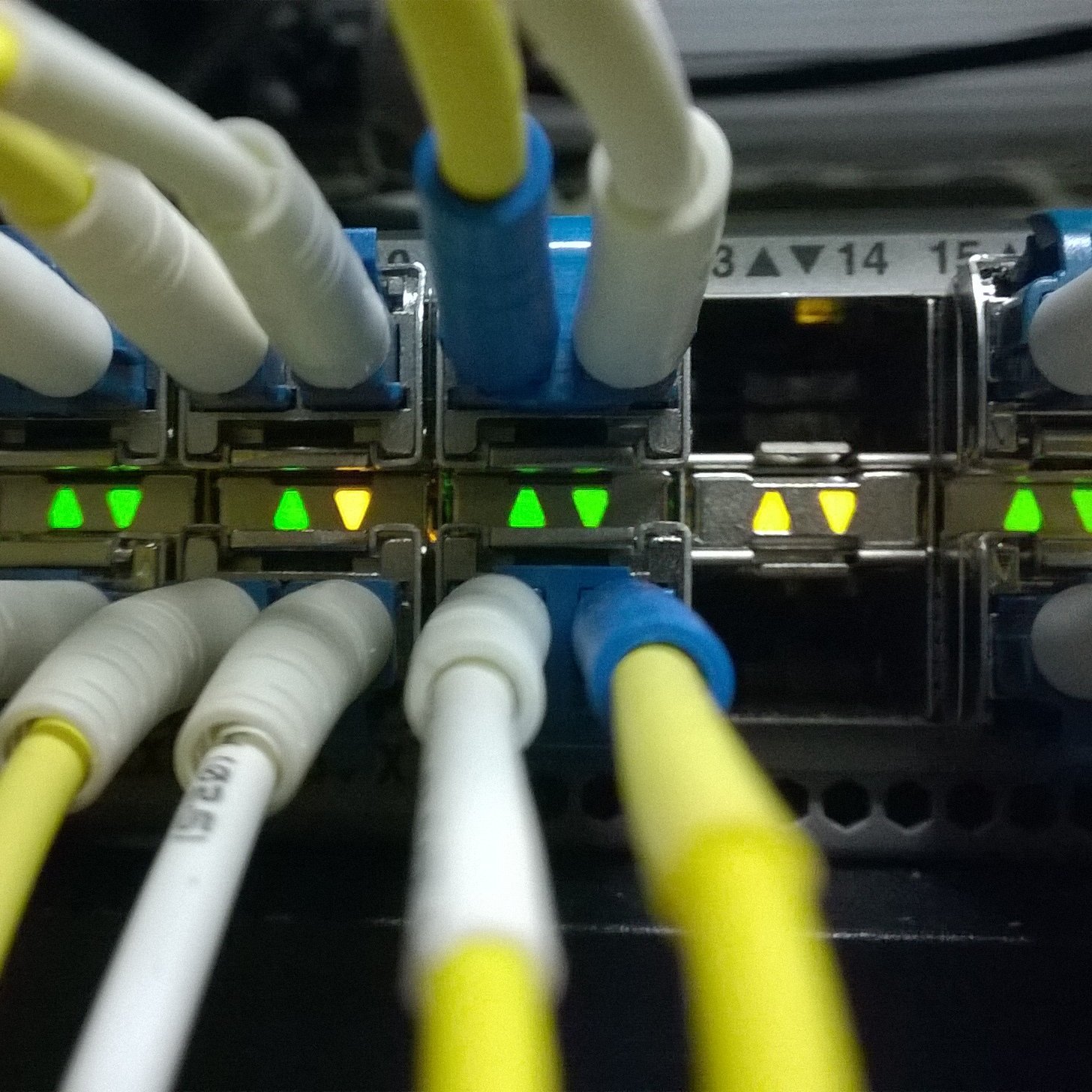
NOKIA’s integration with Infinera has led to the development of optical engines as one of its most important products. Optical engines are highly integrated solutions that combine multiple optical functions onto a single monolithic semiconductor chip. These product lines enable high-speed data transmission in optical communication systems. In fact, NOKIA’s ICE7 solution enables the delivery of 800G services over distances of up to 3000 km, essential for data center interconnect. Moreover, NOKIA’s products can operate at up to 1.2 Tb/s per wavelength, enabling power efficient, high-bandwidth, low-latency data transmission. The company sells integrated solutions in both software and hardware.
During Q2 2026, optical networking represented 18% of net sales, around €868M. The segment is expanding quickly, at around 20% per year.
IP routing
As a networking juggernaut, NOKIA’s portfolio also includes a full range of IP solutions. It has a presence in the whole networking ecosystem, whether mobile, fixed or transport networks.
Its portfolio is so broad that it is difficult to describe the company’s products without going into specific examples. In IP routing alone, the company has the 7750 service router family, used as a datacenter gateway. These are essential for multi-ISP connections and CDN interconnection among IP networks.
Traditional data centers and hyperscalers rely on the physical infrastructure NOKIA provides, and NOKIA designs the critical components inside its optical and networking solutions. For instance, the FP5 networking processor is the backbone of most of their routing platforms. It is a fully programmable routing silicon chip whose programmable logic can adapt to future IP needs as networking services evolve, traffic bursts, or security requirements change. NOKIA’s products are not limited to hardware, but extend to fully integrated systems. Again in routing, the 7750 Service Router ships with the company’s custom operating system for service routing, SR OS.
During Q2 2026, IP Networks represented 14% of net sales, around €679M. The segment is expanding quickly, at around 16% per year.
Radio Networking
Radio Networks is NOKIA’s base station business. The company became the infrastructure leader after it exited phones. It also covers the transport layer that connects those base stations back into the network. As the need for higher speed and seamless connection grows in ever denser urban environments, where billions of mobile devices need access to the internet, it becomes imperative for networking companies to develop solutions in the microwave physical transport layer. The company estimates that by 2034 traffic will be three times higher, driven by AI traffic, immersive experiences and industrial operations. NOKIA’s answer is the Wavence portfolio, which broadens the company’s microwave transport solutions. Wavence covers ultra-broadband transceivers, microwave service switches and advanced antennas such as the UBT-m XP.
During Q2 2026, Radio Networks represented 37% of net sales, around €1,765M. The segment is growing slowly, at around 7% per year.
AI-RAN and future tailwinds in radio networking
In October 2025, NVIDIA and NOKIA announced a partnership to jointly develop AI native radio access network (AI-RAN) products. The alliance expects traditional RAN networks to become software centric, in contrast to the traditional hardware centric approach, which relies mainly on specialized chips known as ASICs to deliver telecommunications.
AI-RAN would allow the same hardware to adopt future standards, starting with 5G and continuing into 6G, with the advantage of delivering updates as needed. On the technical side, AI-RAN incorporates high performance computing, which in NOKIA’s case is expected to use NVIDIA’s GPUs. The GPUs are expected to perform networking operations such as routing, with the spare compute capacity used for inference. Paraphrasing Ronnie Vasishta, senior vice president of telecom at NVIDIA , NOKIA brings its radio communications expertise and market share, while NVIDIA provides its accelerated computing ecosystem. This paradigm change is also expected to affect the business side of the equation, bringing extra revenue to telecom providers, who could essentially rent inference capacity to edge devices such as mobile phones or robotic platforms. The alliance is promising, and NVIDIA has already invested $1B in NOKIA.
AI-RAN is still in a validation phase, but several telecom operators are already showing interest. T-Mobile, Indosat and Elisa have expressed it, and Elisa has already shown a first proof of concept.
AI-RAN economics
To go deeper into AI-RAN, it is essential to consider current token usage. Due to the rise of agentic workloads, token consumption has grown exponentially. Current estimates cite around 100 trillion tokens consumed worldwide per day and still accelerating. With that in mind, having spare inference capability is beneficial both for consumers and telecom providers.
SoftBank estimates that a single GB200-NVL2 based AI-RAN base station has capacity for 25,000 tokens per second, with up to $20 per hour of monetizable compute per server, or around $15K per month. Telecom providers could therefore increase their revenue with AI-RAN.
Beyond monetization, the platform promises a step change in capacity. NOKIA targets more than 100% spectral efficiency gains by 2028, meaning roughly twice as many devices on the same physical link. Moreover, as AI-RAN moves from ASIC based radios to general purpose computing, operators upgrade base stations in software rather than hardware, breaking with tradition.
Telecom is not the only beneficiary of AI-RAN. For NVIDIA, its adoption is critical to its vision of the Omniverse, where every physical system has a digital twin, which in turn allows for optimization of those systems and a more efficient world overall. The constant observability, communication and bandwidth that AI-RAN enables are essential to that vision.
Current financial status and what to expect as drivers manifest
NOKIA’s Q2 2026 results show the AI thesis is already in the numbers. Net sales grew 9% in constant currency to €4.8 billion, with comparable operating margin up 70 basis points to 9.0%. Sales to AI & Cloud customers grew 105%, and order intake from that group hit €2.8 billion, nearly triple Q1. Optical Networks (+20%) and IP Networks (+16%) led the growth, while patent licensing added 15%.
The weak spot was cash. Free cash flow was negative by nearly €0.7 billion, mainly due to higher working capital. While accelerated restructuring and the expansion of manufacturing capacity pushed reported operating profit into a loss.
Management kept its 2026 guidance of €2.1 to €2.6 billion in comparable operating profit, with most of the upside expected in Q4, and says supply, not demand, is its main constraint.
Conclusions
NOKIA has adapted before, going from a wood pulp mill to the biggest cellphone manufacturer on the planet, and from that collapse to a B2B infrastructure provider. Today it is doing it again, this time around networking. From radio to optical, photonic and IP, NOKIA delivers end to end networking that telecom operators and data centers depend on.
Growth remains available to the company, because networking is as vital as raw compute power in the AI era. As both inference usage and the number of connected devices increase exponentially, innovations at the link layer become essential. By 2034 the mobile traffic is expected to grow 200% therefore advances in that area are essential for the industry. This same argument has been recognized by NVIDIA, and technologies like AI-RAN, jointly developed with NOKIA, allow NVIDIA to keep thriving, especially with the upcoming wave of digital twins and physical AI, where inference as close to the source as possible is key.
The caveat is that none of this is yet visible at the group level. NOKIA is still smaller than it was in 2022, its cash flow turned negative in the last quarter, and its most profitable business, mobile, is also its slowest growing one. The growth is real, but it is concentrated in optical and IP, and it is still offsetting decline elsewhere rather than adding on top of it.
Nonetheless, I believe that NOKIA holds a strong position to keep growing and become a key player in the AI era. Today IP routing and optical solutions are the main drivers of growth, pulled by data center infrastructure demand. In the future, as operators begin monetizing inference at the edge, AI-RAN could turn the company’s largest and slowest business into a revenue driver of its own.
Contact [email protected] for any questions or corrections.
Jorge Aragón is an embedded systems engineer with over 7 years of experience in the automotive industry. He has contributed to product development at companies including John Deere, International, and Aptiv. His engineering background gives him a comprehensive view of both the technical merits and the business value behind a product, a perspective that carries directly into his coverage of technology and investment markets. This dual interest led him to writing for 24/7 Wall St. and appearing as a guest on the AI Investor podcast. His articles cover stocks, ETFs, and advances in technology. Although his time with 24/7 Wall St. has been brief, his work has already been featured on Yahoo Finance and AOL.