Rivian Vs. Tesla: At Least The Market Treats Rivian as What It Really Is
Tesla just posted record deliveries and still trades at 344 times earnings while Rivian bleeds cash but actually gets valued like a car company. The gap between those two realities reveals something uncomfortable about what investors think they are actually…

This post may contain links from our sponsors and affiliates, and Flywheel Publishing may receive compensation for actions taken through them.

Rivian (NASDAQ:RIVN | RIVN Price Prediction) and Tesla (NASDAQ:TSLA) both reported second-quarter results in July, and both talked at length about autonomy. Only one gets valued like a carmaker. Rivian trades at 3.64 times sales. Tesla gets 13.62 times, even though most of its revenue still comes from selling vehicles.
R2 Beats the Plan While Tesla’s Margin Nearly Vanishes
Rivian delivered 12,194 vehicles against guidance of 9,000 to 11,000. R2 customer deliveries, which began in June 2026, drove the beat. Automotive gross loss decreased to $36 million from $335 million a year earlier. Software and services revenue rose 37% to $515 million, with $308 million from the Volkswagen joint venture.
Tesla delivered a record 480,126 vehicles, and revenue climbed 25.5% to $28.24 billion. Profit moved the other way. Operating margin fell to 1.4% as operating expenses jumped 47% on AI infrastructure and R&D. Non-GAAP EPS of $0.33 missed the $0.54 estimate.
| Business Driver | Rivian | Tesla |
|---|---|---|
| Growth Engine | R2 launch, VW software work | Model Y, FSD subscriptions |
| Profit Picture | Adjusted EBITDA loss of $379 million | 1.4% operating margin |
| Market Cap | ~$21.6 billion | ~$1.39 trillion |
Tesla Earns Like an Automaker and Trades Like an AI Lab
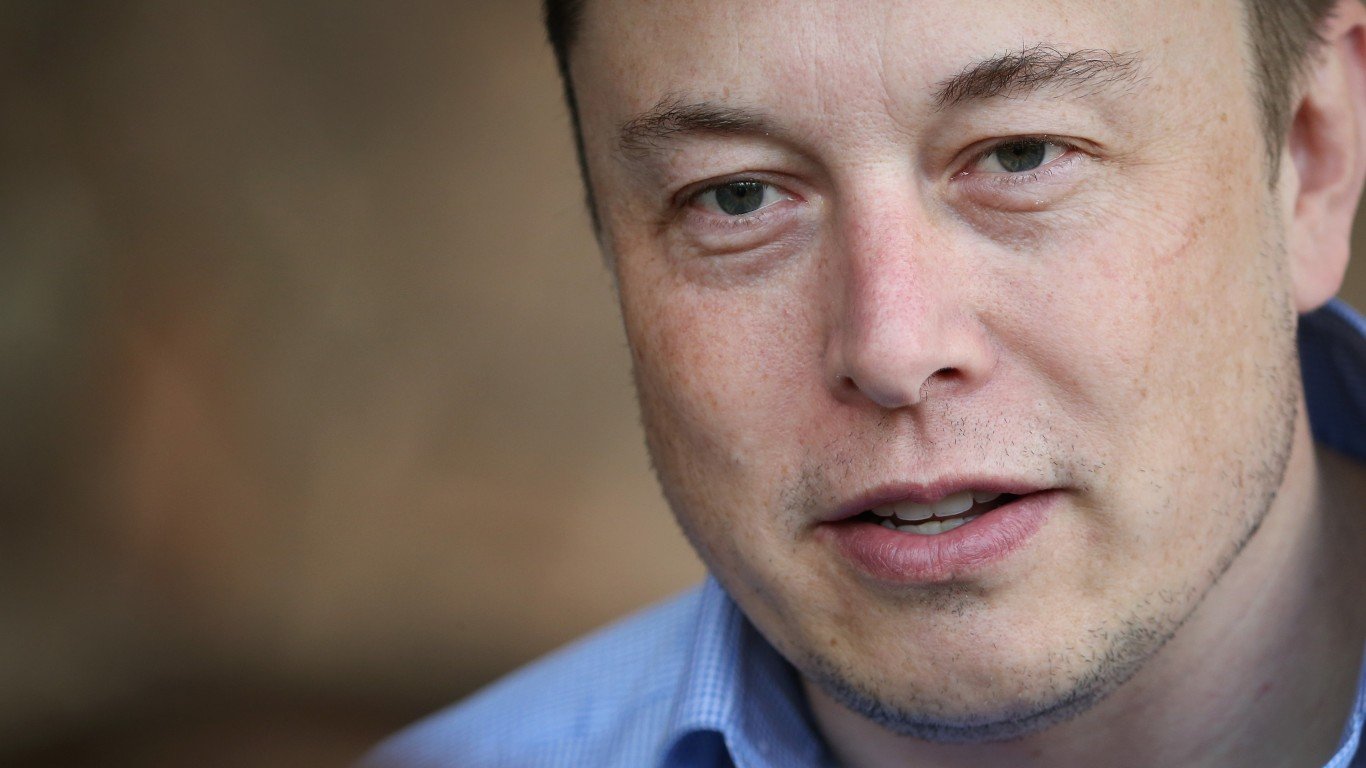
Elon Musk told investors “Optimus will be the biggest product ever,” then admitted “with Optimus, there is no supply chain.” Tesla’s robotaxis have driven more than 380,000 miles with no one monitoring. Automotive sales brought in $20.0 billion of the quarter’s $28.24 billion. FSD, with nearly 1.5 million paying customers, is Tesla’s closest thing to AI income.
Tesla trades at 344 times trailing earnings and 159 times forward earnings. Buyers are pricing in robots and robotaxis barely present in revenue. Rivian targets Level 4 self-driving and Uber robotaxis in 2028. The market values Rivian on deliveries, gross profit, and cash burn instead.
Watch R2 Gross Profit and Tesla’s $25 Billion Spending Spree
CFO Claire McDonough expects R2 to earn positive gross profit by year-end 2026. Watch whether second-half deliveries land between 42,400 and 47,400 once a second factory shift starts. Rivian won’t have first-half regulatory credit sales in the second half, so EBITDA losses will worsen.
Tesla expects 2026 capital spending of “more than $25 billion,” and says that figure “will grow for the next two or three years.” Free cash flow has already fallen to negative $1.09 billion. You should track whether new FSD approvals in Europe, including Croatia, turn into subscription revenue.
Why Rivian Looks Like the Cleaner Stock to Me
Rivian carries real risk. It expects an adjusted EBITDA loss of $2 billion to $1.8 billion this year, and it sold 86.25 million new shares in July, which dilutes existing holders. Still, I know what I’m studying: an automaker with a growing software business and a clear goal for this year. Tesla asks me to value Optimus and Cybercab at 344 times earnings, while a car business earning a 1.4% operating margin pays for them. If Tesla starts reporting meaningful AI revenue, I would reconsider. Until then, Rivian’s price matches what the business actually is, and I prefer that.
Contact [email protected] for any questions or corrections.
Alex Sirois is a financial writer with experience spanning both retail and institutional investing. He has written for InvestorPlace and held roles at BNY Mellon and Bernstein, giving him a perspective that bridges Main Street portfolios and Wall Street analysis.
Alex holds an MBA from George Washington University and has built his career across multiple industries, including e-commerce, education, and translation — a breadth of experience that informs how he breaks down complex financial topics for everyday investors. His writing is conversational, actionable, and grounded in long-term, buy-and-hold investing principles.
At 247 Wall St., Alex focuses on delivering analysis that is both accessible and useful, with a clear emphasis on helping readers make more informed decisions with their money.