Nike Will Never Recover
Nike's stock has collapsed, its China business is crumbling, and local rivals are tightening their grip on the world's biggest market. The real question is whether any turnaround plan can save a brand that may have already lost the battle…

This post may contain links from our sponsors and affiliates, and Flywheel Publishing may receive compensation for actions taken through them.
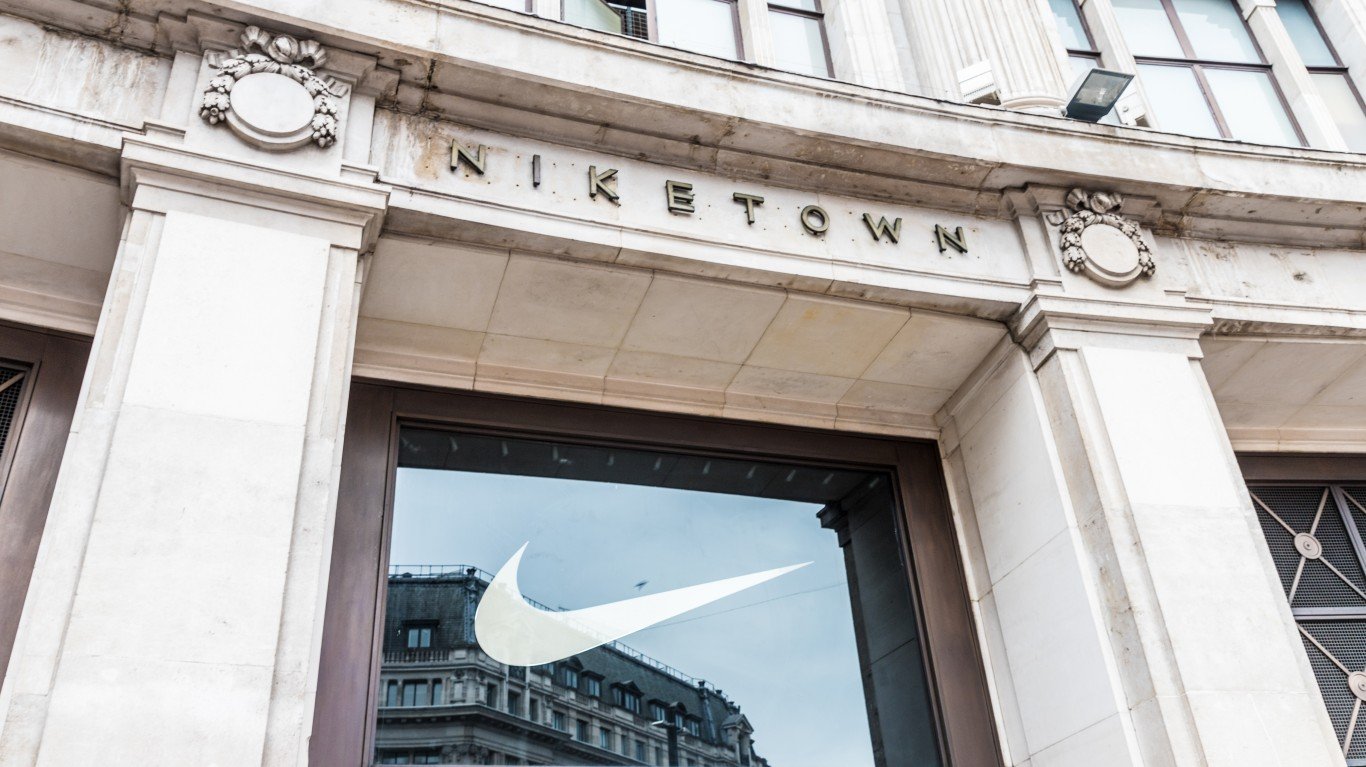
Starbucks (NASDAQ: SBUX | SBUX Price Prediction) dumped its China operations in a deal it announced in April. It sold a majority interest to Boyu Capital, a local private equity firm. It got $4 billion, which is not much given the size of the opportunity. Starbucks used to talk a lot about its prospects in China. Walmart (NYSE: WMT) and McDonald’s (NYSE: MCD) rarely call out their China numbers. US car companies have been battered by local auto manufacturers in China. What was once their most promising market isn’t anymore. Nike recently released its quarterly earnings. They were poor, and the news drove the stock down. Nike management said it would “downsize.” China was given as the reason. Nike (NYSE: NKE) said it will solve the problem. Local athletic wear companies are entrenched, and there are several of them.
Chief Executive Elliott Hill wrote to workers, “We’re taking deliberate actions to strengthen those businesses the right way for the long-term.” He did not mention that his two global rivals, Adidas and Puma, are also trying to improve their fortunes in China. So are other smaller rivals led by On and Hoka.
The real hurdles in China are large local companies: Anta Sports, Li-Ning, and Xtep. A tier below them also competes.
In the most recent quarter, revenue fell 4% to $11.2 billion. Net income dropped 2% to $712 million. “Greater China” revenue dropped 26% to $1.18 billion.
Nike said it would have a “restructuring” program that would save $2.5 billion through fiscal 2031. That means people will be fired.
Most companies don’t say when they have been defeated in a line of business or a region of the world. They always have a plan for a comeback. That is what gives investors hope that the stock in troubled public companies will rise again. This year, Nike’s stock is down 22% while the S&P 500 is 12% higher. Over the last five years, it is down 76%. The S&P is 75% higher.
The house that Michael Jordan built with Air Jordan shoes, which first went on sale in 1984, is disintegrating. Without China, this cannot be fixed. And China is not coming back.
Contact [email protected] for any questions or corrections.
Douglas A. McIntyre is the co-founder, chief executive officer and editor in chief of 24/7 Wall St. and 24/7 Tempo. He has held these jobs since 2006.
McIntyre has written thousands of articles for 24/7 Wall St. He is an expert on corporate finance, the automotive industry, media companies and international finance. He has edited articles on national demographics, sports, personal income and travel.
His work has been quoted or mentioned in The New York Times, The Wall Street Journal, Los Angeles Times, The Washington Post, NBC News, Time, The New Yorker, HuffPost USA Today, Business Insider, Yahoo, AOL, MarketWatch, The Atlantic, Bloomberg, New York Post, Chicago Tribune, Forbes, The Guardian and many other major publications. McIntyre has been a guest on CNBC, the BBC and television and radio stations across the country.
A magna cum laude graduate of Harvard College, McIntyre also was president of The Harvard Advocate. Founded in 1866, the Advocate is the oldest college publication in the United States.
TheStreet.com, Comps.com and Edgar Online are some of the public companies for which McIntyre served on the board of directors. He was a Vicinity Corporation board member when the company was sold to Microsoft in 2002. He served on the audit committees of some of these companies.
McIntyre has been the CEO of FutureSource, a provider of trading terminals and news to commodities and futures traders. He was president of Switchboard, the online phone directory company. He served as chairman and CEO of On2 Technologies, the video compression company that provided video compression software for Adobe’s Flash. Google bought On2 in 2009.