$100,000 in 5 Dividend Kings Will Generate Close to $4,000 Each Year Safely
When paychecks stop, the wrong income strategy forces you to sell shares at the worst possible moment. Five companies have raised their dividends through every recession and rate shock in modern memory, and together they turn a single portfolio into…

This post may contain links from our sponsors and affiliates, and Flywheel Publishing may receive compensation for actions taken through them.
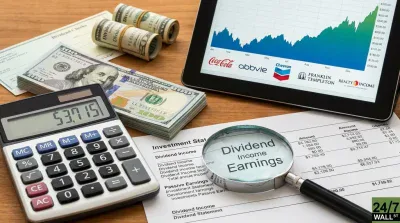
Retirement changes how income works on the day the paychecks stop. Social Security covers part of the monthly bill, and the rest has to come from savings, an annuity, or a portfolio that pays cash on a schedule. Selling shares to cover groceries works fine until a bear market forces those sales at bad prices. Dividends let a retiree collect income and keep the same number of shares.
That is why companies with decades of dividend increases show up in so many retirement income plans. These businesses kept raising their payouts through recessions, oil crashes, and rate cycles. Here is what investing $20,000 in each of these five long-tenured dividend growers would pay: a $100,000 total investment producing more than $3,700 in annual passive income, based on forward dividends and current share prices.
The profiles count down from the lowest forward yield to the highest. Every yield below uses the forward convention.
Coca-Cola
- Stock #5: Coca-Cola (NYSE:KO | KO Price Prediction)
- Yield: 2.45%
- Shares for $20,000: 231.5
- Annual Passive Income: ~$491
Coca-Cola is the world’s largest non-alcoholic beverage company. It sells the concentrates and syrups behind Coca-Cola, Sprite, Fanta, smartwater, BODYARMOR, fairlife, and Topo Chico, while bottling partners carry much of the capital load. That asset-light setup produced a 34.9% operating margin. Second-quarter 2026 revenue rose 6.7% year over year to $13.38 billion, global unit case volume grew 5%, and Coca-Cola Zero Sugar gained 16%.
The yield comes from a mature consumer staples business that hands most of its cash back to shareholders. The forward dividend of $2.12 per share is about 64% of trailing EPS of $3.33. Management also raised 2026 guidance to free cash flow of about $12.4 billion and comparable EPS growth of 9% to 10%. Coca-Cola is a Dividend King with 60+ straight years of increases, and the quarterly payout went from $0.51 in 2025 to $0.53 in 2026.


AbbVie
- Stock #4: AbbVie (NYSE:ABBV)
- Yield: 2.62%
- Shares for $20,000: 75.8
- Annual Passive Income: ~$525
AbbVie is a global drugmaker built around the immunology treatments Skyrizi and Rinvoq, with neuroscience, oncology, and aesthetics franchises behind them. Second-quarter revenue grew 10.2% to $16.99 billion, and adjusted EPS came in at $3.65. Skyrizi rose 24.4% to $5.51 billion, and Rinvoq rose 24.5% to $2.53 billion, more than covering a 36.1% Humira decline caused by biosimilars.
Big, cash-generating drug franchises pay for a generous dividend policy. The forward dividend of $6.92 is roughly 50% of the midpoint of 2026 adjusted EPS guidance of $13.87 to $14.07. The quarterly payment has grown from $0.40 in 2013 to $1.73. The next one is scheduled for November 16, 2026. The main risk is the debt behind the pending $10.9 billion Apogee Therapeutics deal. On the July call, the CFO said, “We remain committed to achieving a net leverage ratio of two times within two to three years following the deal close.”


Chevron
- Stock #3: Chevron (NYSE:CVX)
- Yield: 3.45%
- Shares for $20,000: 97.0
- Annual Passive Income: ~$691
Chevron is an integrated oil major. It produces oil and gas in the Permian Basin, the Gulf of America, and on former Hess assets, and it also refines fuel. The Hess deal raised production 20% year over year to 4.07 million barrels of oil equivalent per day (MMBOED), and second-quarter revenue rose 51% year over year to $67.2 billion.
Mature integrated oil companies put shareholder returns at the top of their capital plans, and that keeps the yield competitive even with shares up 39% year to date. Coverage is strong. Second-quarter operating cash flow reached $22.6 billion, and free cash flow hit $18.1 billion. The forward dividend of $7.12 is about 68% of trailing EPS of $10.40. Chevron raised the quarterly payout to $1.78 from $1.71, bought back $3.1 billion of stock in the quarter, and hit $3 billion in run-rate cost cuts six months ahead of schedule.


Franklin Templeton
- Stock #2: Franklin Templeton (NYSE:BEN)
- Yield: 4.00%
- Shares for $20,000: 606.4
- Annual Passive Income: ~$800
Franklin Resources changed its corporate name to Franklin Templeton on August 17, 2026, and the stock still trades as BEN. The global asset manager managed $1.79 trillion as of June 30, 2026, spread across equity, fixed income, multi-asset, and alternatives. It earns fees on those assets. The business needs little capital, so most of its cash can go to shareholders. Fees move with the markets, though, which helps explain a beta of 1.57.
Fiscal third-quarter adjusted EPS of $0.72 covers the $0.33 quarterly dividend, a payout of about 46%. The adjusted operating margin expanded to 28.0% from 23.7%, and long-term net inflows reached $18.4 billion. The company returned $521.5 million to shareholders in the quarter. On the earnings call, management said, “We’re always focused on making sure that we’re in a position where we can continue to increase our dividend. That’s always a high priority.”
Realty Income
- Stock #1: Realty Income (NYSE:O)
- Yield: 6.04%
- Shares for $20,000: 370.9
- Annual Passive Income: ~$1,208
Realty Income is a net-lease real estate investment trust (REIT) that owns single-tenant commercial properties, and its exposure to gaming, data centers, and industrial assets is growing. It pays monthly. The latest $0.2715 payment is due October 15, 2026, and the company raised its dividend for the 115th consecutive quarter.
As a REIT, Realty Income has to distribute 90% of its taxable income, and that rule sets its baseline yield. An 11.89% share price drop over the past month drove the yield into ultra-high-yield territory. The right test for a REIT is adjusted funds from operations (AFFO) coverage. AFFO per share was $1.09 in the second quarter, up 3.8%, and 2026 guidance was raised to $4.44 to $4.45. That puts the forward payout near 73% of AFFO. Occupancy stands at 98.8%, Fitch rates the company A, and management raised 2026 investment volume guidance to $10 billion after announcing a $6 billion hyperscale data center joint venture.
How the $100,000 Portfolio Adds Up
| Name | Yield | Annual Dividend Income |
|---|---|---|
| Coca-Cola | 2.45% | $491 |
| AbbVie | 2.62% | $525 |
| Chevron | 3.45% | $691 |
| Franklin Templeton | 4.00% | $800 |
| Realty Income | 6.04% | $1,208 |
| Total | 3.72% | $3,715 |
Together, the five positions generate $3,715 in annual passive income on a $100,000 investment, a blended yield of 3.72%. Realty Income contributes $1,208, Franklin Templeton adds $800, Chevron supplies $691, AbbVie adds $525, and Coca-Cola rounds out the group with $491.
Timing matters as much as the total for anyone budgeting around these payments. Realty Income pays every month and the other four pay quarterly, so checks arrive regularly throughout the year. Because five different industries fund the income, a weak year in oil, drug pricing, or asset management would hit only part of it.
Contact [email protected] for any questions or corrections.
Lee Jackson has covered Wall Street analysts' equity and debt research and equity strategy daily for 24/7 Wall St. since 2012. His broad, diverse career, including a stint as creative services director at an NBC affiliate in Austin, Texas, gives him unique insight into the financial industry.
Lee Jackson's journey in the financial industry spans more than 30 years, including nearly two decades as an institutional equity salesperson at Bear Stearns, Lehman Brothers, and Morgan Stanley. His career spanned pivotal sell-side Wall Street events, from the dot-com rise and bubble to the Long-Term Capital Management debacle, 9/11, and the Great Recession of 2008. This reflects his resilience and adaptability amid market volatility.
Lee Jackson’s practical financial industry experience, gained through a career at some of the biggest banks and brokerage firms, is complemented by a lifetime of writing across various platforms. This unique combination allows him to shed light on the intricacies of Wall Street in a way only someone with deep insider experience and knowledge can. Moreover, his extensive network across Wall Street continues to provide direct access for him and 24/7 Wall St., a privilege few firms enjoy.
Since 2012, Jackson’s work for 24/7 Wall St. has been featured in Barron’s, Yahoo Finance, MarketWatch, Business Insider, TradingView, Real Money, The Street, Seeking Alpha, Benzinga, and other media outlets. He attended the prestigious Cranbrook Schools in Bloomfield Hills, Michigan, and has a degree in broadcasting from the Specs Howard School of Media Arts.