4 Dividend REITs Collecting Rent From Some of America’s Strangest Properties
Some landlords collect rent on properties their tenants can never relocate, from casino floors on the Las Vegas Strip to pistachio orchards in California, and the lease structures behind those deals reveal just how different specialty REITs can be from…


A Las Vegas Strip casino, a stand of Southern pine and a California pistachio orchard have one thing in common: the tenant can’t move any of them. Specialty REITs own that kind of property, and their leases show it. VICI Properties (NYSE:VICI) reports 100% occupancy and a 39.6-year weighted average lease term, which is about as long as lease commitments get in public real estate. The four companies below are equity REITs that own physical property, which keeps them clear of the interest rate and credit-spread risk that comes with mortgage lending. Each one is judged here on FFO or AFFO coverage, because GAAP earnings understate what a landlord actually has available to pay out.
VICI Properties Yields 8.1% Backed by Strip Icons and Decades-Long Leases
What It Owns
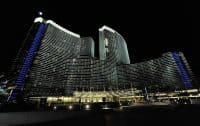
VICI owns the real estate under Caesars Palace Las Vegas, MGM Grand, the Venetian Resort Las Vegas and Mandalay Bay, along with regional casinos and entertainment assets such as Chelsea Piers, Canyon Ranch, Great Wolf Resorts and Kalahari Resorts. Its leases are triple-net. In plain terms, the casino operator pays the rent and also covers property taxes, coverage and maintenance, so VICI takes in a fairly clean check. Most of those leases include 2.0% annual rent escalators and CPI linkage. After the second quarter, VICI had 16 tenants. The newest include a $1.16 billion sale-leaseback of a Las Vegas locals casino portfolio and a $75 million Club Med build-to-suit in St. Croix.
Demand Backdrop
On the second-quarter call, management said Strip gaming revenue was running ahead of the prior year to date. It also noted that VICI owns nearly 6 million square feet of convention space on the Strip, which helps offset swings in leisure travel. President John Payne called regional casinos “the people’s country club” and pointed to a strong rebound in those markets over the prior six months.
Yield and AFFO Coverage
VICI raised its quarterly dividend to $0.46 from $0.45, payable October 8, 2026. The annualized forward rate is $1.84, and at $22.68 a share that works out to an ultra-high yield of about 8.1%. Second-quarter AFFO came in at $0.62 per diluted share, up 4.6% from a year earlier, so the new quarterly payout uses about 74% of AFFO. Management’s raised 2026 guidance of $2.45 to $2.47 per share puts the forward dividend at roughly 75% of the low end. GAAP EPS of $0.48 missed expectations because of a $271.06 million non-cash CECL allowance charge. That gap is a good example of why REIT dividends should be measured against AFFO.
Bull Case
Leverage is about 4.9 times net debt to adjusted EBITDA, below the company’s 5 to 5.5 times target. The weighted average interest rate is 4.45% and liquidity is about $2.5 billion. VICI also holds rights of first refusal on Flamingo, Horseshoe, Paris, Planet Hollywood and the LINQ, which gives it a visible pipeline for future acquisitions.
Risk to Watch
Tenant concentration is the biggest risk. Caesars Entertainment (NASDAQ:CZR | CZR Price Prediction) accounts for about 38% of rent, and the tenant behind MGM Grand and Mandalay Bay accounts for about 32%. Together that is roughly 70% from two operators. Management said Caesars is in a significant M&A transaction, and on the call it added, “We obviously collect every dollar of rent in the meantime.” The stock is down 24.74% over the past year, which shows how much of that uncertainty the market has already priced in.
Gaming & Leisure Properties Raised Its Payout and Still Covers It
What It Owns
Gaming & Leisure Properties (NASDAQ:GLPI) owns regional casino real estate under long-term triple-net master leases. A master lease puts several properties under one contract with one tenant, so the operator can’t walk away from a weak casino while keeping the strong ones. Management describes this capital as “35-year funding, which is more akin to equity than it is to debt.”
Demand Backdrop
On the second-quarter call, CEO Peter Carlino said, “The regional gaming market remains strong,” and added that “people don’t give up their entertainment.” Second-quarter revenue rose 9.0% to $430.52 million, and adjusted EBITDA rose 12.2% to $405.5 million.
Yield and AFFO Coverage
GLPI raised its quarterly dividend 5.1% to $0.82 from $0.78, for an annualized forward rate of $3.28. At $37.94, the stock offers an ultra-high yield of about 8.6%. Second-quarter AFFO grew 10.1% to $1.03 per diluted share, so the quarterly dividend uses about 80% of AFFO. Measured against the low end of the raised 2026 AFFO guidance of $4.10 to $4.12, the forward payout is 80%. That leaves less buffer than VICI, but coverage is still solid.
Bull Case
GLPI has a $2.022 billion development pipeline at a average 8.77% cap rate, and leverage of 4.8x is below its 5.0x to 5.5x target range. Carlino said the company “can finance everything that we’ve got announced with what we have available today.” The latest increase brought three-year compounded dividend growth to 4.4%.
Risk to Watch
Rent coverage across the master leases ran from 1.58x to 2.46x. Rent coverage measures how many times the tenant’s property-level cash flow covers its rent. The low end is the Caesars Master Lease at 1.59x, which is below the 1.8x level tied to rent increases. GLPI also offers construction risk on a $940 million Chicago commitment, of which $475.7 million has been funded, and a Virginia development of up to $467 million. The shares are down 10.43% year to date.
Weyerhaeuser’s Timberland Yield Rides the Housing Cycle
What It Owns
Weyerhaeuser (NYSE:WY) is one of the largest private timberland owners in North America. It reports through three segments: Timberlands, Wood Products and Strategic Land Solutions. The last one includes a newer Climate Solutions business. This thesis runs on commodity markets. Weyerhaeuser’s income comes from harvesting trees and selling logs and lumber, so commodity prices drive the results.
Demand Backdrop
First-quarter revenue was $1.727 billion, down 2.0% from a year earlier. Adjusted EPS of $0.11 beat the $0.05 consensus estimate. Adjusted EBITDA was $308 million, helped by a $94 million conservation easement. Climate Solutions net sales reached $111 million, compared with $13 million a year earlier.
Yield and Payout Coverage
The base dividend is $0.21 per quarter, or $0.84 annualized. At $18.61, that’s a yield of about 4.5%. FY2025 GAAP EPS was $0.20, which looks thin next to the dividend. GAAP earnings for a timber REIT are reduced by depletion, a non-cash charge for timber harvested, so cash flow is the better coverage measure.
Weyerhaeuser generated $562 million of operating cash flow in FY2025. The company doesn’t publish an AFFO figure, so readers can’t check coverage on that basis the way they can for VICI and GLPI. Its history shows the payout moving with the cycle: extra distributions of $1.45 in 2022 and $0.90 in 2023, and a base-rate cut to $0.17 in late 2020.
Bull Case
A recovery in housing and the recent rise in lumber prices would help both Timberlands and Wood Products. Management raised its 2030 Climate Solutions target to $250 million of adjusted EBITDA. RBC Capital rates the stock Buy with a $30 price target.
Risk to Watch
Wood Products swung to negative $20 million of adjusted EBITDA in Q4 2025, which shows how fast weak housing starts and volatile lumber and OSB prices can hit results. Management also guided Strategic Land Solutions adjusted EBITDA about $70 million lower in Q2 without another easement sale. The stock fell 19.16% in the past month and is down 36.8% over five years.
Gladstone Land Pays Monthly While Waiting on Fourth-Quarter Crop Rent
What It Owns
Gladstone Land (NASDAQ:LAND) owns 98,688 acres of farmland, down from 103,001 a year earlier. Its holdings lean heavily toward California pistachios and almonds. Occupancy was 95.4%, down from 95.9%. Like Weyerhaeuser, its income depends on the crop, and crop prices and harvest yields move it in ways a casino lease never would.
Demand Backdrop
A pistachio processor raised its initial 2026 base price 67% to $2.50 per pound, and almond prices are up 15% to 20% from a year earlier. Those prices matter because the company’s shifted farms now use participation-rent leases, where rent rises and falls with the harvest. That means a substantial majority of 2026 revenue and earnings are concentrated in Q4.
Yield and AFFO Coverage
The monthly distribution of $0.0467 has held steady for 12 straight payments. That’s $0.5604 a year, a yield of about 5.8% at $9.70. That falls short of the 6% ultra-high-yield threshold, so it counts as high-yield. Interim AFFO coverage is weak: Q1 AFFO was $0.08 per share against $0.1401 in quarterly distributions, a payout of about 175% of AFFO for that quarter. Whether the full year is covered depends on fourth-quarter crop rent coming as expected. The balance sheet gives some breathing room, with nearly 96% of debt at fixed rates and over $120 million of immediately available capital.
Bull Case
Seven lease amendments signed after the quarter are expected to add about $297,000 of annual NOI, and higher nut prices feed straight into participation rent. The stock is up 10.82% year to date.
Risk to Watch
The 2026 pistachio crop is expected to be an off year, and a March heat event hurt pollination in California. On top of that, Gladstone Land took a $4.19 million impairment on four Arizona farms, has some tenants on non-accrual, and expects recent lease restructurings to reduce annual NOI by $931,000 in aggregate. The shares remain 48.04% below their level of five years ago.
Specialty Landlords Ranked by Dividend Safety
On AFFO coverage, VICI is the safest payout in the group at about 74%, with GLPI close behind at about 80%. Both depend on a small number of casino operators, and that concentration is the main risk to watch. Weyerhaeuser and Gladstone Land pay less secure dividends because lumber prices and crop rent can swing their cash flow from one year to the next. Gladstone Land’s fourth-quarter crop rent will ultimately show whether its monthly payout is covered for 2026.
Contact [email protected] for any questions or corrections.
Chris Lange is a financial and geopolitical writer with more than a decade of experience covering a myriad of topics. He has published thousands of articles for 24/7 Wall St., with past coverage focused heavily on stocks, IPOs, healthcare, defense, global affairs, and technology.
His work has been quoted, or referenced by a number of outlets including Business Insider, USA Today, Yahoo Finance, MSN, The Motley Fool, and many other publications. A graduate of Southwestern University, he studied business with a focus on investments and has previous experience in banking and startups.
When not reading or writing the news, he is following his passion for Lacrosse, playing chess, or building solar projects with his dad.