Why VICI’s 1.3x Dividend Coverage Ratio Looks Safer Than Its Falling Stock Price Suggests
VICI Properties stock has shed nearly a quarter of its value in a year, yet the company just raised its dividend again. The casino landlord's lease structure tells a story the falling share price ignores, but one tenant relationship could…

VICI Properties (NYSE:VICI) shares have fallen 23.9% over the past year to $23.16, and the stock underperformed the market again Monday. Yet on September 3, the casino landlord raised its quarterly dividend to $0.46 from $0.45. The market is pricing gaming cyclicality. The lease book tells a steadier story.
Who Actually Pays VICI’s Rent
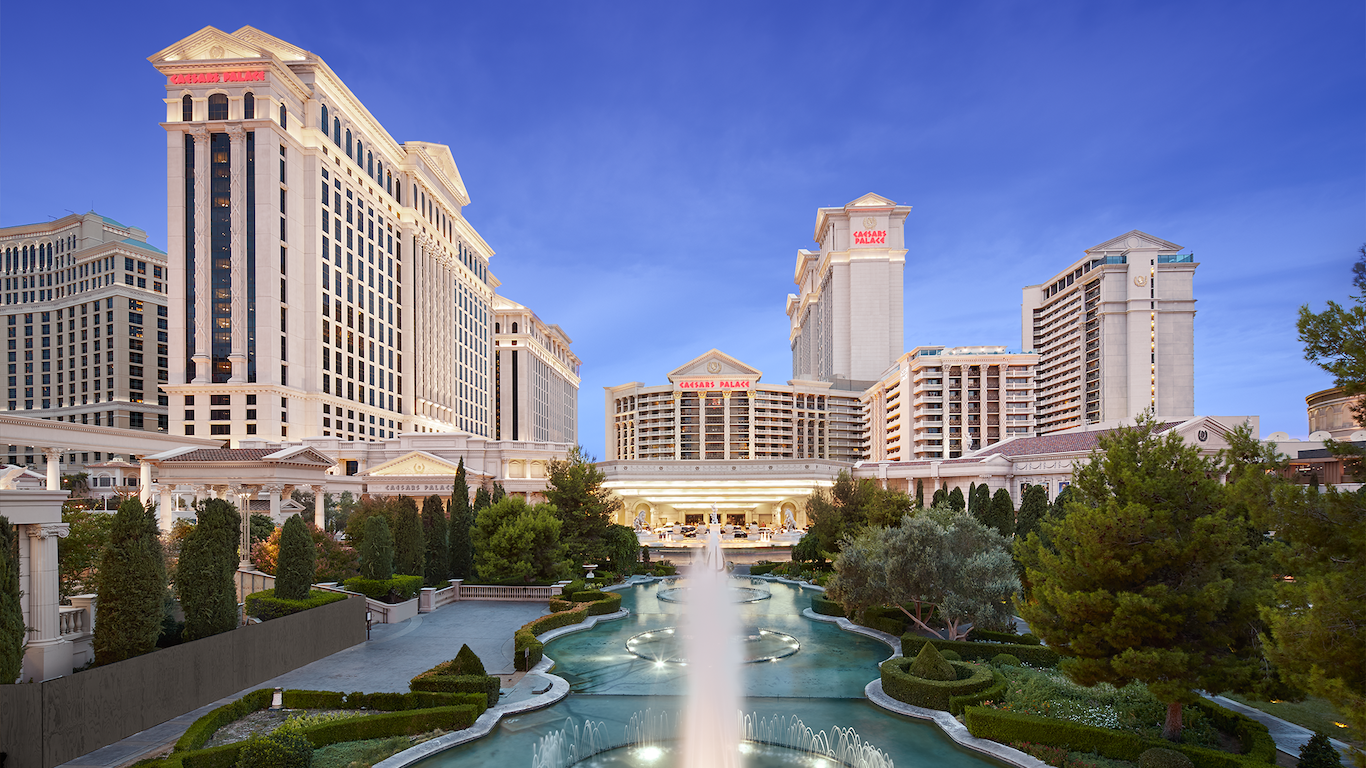
VICI owns 93+ experiential properties, including Caesars Palace, at 100% occupancy. Two tenants dominate: Caesars (NASDAQ:CZR | CZR Price Prediction) at roughly 38% of rent and MGM Resorts (NYSE:MGM) at 32%. The MGM Master Lease alone produced $185.8 million of second-quarter revenue.
Why Triple-Net Leases Blunt the Casino Cycle
In a triple-net lease, the tenant covers taxes, insurance and maintenance, so VICI simply collects a check. The weighted average lease term is 39.6 years, with 2.0% annual escalators, many tied to CPI. Management said CPI remained above the contractual floor, so inflation is raising rent.
Gaming and Leisure Properties (NASDAQ:GLPI), the other pure-play gaming REIT, runs the same model. Realty Income (NYSE:O), the monthly-paying net-lease benchmark, spreads risk across a far larger roster. VICI has just 16 tenants, which management frames as an advantage:
“Deeper and more frequent conversations.”
AFFO Coverage Leaves a Wide Cushion
Adjusted funds from operations (AFFO) measures the cash a REIT generates, and it is the right metric here. Second-quarter AFFO was $0.62 per share against a $0.45 dividend. Full-year guidance of $2.45 to $2.47 per share compares with an annualized forward dividend of $1.84.

GAAP EPS of $0.48 missed the $0.71 estimate because of a $271.06 million non-cash CECL allowance charge, an accounting reserve that moves no cash. Leverage is about 4.9 times net debt to adjusted EBITDA, below the 5 to 5.5 times target, on $17.2 billion of debt carrying a 4.45% weighted rate.
The payout record backs this up. The quarterly rate has risen in every annual period since the IPO, from $0.2875 in late 2018 to $0.46 today. CEO Edward Pitoniak explained the engine last year:
“In the last twelve months, we have grown our aggregate AFFO by 7.4% while only growing our share count by 2.1%, highlighting the efficiency of our business model and the merit of our disciplined capital allocation strategy.”
Caesars Is the Pressure Point Investors Cannot Ignore
Caesars is working through a major ownership change. Management addressed the regional lease directly during the July 30 earnings call:
“In the case of Caesars, they’re obviously undergoing a very significant M&A transaction with many, many moving pieces and many stakeholders, including regulatory.”
Executives stressed that “we obviously collect every dollar of rent in the meantime” but noted a “fairly prolonged timescale” and gave no timetable.
Verdict: Defensive Income With One Tripwire
VICI’s dividend behaves defensively. Decades-long leases, inflation-linked escalators, AFFO well above the payout and leverage under target outweigh the casino label. The 13.26% year-to-date slide reflects sentiment, while the cash flows keep climbing. A high yield coupled with a falling share price is usually where trouble hides, which is why we listed the seven warning signs of a dividend about to be cut in a free report here.
The one development that would change this read: any rent cut or restructuring of the Caesars regional master lease once the new ownership settles. That lease generated $140.5 million last quarter. This warrants close attention.
Contact [email protected] for any questions or corrections.
Chris Lange is a financial and geopolitical writer with more than a decade of experience covering a myriad of topics. He has published thousands of articles for 24/7 Wall St., with past coverage focused heavily on stocks, IPOs, healthcare, defense, global affairs, and technology.
His work has been quoted, or referenced by a number of outlets including Business Insider, USA Today, Yahoo Finance, MSN, The Motley Fool, and many other publications. A graduate of Southwestern University, he studied business with a focus on investments and has previous experience in banking and startups.
When not reading or writing the news, he is following his passion for Lacrosse, playing chess, or building solar projects with his dad.