Billionaire Hedge Fund Founder Ray Dalio Warns China And Japan May Pull Back From U.S. Treasuries, But One Economist Says Hedge Funds Are A Bigger Threat
Ray Dalio sees China and Japan retreating from U.S. Treasuries, but a Federal Reserve economist points to a different group of creditors as the greater danger to the market.

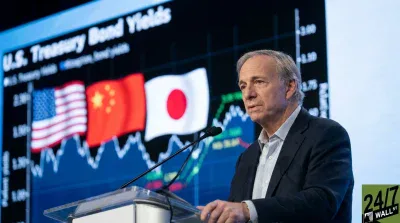
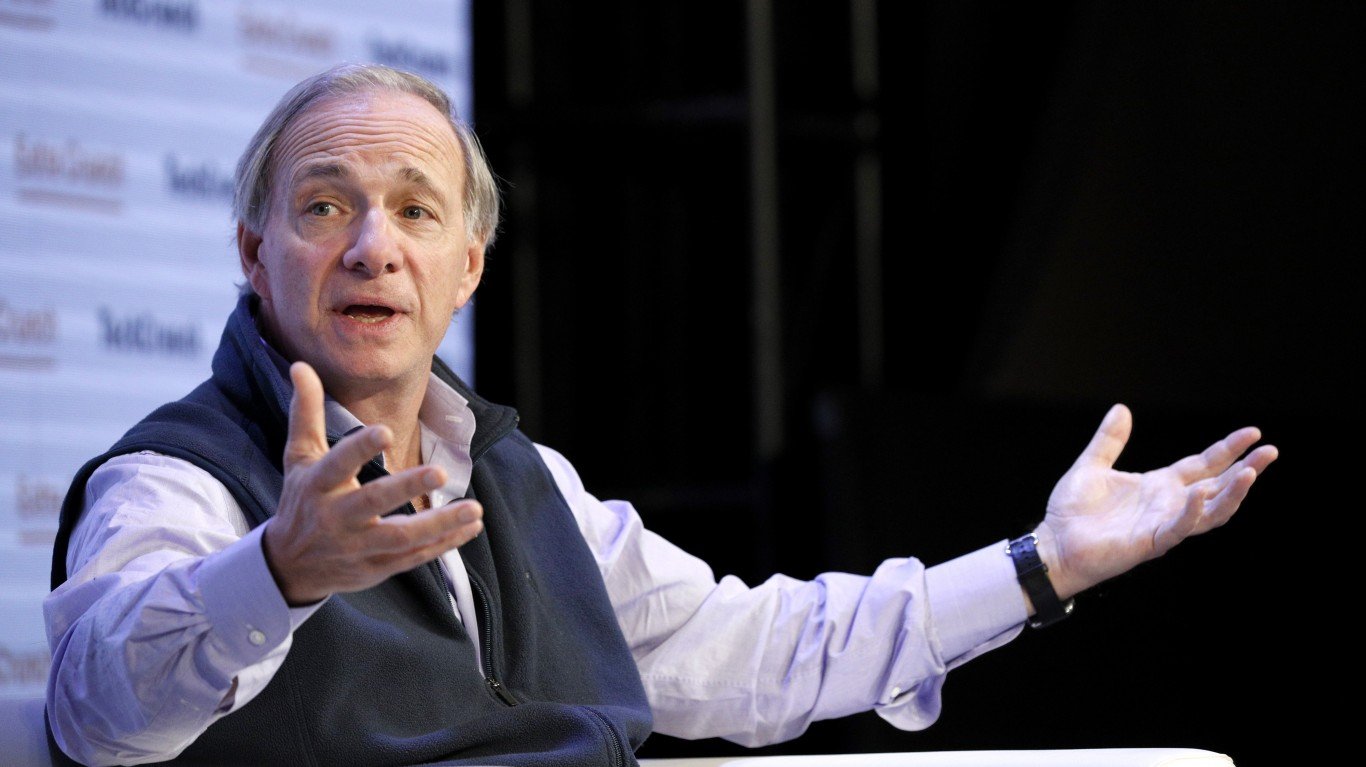
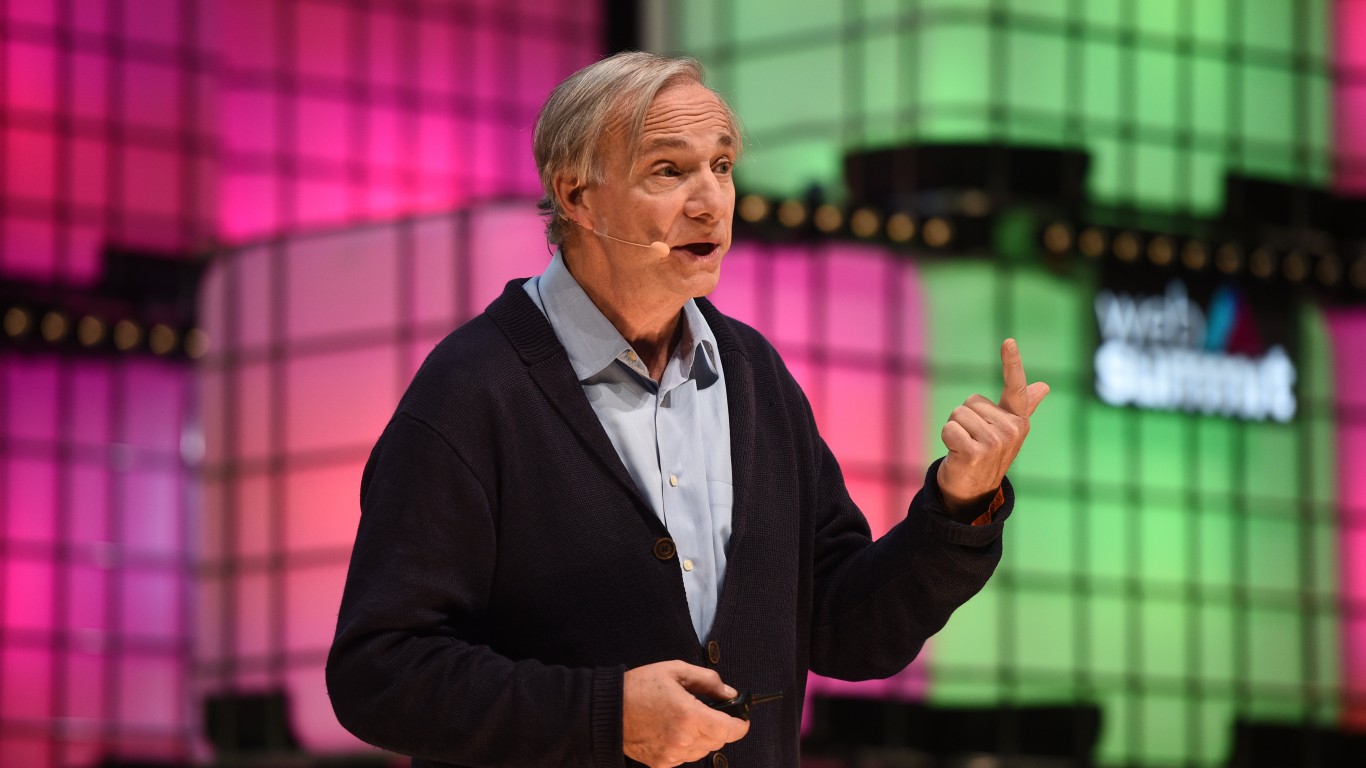
The U.S. Treasury market is vulnerable. Ray Dalio said it faces a pullback in demand from China and Japan, two of the country’s largest foreign creditors. He appeared on Bloomberg Television in Singapore on Tuesday, he said the United States relies on foreign capital for about a third of its debt.
On China, he was direct. “The Chinese do not want to continue to accumulate,” he said, adding that there are “geopolitical issues as well as economic issues.” On Japan, Dalio said the country has lent “a lot of money,” and Bloomberg reported his view that Japan now wants that money back.
He also repeated his warning that the United States faces a potential debt crisis within three years, and said some borrowers are already feeling the pressure. Global bonds have lost 3% this year, according to Bloomberg. We have a free guide for retirees. For those watching rate risk spread into their withdrawal math, it helps defend the first five years of retirement income here: The First Five Years.
Who Is Issuing This Warning
Dalio founded Bridgewater Associates, the world’s largest hedge fund. Markets Group reported in August 2025 that he sold his remaining Bridgewater shares and stepped away from the board, and Investopedia that same month described the sale as the Last Stake in the firm. Crain Currency reported in September 2025 that he now runs his own money through a family office as its CIO. The counterargument below concerns hedge funds, and the man issuing this warning founded the largest one and no longer owns any part of it.
What July’s Holdings Data Reveals
Japan’s holdings fell $12.8 billion in July to $1.104 trillion, according to Treasury international capital data. The decline is tied to currency intervention that month, and it remains unclear whether it reflects a decision to pull back from Treasuries.
China’s holdings fell $15.4 billion to $618 billion, reportedly the lowest since August 2008. Bloomberg notes that Belgium’s $470.7 billion may include Chinese custodial accounts, so China’s true position may be understated.
Foreign holders owned $9.2 trillion of Treasuries at the end of 2025, or 31% of publicly held debt. Per SSGA and Axios, foreign official holders own about 12%, compared with about 40% after the financial crisis.
A Separate Case Centered on Hedge Funds
An opinion piece published in early September argued that hedge funds pose a greater threat to the Treasury market than China, drawing on Philip J. Monin, described as a Federal Reserve economist. It ran about a month before Dalio’s interview, so the two arguments are independent.
Monin warned that large scale, high concentration and elevated leverage create potential for “systemic stress” if multiple strategies face simultaneous pressure. Central banks were conservative, stable holders, while leveraged funds trading for profit produce a “less-stable equilibrium.”
Federal Reserve research put gross hedge fund Treasury exposure at $4.0 trillion as of September 2025, made up of $2.4 trillion in long positions offset by $1.6 trillion in shorts. The long figure is gross, and it does not represent ownership. Repo borrowing stood at $3.0 trillion, hedge funds made up for 8.5% of outstanding Treasuries, and the top 50 funds controlled about 90% of that activity.
The largest strategy, the cash futures basis trade, amounted about $830 billion. The Fed warned high leverage can lead to “spillovers” if a fund suddenly loses access to funding. Agecroft Partners says these trades typically run at 20x leverage or more.
Where the Comparison Gets Approximate
Hedge funds held about $2 trillion in cash Treasuries at the end of 2025, a record 7% share. China and Japan combined held $1.72 trillion using July 2026 data.
The comparison is limited because the hedge fund and country figures come from different dates, and estimates disagree. The piece mentions $2.6 trillion, about 8% of the market, which does not match from Federal Reserve data. Readers should treat this as a rough comparison.
Morgan Stanley (NYSE:MS | MS Price Prediction) also estimates the basis trade shrank about 20% this year to roughly $1.2 trillion, which works against a rising-risk reading.
Auction Demand Sends Mixed Signals
In the September 24 seven-year auction, indirect bidders took 57.2%, below the recent average of 64.6%. The $22 billion thirty-year sale on September 10 saw foreign and international investors take 79.5%, the second-highest share ever for that maturity. The two results offer mixed evidence on whether demand is weakening.
What to Watch This Week
The Treasury is selling $119 billion of three-, ten- and thirty-year debt this week. The 10-year yield stood at 5.31% on Monday, October 5, the most recent published session. The daily curve publishes after the close, so Tuesday’s reading is not yet available.
Contact [email protected] for any questions or corrections.
AJ spent 10 years writing about financial markets at The Motley Fool. His coverage centers on technology stocks and the broader macroeconomic trends, from interest rates to geopolitics, that shape where markets are headed next. AJ is drawn to the stories where big-picture economics and individual companies collide.