FuelCell Tumbles 12% as Its Finance Chief of 15 Years Steps Down; Bloom Energy Dips, Plug Power Slides 3%
FuelCell Energy's finance chief of 15 years is walking out the door just as the company stakes its future on a backlog conversion story that same team was supposed to deliver, and the market is already passing judgment.


The finance handoff at FuelCell Energy (NASDAQ:FCEL) drew a rougher verdict. It is drawing a far rougher market verdict than the rest of the fuel cell group, even with a reaffirmed profit target attached. FuelCell stock is down 12% to $18.13 in morning trading as the company names a new chief financial officer.
Checking in on the peers, Bloom Energy (NYSE:BE) stock is slipping 2% to $289.25, a far softer decline for the sector’s largest name. Plug Power (NASDAQ:PLUG) shares are falling 3% to $1.81, adding to a rough stretch for hydrogen names.
At the same time, the Global X Hydrogen ETF (NASDAQ:HYDR) is down 3% to $43.80, while the SPDR S&P 500 ETF Trust (NYSEARCA:SPY) is down just 0.6% to $774.50. That spread shows hydrogen and fuel cell stocks falling behind the wider indexes, with FuelCell stock absorbing the hardest blow.
Finance Chief Exit Sparks FuelCell Selloff
Under a planned transition announced by FuelCell, Matthew Latino succeeds Michael Bishop as Executive Vice President, Chief Financial Officer and Treasurer. According to FuelCell Energy, Bishop held the CFO post for 15 years and stays on as a senior advisor through the company’s 2027 annual meeting of stockholders to support continuity. Latino joins FuelCell from a large industrial technology company, where he ran division finance and earlier led the investor relations function.
FuelCell Energy paired the news with a reaffirmed target of positive adjusted earnings before interest, taxes, depreciation and amortization (adjusted EBITDA) in the fourth quarter of fiscal 2027. That goal depends on FuelCell raising its annualized production rate as planned, converting its awarded capacity backlog into committed backlog, meeting its customer delivery schedules and continuing to cut its costs. President and Chief Executive Officer Jason Few stated that Bishop led FuelCell’s finance organization through periods that tested the business and the industry while keeping a clear focus on financial discipline.
Why the Timing Stings for FuelCell
FuelCell’s bear case centers on timing. A finance chief leaving FuelCell after 15 years lands just as the company asks investors to believe a backlog conversion and cost reduction story that the finance organization itself is executing. Much of FuelCell’s $3.6 billion in committed and awarded capacity backlog sits in the awarded category, which remains uncontracted.
The bull case starts with how FuelCell structured the handoff. Management called it a planned transition, kept Bishop as a senior advisor and reaffirmed FuelCell’s adjusted EBITDA target in the same announcement, and holding that profit goal steady alongside a personnel change signals continuity in the company’s operating plan.
Despite the drop, FuelCell stock is up 149% year to date, so the selloff cuts gains from a powerful 2026 run. Unrestricted cash at FuelCell totals $658.1 million, giving Latino a funded starting point as the company expands its Torrington, Connecticut manufacturing plant.
Bloom and Plug Slip on a Shared Theme
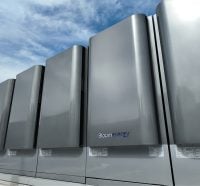
Bloom Energy sells solid oxide fuel cell platforms into the same on-site power market as FuelCell at far greater scale. That scale shows up in valuation, where Bloom Energy stock carries a market cap of $85.08 billion versus $1.46 billion for FuelCell stock. Plug Power is built around hydrogen fuel cells. It also has the production and fueling infrastructure behind them, so the three companies carry one AI power theme (we covered seven suppliers behind that data-center expansion, from power to cooling, in a free report) through different products and very different balance sheets.
Shared exposure through the Global X Hydrogen ETF ties the group together, since the fund held Bloom Energy at 15.5% of net assets, Plug Power at 10.8% and FuelCell at 7.2% as of May 31. Part of the move in FuelCell stock therefore reflects sector weakness, yet FuelCell stock is down far more than shares of Bloom Energy, Plug Power or the hydrogen fund. Leadership risk is being priced into that gap.
What to Watch Next
Latino’s first test is carrying FuelCell’s backlog conversion plan forward without disruption. Look for progress toward FuelCell’s planned production increase and fresh conversions of its awarded backlog into committed contracts.
Traders should watch the price action of Bloom Energy and Plug Power shares. A sector rebound could isolate how much of the drop in FuelCell stock ties to the finance handoff. A recovery confined to those two names would point at the leadership change at FuelCell.
Given FuelCell’s ongoing losses and a finance leadership change arriving mid-ramp, investors should calibrate their holdings carefully. Investments should reflect dependence on reaching the adjusted EBITDA target FuelCell Energy set for fiscal 2027.
Contact [email protected] for any questions or corrections.
David Moadel is financial writer specializing in stocks, ETFs, options, precious metals, and Bitcoin. David has written well over 1,000 articles for leading online publications, helping investors understand markets, income strategies, and risk.His work has appeared in The Motley Fool, InvestorPlace, U.S. News & World Report, TipRanks, ValueWalk, Benzinga, Market Realist, TalkMarkets, Finmasters, 24/7 Wall St., and others.With a master’s degree in education, David has taught at the elementary, high school, and college levels. That teaching background shapes his writing style: clear, educational, and practical. David has also built a loyal social-media audience by providing trustworthy financial content on YouTube, X/Twitter, and StockTwits.