Rivian Turnaround Falls Apart
Rivian beat delivery expectations and still watched its stock crater, leaving investors to wonder whether the EV startup's ambitious recovery plan was already unraveling before it even got started.

This post may contain links from our sponsors and affiliates, and Flywheel Publishing may receive compensation for actions taken through them.

Rivian (NASDAQ: RIVN | RIVN Price Prediction) posted what should have been good news. It produced 19,751 vehicles and delivered 19,248 vehicles in the third quarter. This was above most expectations. The company’s stock dropped after the announcement. It is down 26% this year. The disappointment is that it did not raise its full-year delivery guidance, which is between 65,000 and 70,000. The new figures only looked good for a few moments.
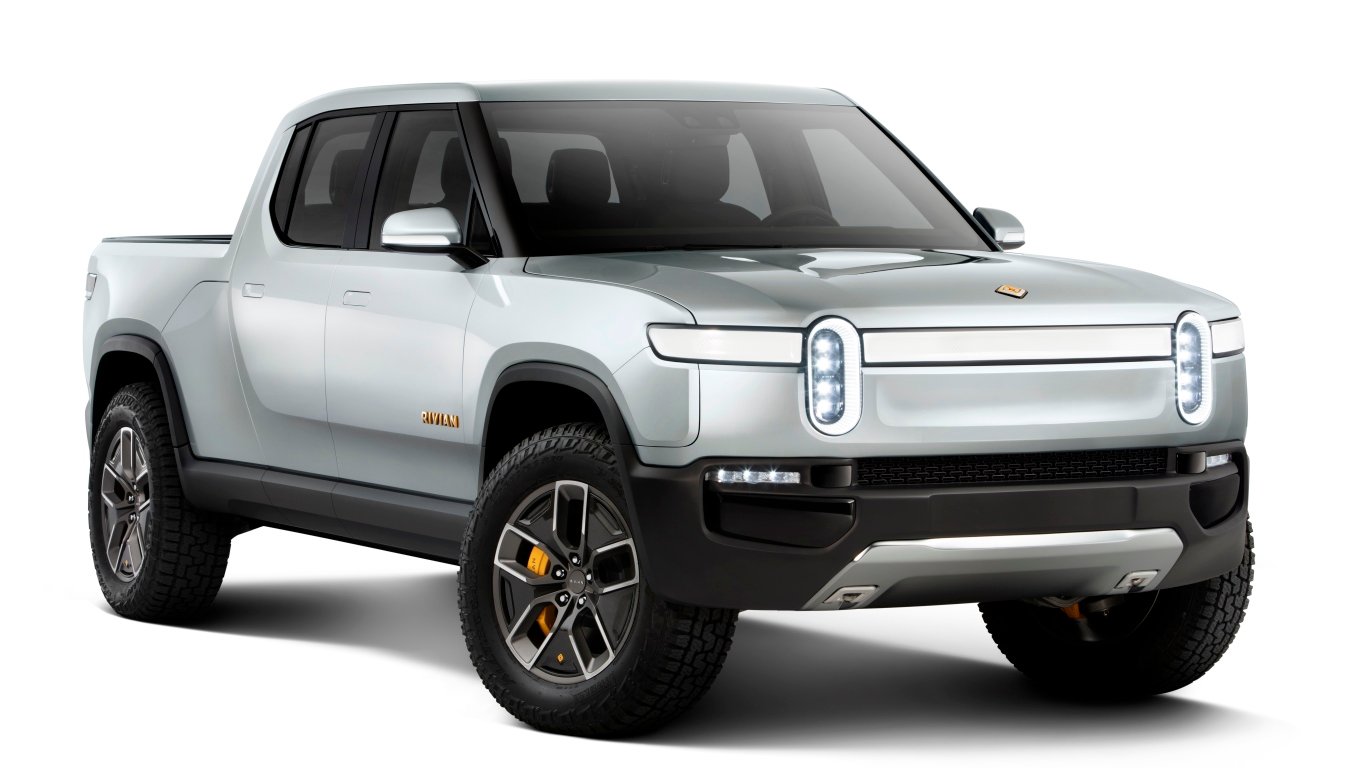
Rivian’s recovery is supposed to be driven by its new R2 SUV. The base price will be just below $45,000. However, people cannot buy this model yet. Anyone who reads the fine print, which is hard to find on the Rivian website, sees that this low-price model will not be available for over a year. Today, the “R2 Launch Edition” costs $57,990. The sequence suggests management needs to get something out the door.
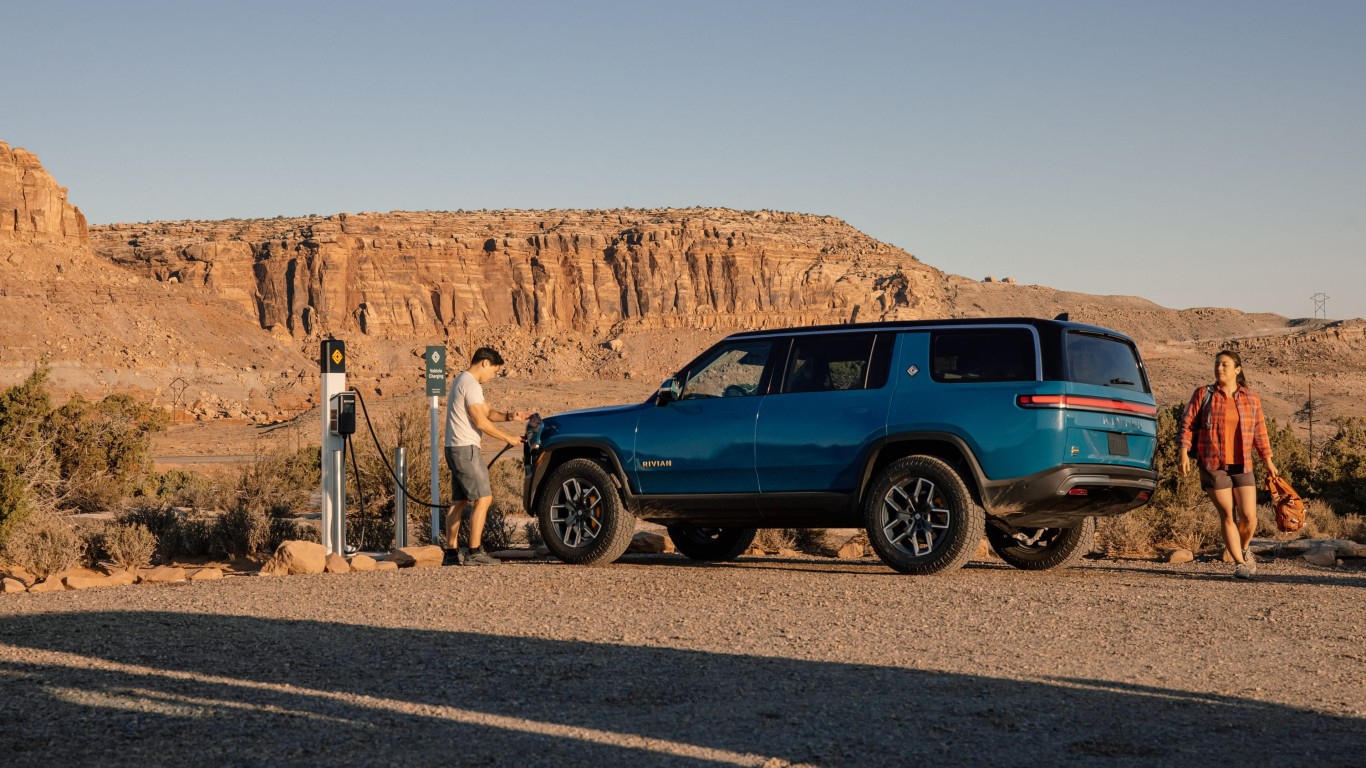
Rivian’s other two vehicles, which it clearly understands are too expensive, are the R1S SUV, which starts at $84,000 and goes up to $122,000, and the R1T pickup, which starts at $80,000 and goes up to $116,000.
Rivian made a poor decision early in its history. It assumed people wanted extremely expensive EV SUVs and pickups. It bet wrong and is now trying to fix the mistake. It’s too late to do that.
Rivian also faces the same problem as any car company selling EVs in the US. EV sales are down about 20% through the first half of this year. The expiration of the $7,500 tax credit at the end of last September did significant damage. And the public still doesn’t like an EV’s range on a single charge or the lack of public charging stations, especially because they can be crowded.
Rivian lost $833 million on $1.7 billion in revenue during the last quarter. It’s hard to imagine it selling enough vehicles to break even. That is why the stock won’t recover.
Contact [email protected] for any questions or corrections.
Douglas A. McIntyre is the co-founder, chief executive officer and editor in chief of 24/7 Wall St. and 24/7 Tempo. He has held these jobs since 2006.
McIntyre has written thousands of articles for 24/7 Wall St. He is an expert on corporate finance, the automotive industry, media companies and international finance. He has edited articles on national demographics, sports, personal income and travel.
His work has been quoted or mentioned in The New York Times, The Wall Street Journal, Los Angeles Times, The Washington Post, NBC News, Time, The New Yorker, HuffPost USA Today, Business Insider, Yahoo, AOL, MarketWatch, The Atlantic, Bloomberg, New York Post, Chicago Tribune, Forbes, The Guardian and many other major publications. McIntyre has been a guest on CNBC, the BBC and television and radio stations across the country.
A magna cum laude graduate of Harvard College, McIntyre also was president of The Harvard Advocate. Founded in 1866, the Advocate is the oldest college publication in the United States.
TheStreet.com, Comps.com and Edgar Online are some of the public companies for which McIntyre served on the board of directors. He was a Vicinity Corporation board member when the company was sold to Microsoft in 2002. He served on the audit committees of some of these companies.
McIntyre has been the CEO of FutureSource, a provider of trading terminals and news to commodities and futures traders. He was president of Switchboard, the online phone directory company. He served as chairman and CEO of On2 Technologies, the video compression company that provided video compression software for Adobe’s Flash. Google bought On2 in 2009.