Americans Cannot Stop Using Their Phones. These 3 REITs Collect the Rent
Every time someone opens a map app or joins a video call, rent flows to the owners of the antenna carrying that signal. Three REITs have built their entire business on that transaction, but their dividend safety levels are nowhere…

This post may contain links from our sponsors and affiliates, and Flywheel Publishing may receive compensation for actions taken through them.

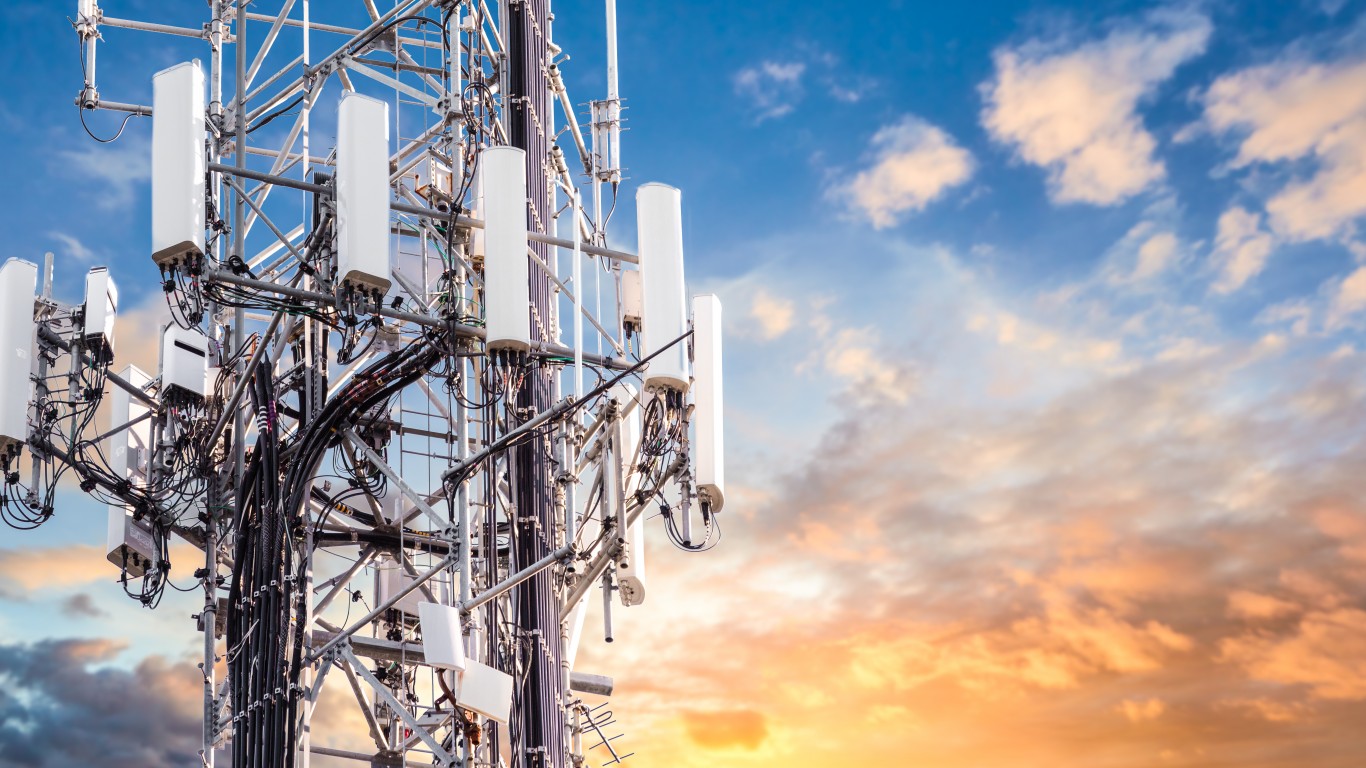
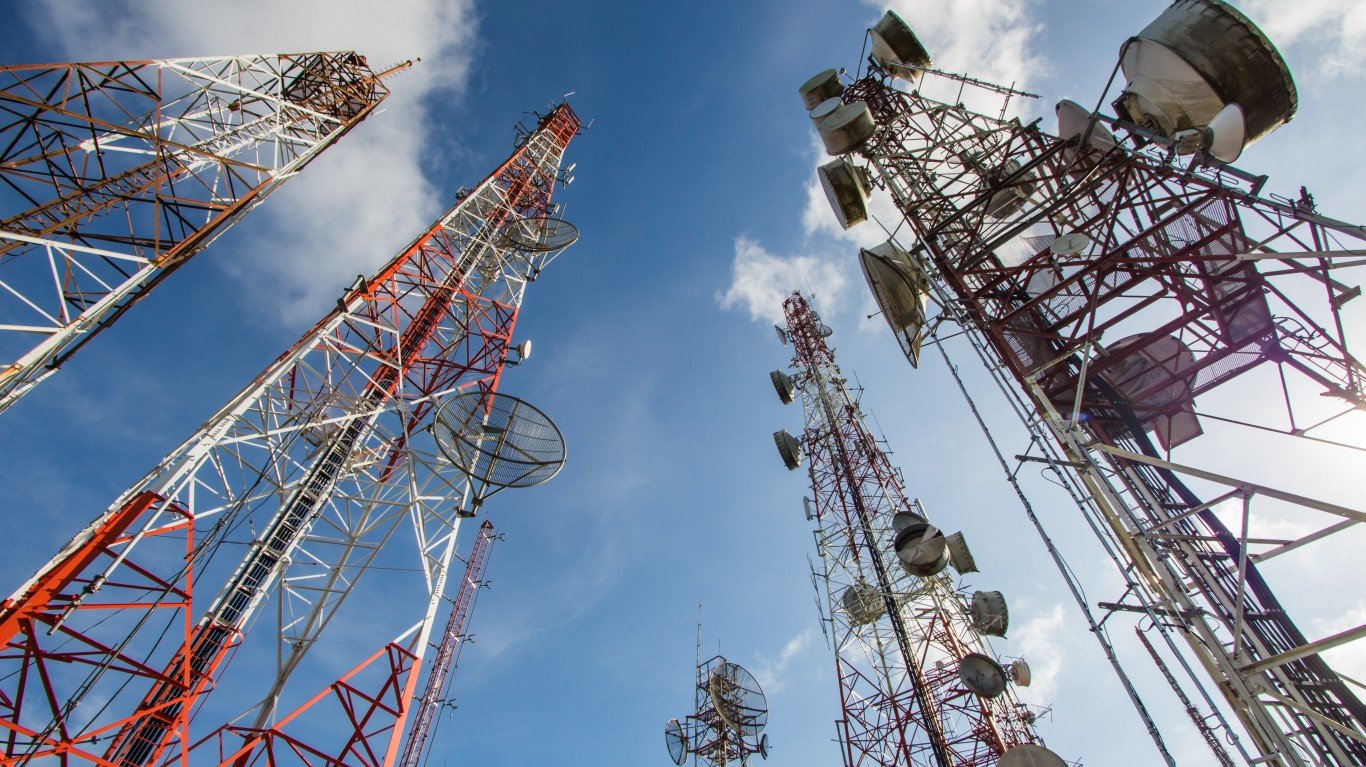
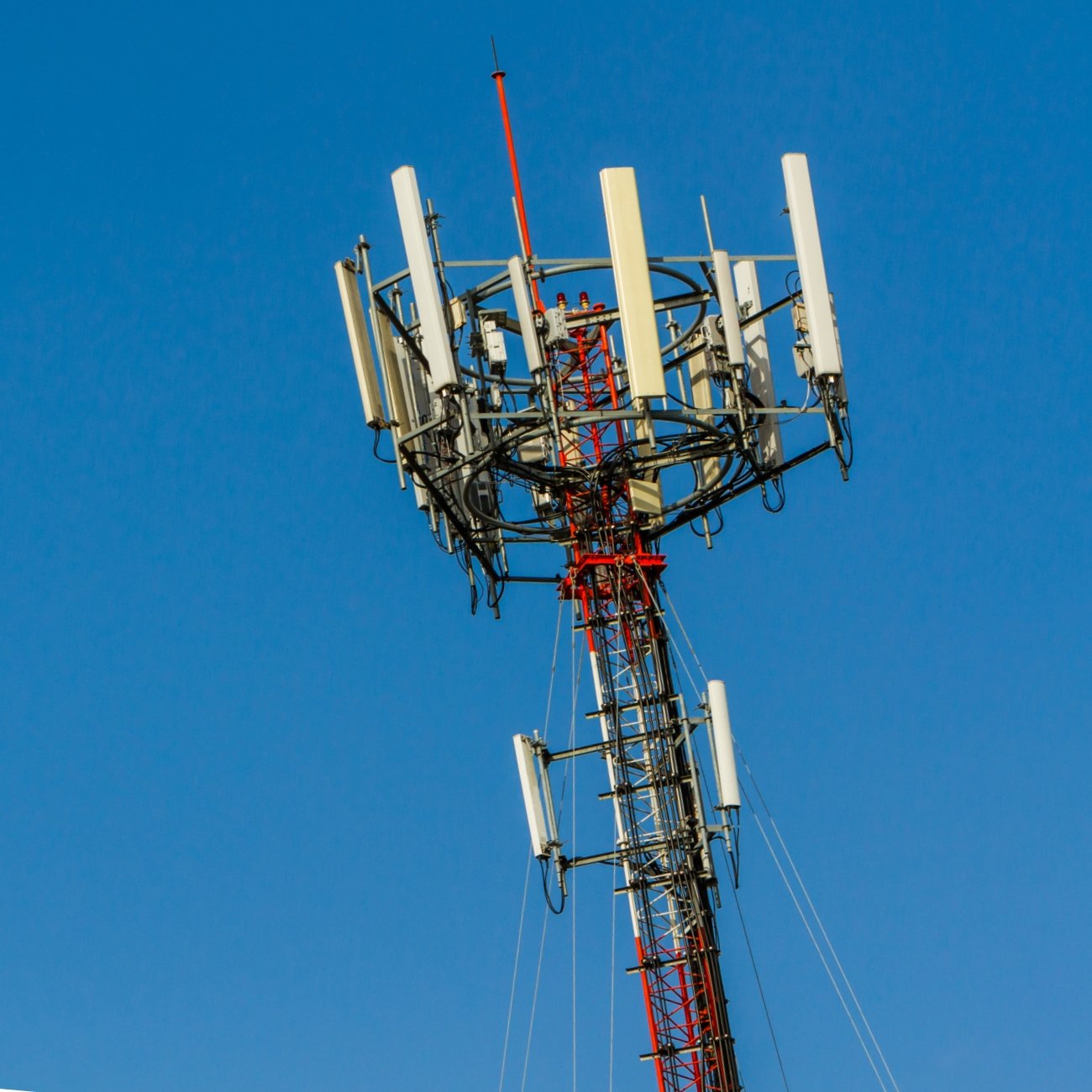
Every video call, map search and AI query from a phone goes through an antenna bolted to a structure that someone owns. American Tower (NYSE:AMT), Crown Castle (NYSE:CCI) and SBA Communications (NASDAQ:SBAC) own those towers and rooftop sites, and wireless carriers lease space on them. A single tower can host multiple tenants under long contracts with built-in annual escalators, so every new carrier added to a site is close to pure profit. Demand keeps going up: American Tower said “industry analysts estimate that mobile network capacity will need to at least double over the next five years to meet projected traffic demand.” All three operate as equity REITs holding physical sites.
They carry property risk and none of the credit-spread risk that comes with mortgage REITs. Dividend safety here is measured on AFFO (adjusted funds from operations) per share, the recurring cash a REIT generates after maintenance spending. Earnings payout ratios are the wrong yardstick for this group.
| REIT | Price | Forward Dividend | Forward Yield | FY2026 AFFO/Share Guide | Dividend as % of AFFO Midpoint |
|---|---|---|---|---|---|
| American Tower | $166.16 | $7.16 | 4.31% | $11.00 to $11.17 | 64.6% |
| Crown Castle | $69 | $4.25 | 6.16% | $4.53 to $4.65 | 92.6% |
| SBA Communications | $170.38 | $5 | 2.93% | $11.95 to $12.40 | 41.1% |
All three stocks closed out a strong session on October 6, yet each is still down for the year: American Tower -2.43%, SBA -10.17% and Crown Castle -19.32%.
American Tower: Global Towers With an AI Data Center Engine Attached
The company has a global portfolio of communications towers plus CoreSite, a group of interconnection-rich data centers. American Tower is narrowing its presence. It completed the sale of its Philippines and Bangladesh operations, exiting the APAC region, and expects to spend approximately 85% of discretionary capital in developed markets.
Demand background: Q2 2026 revenue reached $2.749B (+4.7% YoY). U.S. and Canada property revenue slipped to $1,274M (-2.5% YoY) after $63M of DISH cancellations. Organic growth in the region was “approximately 5% when excluding Dish churn.” Data centers brought in $297M (+13.4%), and management says “nine of the top 10 AI companies and three of the top five NeoClouds are deployed within our facilities.”
Tenant concentration: U.S. tower revenue depends on a small group of national carriers. That gives American Tower reliable, contracted rent, and it also means the loss of one tenant shows up right away. The DISH hit to Q2 is a live example.
Yield and coverage: The quarterly dividend is $1.79, up from $1.70 in 2025. The forward payout is $7.16 and the yield is 4.31%. Full-year AFFO per share guidance of $11.00 to $11.17 has been raised for the second time this year, so the dividend uses about 64.6% of the midpoint. Net leverage is at 4.9x.
The bull case rests on Management sees approximately 800 megahertz of new mobile spectrum coming to market, starting with the upper C block in 2027. It now expects data center growth of approximately 15%, up from 13%. CEO Steve Vondran calls the company “uniquely positioned at the intersection of wireless, cloud, and AI.”
Risk: Carrier churn in emerging markets. Latin America organic growth declined over 2%, primarily due to elevated churn in Brazil. Management says that should turn around in 2027, but it is still a forecast.
Crown Castle: Ultra-High-Yield With the Thinnest Cushion
Crown Castle owns about 40,000 U.S. towers. Crown Castle became a pure-play tower operator after it completed the $8.4B sale of its Fiber and Small Cell businesses on May 1, 2026. It owns 43% of the ground under its towers and is buying more land to close an approximately 11% land-cost gap with its peers. Its contracts are long: the company has $26B of remaining contracted tenant receivables with a 5-year weighted average term.
Tenant concentration: The three national carriers account for 42%, 28% and 23% of site rental revenue, for a combined 93%. These tenants have the biggest network budgets in the country. With so few of them, though, a single renewal negotiation can move the whole company.
Yield and coverage: The $1.0625 quarterly dividend comes to $4.25 a year, a 6.16% yield. Income investors should remember that the payout was cut from $1.565 starting with the June 2025 ex-date. AFFO per share guidance was raised to $4.53 to $4.65, and the dividend uses 92.6% of the midpoint. It is covered, but by the narrowest margin of the three. Management calls the dividend “sacrosanct.”
Bull case: Sale proceeds paid down more than $7B of debt and funded a $1B buyback. All remaining debt is fixed-rate at 3.7%. Q2 AFFO rose to $488M (+10% YoY). More than 90% of 2026 organic growth was already contracted by the end of Q2, with 2026 expected to mark the low point for organic growth.
Risk: A large renewal with one of its big three carriers comes due in 2028, worth $774M annualized. Crown Castle will negotiate that renewal carrying net debt of 6.3x adjusted EBITDA and stockholders’ equity of $(3,270)M. The market is already pricing in some doubt: the stock is down 23.74% over the past year.
SBA Communications: Lowest Yield, Strongest Dividend Coverage
SBA Communications owns 46,358 communication sites worldwide. Site leasing produces 98.2% of operating profit. In Q2, domestic site leasing revenue fell to $452.4M (-3.7%), while international site leasing grew to $211.4M (+30.5%) on Central America build-to-suit towers for a regional carrier. SBA built 109 towers in the quarter and expects approximately 600 for the year. Part of its international growth comes from local CPI-linked rent escalators.
Tenant concentration: Carrier consolidation is the main tenant risk here. SBA expects $56M of Sprint consolidation churn and another $56M of DISH-related churn in FY2026. When the tenant base shrinks, SBA loses leases.
Yield and coverage: The $1.25 quarterly dividend yields 2.93%. SBA has the lowest yield in the group and the most room to grow the payout. The dividend uses just 41.1% of the $12.175 AFFO per share guidance midpoint. The quarterly payment has climbed from $0.37 in 2019, and CEO Brendan Cavanagh says “we expect to continue growing our dividend at the highest growth rate in the industry.”
Bull case: S&P upgraded SBA to BBB investment grade, and the company issued its first $3.5B of unsecured notes. The FCC plans to auction 160 MHz of upper C-band spectrum beginning in April 2027. Management says “share buybacks are the best use of capital at current valuation levels,” and $1.1B of buyback authorization remains.
Risk: Interest rates. Net interest expense climbed 9.5% YoY, and net income fell 12.9% to $198.78M. The company assumes its $1.2 billion November ABS maturity will be refinanced at 5.25%, on total debt of about $13 billion. If refinancing costs come in higher, the AFFO that funds dividend growth shrinks.
Tower REITs Offer Covered Dividends Ahead of a 2027 Spectrum Cycle
Several factors support the income case for towers. All three dividends are covered by AFFO, rents are contracted for years, and a new spectrum cycle starts in 2027. SBA has the safest coverage and the best dividend-growth potential. American Tower offers the most balanced mix of yield, coverage and diversification. Crown Castle’s ultra-high yield comes with 93% carrier concentration, a cut in its recent history and the thinnest AFFO buffer of the three, so its 2028 renewal is the item to watch.
Contact [email protected] for any questions or corrections.
Chris Lange is a financial and geopolitical writer with more than a decade of experience covering a myriad of topics. He has published thousands of articles for 24/7 Wall St., with past coverage focused heavily on stocks, IPOs, healthcare, defense, global affairs, and technology.
His work has been quoted, or referenced by a number of outlets including Business Insider, USA Today, Yahoo Finance, MSN, The Motley Fool, and many other publications. A graduate of Southwestern University, he studied business with a focus on investments and has previous experience in banking and startups.
When not reading or writing the news, he is following his passion for Lacrosse, playing chess, or building solar projects with his dad.