Wells Fargo Analyst: SpaceX Wireless Will Crush Carriers While Tower REITs “Quietly” Profit
A Wells Fargo analyst says SpaceX's wireless push will hurt carriers far less than investors fear, and the real beneficiaries may surprise anyone who assumed satellite and towers compete rather than cooperate.

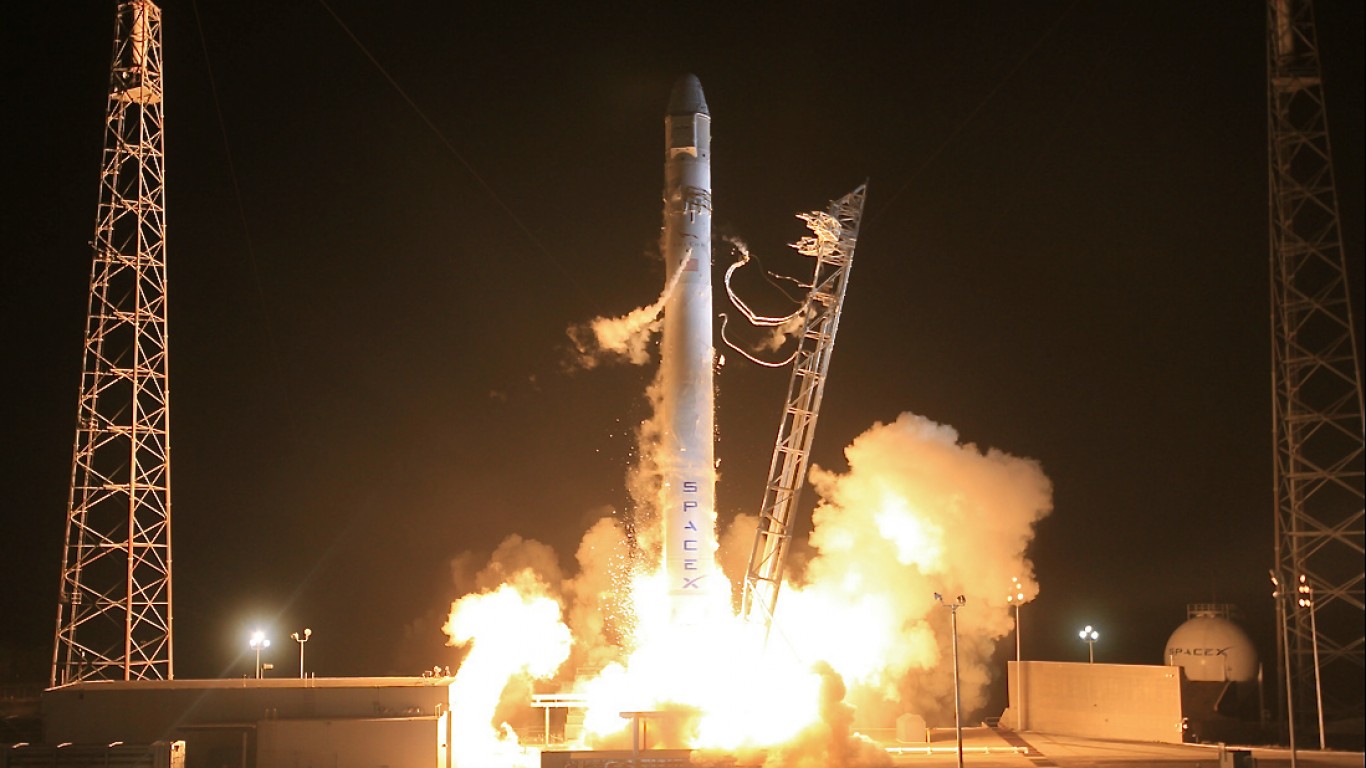
Wells Fargo’s Steven Cahall used a CNBC segment on September 8 to reframe SpaceX’s (NASDAQ:SPCX | SPCX Price Prediction) wireless push. He argues that satellite-plus-spectrum architecture needs less ground infrastructure than a traditional fourth carrier, so the pain falls on incumbent telcos while tower REITs and cable operators quietly collect rent on whatever pieces SpaceX still has to lease.
Cahall told CNBC: “Telco just facing another competitor, a three player market going to a much smaller fourth player. That’s still a net negative for sure.”
The FCC just cleared SpaceX to absorb 65 MHz of EchoStar’s U.S. spectrum, and Starlink subscribers doubled year over year to 12.0 million as of Q2 2026. That makes the question urgent for anyone holding AT&T (NYSE:T), Verizon (NYSE:VZ), T-Mobile (NASDAQ:TMUS), American Tower (NYSE:AMT), Crown Castle (NYSE:CCI), SBA Communications (NASDAQ:SBAC), Charter Communications (NASDAQ:CHTR) or Comcast (NASDAQ:CMCSA).
What Cahall Said About the Fourth-Carrier Debate
Cahall broke from the standard fourth-carrier framing. He said, “We don’t think it’s because the economics of adding a fourth player to the U.S. wireless market is so compelling. It’s that there are ulterior long term technology motives.”
Those motives sit in plain view. SpaceX’s Q2 connectivity revenue reached $4.29 billion, up 66% year over year.
The EchoStar (NASDAQ:ECHO) transfer gives SpaceX a spectrum foundation it could not have assembled in time at auction. Management plans to integrate the 65 MHz “later next year” and build terrestrial hardware alongside the constellation.
Damage to carriers shows up first in pricing and margin pressure, with wholesale subscriber loss a slower, secondary risk. That matches what Verizon CEO Dan Schulman is telling investors.
Schulman said Verizon is “purposely shifting our mix towards durable recurring service revenues and away from low margin, highly promotional activity.” Carriers do that when they expect pricing to tighten.
Why the Satellite Architecture Changes the Math
Cahall put the mechanics simply: “They don’t need nearly the same amount of spectrum, the same amount of tower and signal projection. They have a big and growing satellite constellation.”
Spectrum is expensive because supply is fixed and FCC auctions clear for tens of billions of dollars. An MVNO, or mobile virtual network operator, rents capacity on somebody else’s network rather than buying spectrum and towers of its own, and Wi-Fi offload dumps phone traffic onto fixed broadband so cellular capacity stays free.
SpaceX itself described a network of “little femtocells” and rooftop Starlink dishes handling terrestrial handoffs. That is capital-light compared to macro-tower densification.
The thesis has a real hole. If SpaceX routes around U.S. towers entirely with its own rooftop equipment, the tower leasing bump never lands.
Crown Castle, asked directly on its Q2 call, would say only that its sites offer “space, power, backhaul” and would welcome satellite operators as tenants. No signed agreement exists yet.
Who Collects the Checks If He’s Right
Cahall gave the shopping list: “There would require towers. It would require a Wi-Fi offload MVNO with cable. So those could be two of the potential winners from a sector perspective.”
Tower REITs get paid regardless of which carrier wins the customer. American Tower yields about 3.93% with FY26 AFFO guided to $11.00 to $11.17 per share.
Crown Castle is the purer bet post-fiber divestiture, yielding around 5.5%, though AT&T contributes 28% of site rental revenue with a $774 million renewal cycle in 2028. SBA is the international grower, with international site leasing up 30.5% in Q2.
On the cable side, Charter’s Spectrum Mobile added 406,000 lines with mobile service revenue up 18.9% year over year to $1.095 billion. Comcast crossed 10 million wireless lines and offloads roughly 90% of traffic onto Wi-Fi.
The carriers face the opposite trend. Verizon’s fixed wireless net additions fell 30.6% year over year, the first visible mark of satellite broadband encroachment.
Is SPCX Stock a Buy?

Q2 revenue was $7.81 billion, with $3.54 billion of adjusted EBITDA and a $93.5 billion cash position. The stock trades at roughly 85 times trailing sales.
Among incumbents, T-Mobile is most exposed because its Direct-to-Cell partnership loses differentiation once SpaceX controls its own spectrum. TMUS shares are down 23.18% over the past year.
AT&T’s satellite-as-corner-case posture looks defensible, and CEO John Stankey argued the company can “get 98% of the traffic” without a wholesale satellite partner. Verizon’s 29.99% year-to-date rally already prices in the fiber pivot.
My read: infrastructure owners look like the cleaner exposure to this thesis, and Crown Castle offers the most direct tower exposure at a yield the carriers cannot match. SPCX carries the growth optionality for those comfortable with a triple-digit sales multiple, while CCI leans income-oriented at a materially lower valuation.
Contact [email protected] for any questions or corrections.
Omor Ibne Ehsan is a writer at 24/7 Wall St. He is a self-taught investor with a focus on growth, cyclical, and dividend equities that have strong fundamentals, value, and long-term potential. He also has an interest in high-risk, high-reward investments such as penny stocks.