American Tower’s Dividend Strength Hinges on Tower Lease Economics and Data Center Expansion
American Tower collects rent from wireless carriers under long-term contracts, but rising interest rates and a major customer exodus are squeezing the cash that funds the dividend. Here is what retirees actually need to check before trusting the payout.

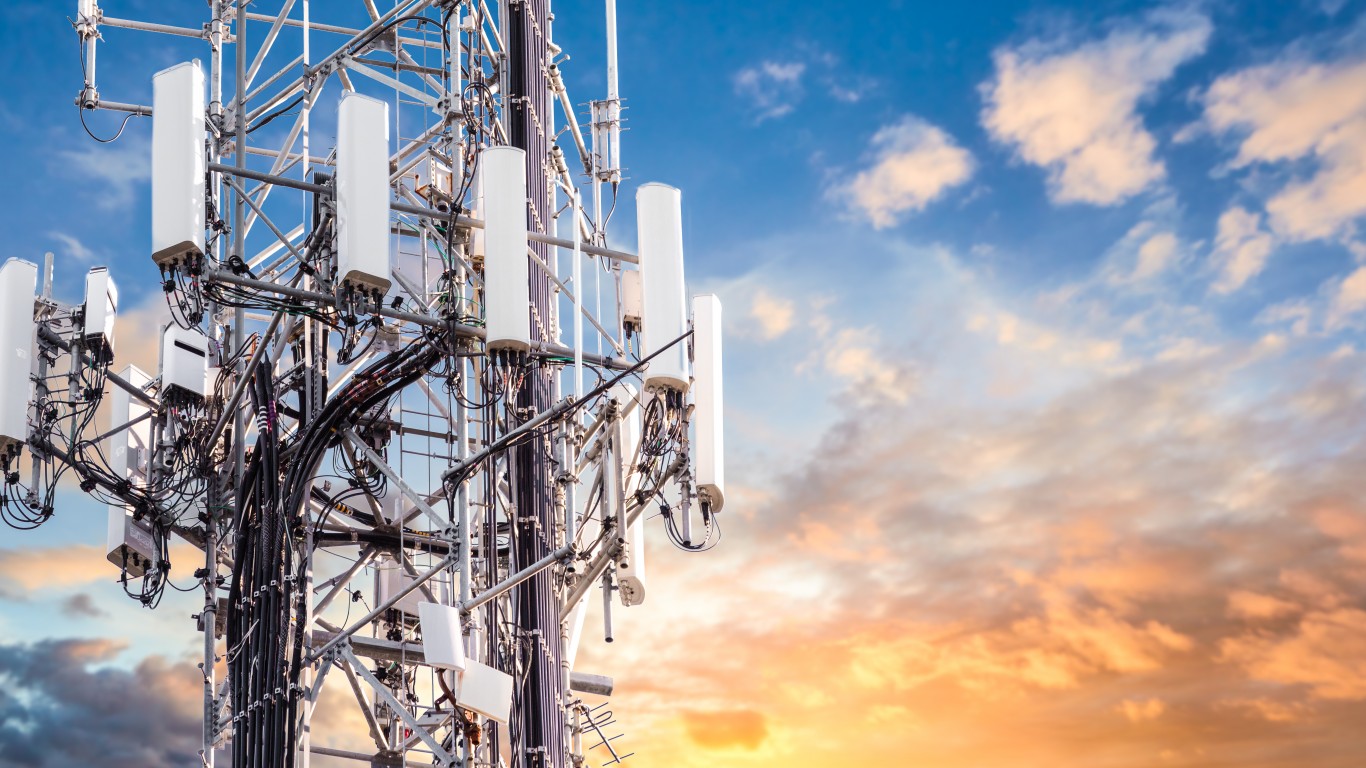
American Tower (NYSE:AMT) owns tower sites that wireless carriers rent under long-term contracts. Those lease payments fund the dividend. At $169.09, shares yield 4.09% on $6.98 trailing payouts, with annualized forward dividend at $7.16. Against the 10-year Treasury at 5.18% on September 24, retirees need proof the payout justifies the extra risk.
AFFO Coverage Is the Core of the Case
Evaluating a REIT by earnings payout ratio misleads investors. Towers are depreciated on paper while collecting rent, shrinking GAAP earnings without touching cash. Adjusted funds from operations (AFFO) adds back depreciation and subtracts maintenance, tracking cash available for dividends.
American Tower’s 2026 AFFO guidance calls for $11.00 to $11.17 per share against the $7.16 annualized dividend. Second-quarter free cash flow hit $1.158 billion, up 18.54% year over year. Management prioritizes the dividend:
“When we think about our capital allocation approach, first and foremost, it’s supporting the dividend and a growing dividend.”
On the same call, management said the company aims “to dividend out 100% of our REIT taxable income each year.”
Lease Economics Backing Every Payment
Adding a tenant to an existing tower costs far less than building new, so additional leases flow largely to cash. The weak spot is concentration: revenue depends on a small number of large customers. DISH-related cancellations cost the U.S. & Canada segment $63 million in Q2, with segment revenue down 2.5%. Excluding DISH churn, U.S. and Canada organic growth was approximately 5%. CoreSite offsets this, with full-year data center revenue growth guidance raised to approximately 15%.

Peers frame the choice. Crown Castle (NYSE:CCI) is a U.S. tower REIT with a heavier dividend focus, while SBA Communications (NASDAQ:SBAC) offers a lower yield and a higher growth profile. American Tower combines income with a data center engine, a mix CEO Steve Vondran describes this way:
“American Tower is uniquely positioned at the intersection of wireless, cloud, and AI.”
Debt and Rates Are the Pressure Points
Heavy borrowing is structural to tower ownership. American Tower carries $37.3 billion of debt with net leverage of 4.9 times, inside its 3 to 5 times target. Refinancing at higher rates is now an approximately 150 basis point headwind to 2026 AFFO per share growth. The 10-year yield rose from a 3.97% low in February to 5.18%, and the stock is down 9.36% over the past year.
Dividend Record Shows Growth and One Reset
Quarterly payments began December 2011, climbing from $0.21 in April 2012 to $1.79 in 2026. After paying $1.70 in December 2023, the company paid $1.62 per quarter through 2024, then returned to $1.70 in 2025. The 2026 increase delivered 5.3% per-share growth.
Verdict: A Durable Payout With One Number to Track
American Tower’s dividend is strong enough for retirement portfolios. AFFO covers the payout with room to spare, leverage sits in range, and management expects 2026 to be a trough for attributable AFFO per share growth before mid to high single-digit growth returns. Analysts lean positive, with 7 Strong Buy, 15 Buy and 3 Hold ratings and an average target of $215.7.
The metric that would change this answer is attributable AFFO per share. If 2027 fails to deliver the promised turnaround while refinancing costs rise, the buffer under the $7.16 payout starts shrinking, and the conclusion flips. For retirees building a portfolio that throws off income without forcing share sales, a dividend ladder is the structure to study, and we walked through how to build one in a free guide here.
Contact [email protected] for any questions or corrections.
Chris Lange is a financial and geopolitical writer with more than a decade of experience covering a myriad of topics. He has published thousands of articles for 24/7 Wall St., with past coverage focused heavily on stocks, IPOs, healthcare, defense, global affairs, and technology.
His work has been quoted, or referenced by a number of outlets including Business Insider, USA Today, Yahoo Finance, MSN, The Motley Fool, and many other publications. A graduate of Southwestern University, he studied business with a focus on investments and has previous experience in banking and startups.
When not reading or writing the news, he is following his passion for Lacrosse, playing chess, or building solar projects with his dad.