Alibaba Is Now Down 24% This Year: Did BABA Stock Just Find a Bottom?
Alibaba has absorbed a brutal year of AI-fueled losses, a profit collapse, and a dilutive capital raise, yet it has somehow held up better than every major Chinese tech peer. Whether that relative strength signals a floor forming or a…

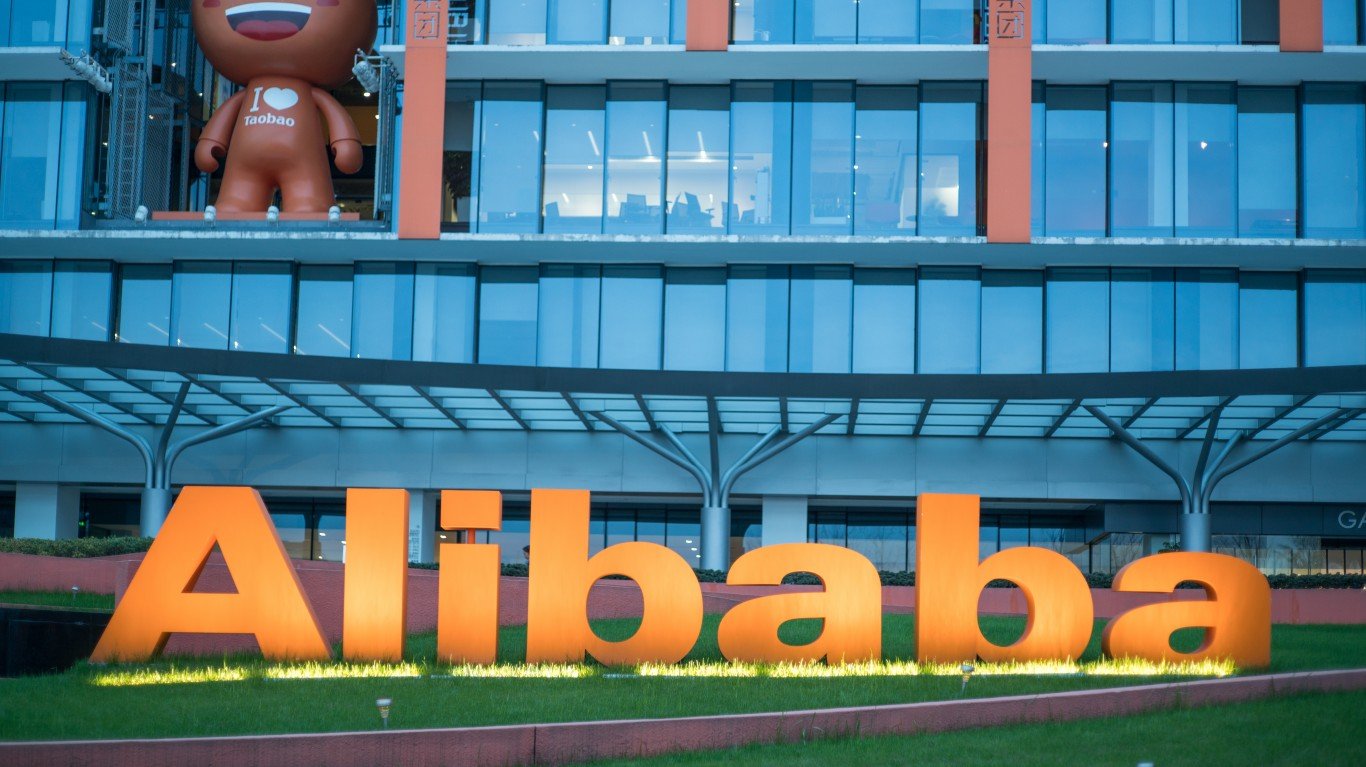
Heavy artificial intelligence (AI) spending has defined 2026 for Alibaba Group (NYSE:BABA | BABA Price Prediction), and the share price has absorbed the cost. Alibaba stock trades at $110.94, down 24% year to date. That decline raises a fair question: has the selling run its course, or is there more room to fall?
Meanwhile, Baidu (NASDAQ:BIDU) stock, a close comparison on AI investment, is at $85.25. That’s down 35% year to date, representing a steeper drop than Alibaba stock’s decline. Additionally, PDD Holdings (NASDAQ:PDD) stock is at $81.43, down 28% year to date, also worse than Alibaba.
To test whether the pressure belongs to Alibaba alone, two funds offer a useful benchmark for the year. The KraneShares CSI China Internet ETF (NYSEARCA:KWEB) is down 27% year to date. Over the same stretch, the SPDR S&P 500 ETF Trust (NYSEARCA:SPY) is up 14% year to date.

A Profit Plunge, Then a Dilutive Raise
In its results for the June 2026 quarter, Alibaba reported a 75% drop in profit as heavy AI spending ran through the numbers. Days later, Alibaba priced a share placement. It raised $10.2 billion and told investors it would put all of the net proceeds into expanding its AI capability and infrastructure.
The two events support each other. The quarter showed spending compressing earnings, and the placement committed the company to more of it while diluting existing holders. On the June-quarter call, management offered its own framing: “AI has become Alibaba’s most certain growth engine.”

Why Baidu and PDD Frame the Debate
Alibaba runs Chinese e-commerce marketplaces alongside a cloud computing arm, and that unit is where the AI investment is going. In effect, the retail business generates the cash funding a capital-heavy infrastructure build.
Baidu is comparable on that score. As a search and cloud company making its own AI investment, it faces the same tension between spending now and earning later.
PDD is the e-commerce comparison, running marketplaces without an equivalent cloud infrastructure commitment, yet PDD stock has also fallen further this year than Alibaba stock, so the weakness reaches beyond the spending question.
Against the KWEB China internet fund’s decline and the overall market’s gain, the pressure looks sector-wide. Alibaba stock has held up better than its two peers and the sector fund this year. That relative strength is the core of the bottoming argument, though outperforming during a slide still leaves the share price lower.
Floor, or False Bottom?
The bull case holds that the spending is calculated and funded, with a stated destination. A business investing through a weak stretch can post rough numbers before the returns show up, which differs from genuine trouble. On that reading, the smaller decline in Alibaba stock relative to its peers could signal a base forming.
Skeptics may see the same facts differently, and their concerns are concrete. Alibaba’s profit has already been cut sharply, its share count has grown, and nothing in the commitment suggests the spending stops soon. However, the year-to-date figures alone can’t settle how much of that risk the current price already reflects.

Whether Alibaba stock has found a floor remains open, and the evidence supports both the patient reading and the skeptical one. Investors can watch for whether Alibaba stock keeps outperforming the China internet fund as more AI spending flows through upcoming quarters. Anyone adding exposure should keep positions small until profit shows clear signs of recovering.
Contact [email protected] for any questions or corrections.
David Moadel is financial writer specializing in stocks, ETFs, options, precious metals, and Bitcoin. David has written well over 1,000 articles for leading online publications, helping investors understand markets, income strategies, and risk.His work has appeared in The Motley Fool, InvestorPlace, U.S. News & World Report, TipRanks, ValueWalk, Benzinga, Market Realist, TalkMarkets, Finmasters, 24/7 Wall St., and others.With a master’s degree in education, David has taught at the elementary, high school, and college levels. That teaching background shapes his writing style: clear, educational, and practical. David has also built a loyal social-media audience by providing trustworthy financial content on YouTube, X/Twitter, and StockTwits.