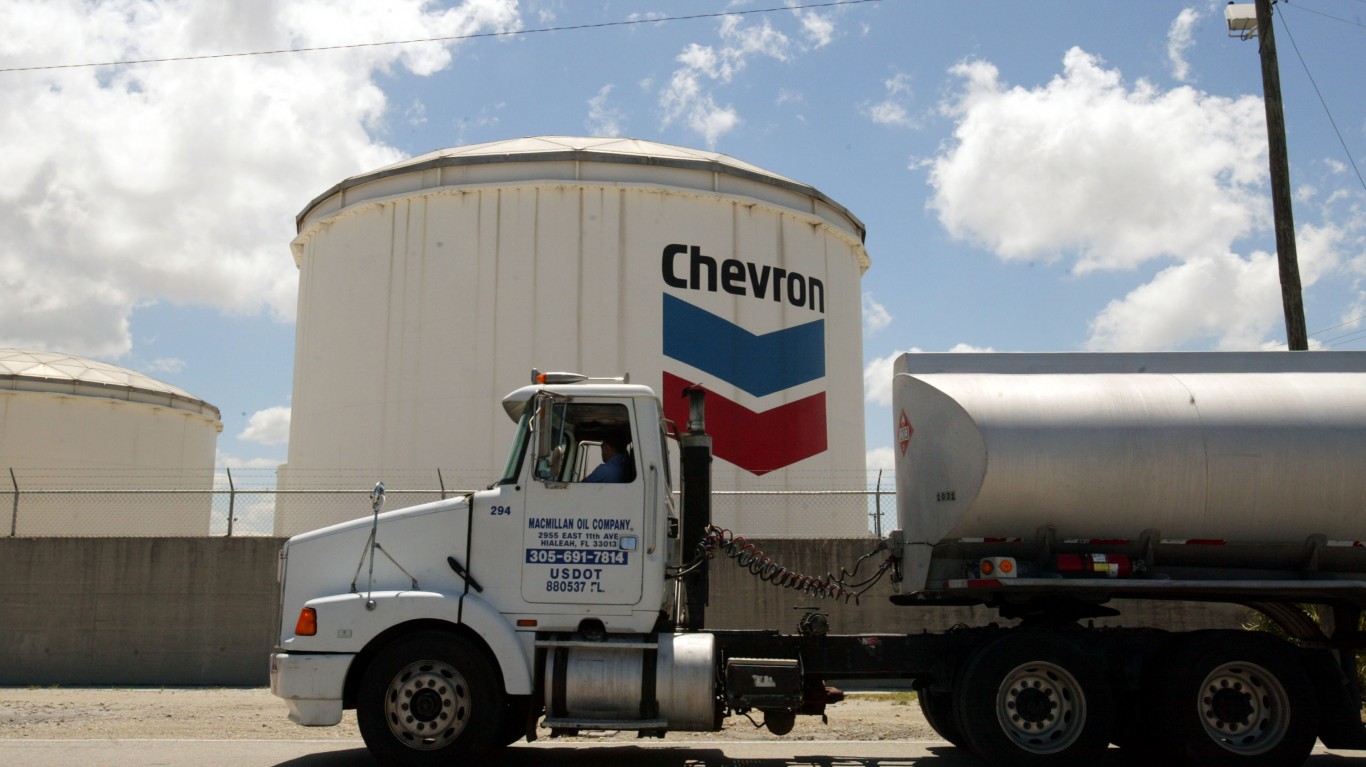
Chevron’s Dividend Has Survived Every Oil Crash. Can It Survive This One?
Chevron has raised its dividend for 39 straight years through oil booms, price collapses, and a pandemic quarter that brought in almost nothing. The next test is already visible on the horizon, and the math gets uncomfortable fast.

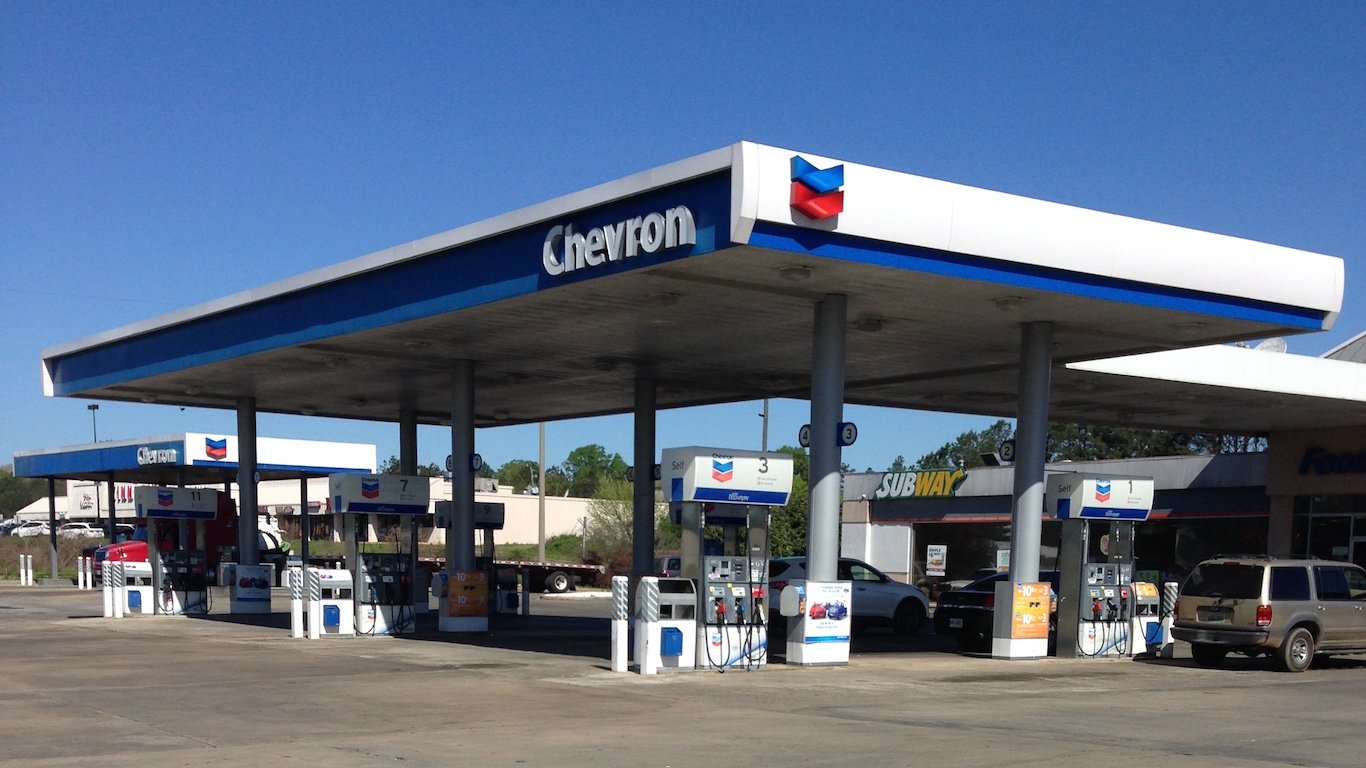
Chevron (NYSE:CVX | CVX Price Prediction) pays an annualized forward dividend of $7.12 a share, yielding 3.07%. The company reported $18.10 billion in free cash flow last quarter. WTI crude sat at $96.24 on October 6, with shares up 43.46% year to date. The payout looks secure now, but the test comes when crude falls. The EIA projects Brent at $89 in the fourth quarter and $79 in 2027.
One Quarter Showed the Dividend Relying on the Balance Sheet
Oil majors sell a commodity they cannot control, so dividend coverage swings with crude prices. Chevron’s 2026 shows how wide those swings can be.
In the first quarter, operating cash flow was only $2.514 billion, while dividends cost $3.526 billion. Free cash flow came in at -$1.549 billion, dragged down by about $2.9 billion of negative timing effects. Chevron still bought back $2.5 billion of stock, and its net debt ratio rose to 17.9% from 15.6%. For that quarter, the balance sheet paid shareholders.

The second quarter reversed the picture. Operating cash flow reached $22.63 billion against $3.504 billion in dividends, and Chevron cut debt by $8.41 billion. CFO Eimear Bonner said:
“Our net debt coverage ratio improved, reflecting strong cash generation in the quarter.”
What Crude Price Does the Dividend Need?
Chevron’s Q4 2025 results offer a breakeven test. Brent averaged $64. Operating cash flow of $10.789 billion covered $5.264 billion in capex and $3.404 billion in dividends with $2,121 million left over. For all of 2025, free cash flow of $16.60 billion beat dividends by $3.849 billion. Total shareholder returns were $27.1 billion, with buybacks making up the difference.
Management plans for prices below today’s. CEO Mike Wirth reaffirmed “our $6 billion guidance at $70 Brent” for affiliate distributions. Bonner said 2030 targets hold:
“…adjusted free cash flow growth, averaging greater than 10% per year, and more than 3% improvement on return on capital employed, all at flat commodity prices that are lower than today.”
The Hess acquisition helps. Wirth said those assets produce free cash flow “roughly double the incremental dividends.”
A 39-Year Raise Streak Helps Holders and Limits Management
The 4% raise in January was Chevron’s 39th consecutive annual increase, putting it in rare company with the longest-streak dividend payers (we ranked ten of them by valuation in a free Dividend Kings report). Past crashes tested that run. In 2020, operating cash flow of $10.6 billion just covered $9.7 billion of dividends and did not cover capex on top of them. Q2 2020 brought in only $80 million. Even so, the quarterly rate stayed at $1.29, up from $1.19 in 2019. In 2015 the rate stayed at $1.07 for all four payments. The run gives holders confidence. It also means management keeps paying through downturns and covers the gap with debt.
How ExxonMobil and ConocoPhillips Compare
ExxonMobil (NYSE:XOM) has a 43-year streak of increases and a $20 billion buyback plan for 2026. ConocoPhillips (NYSE:COP) ties payouts to cash flow, targeting 45% of CFO to shareholders. That approach reduces payouts when oil falls. Chevron must decide what to cut.
Verdict: The Dividend Is Covered by Cash, With the Balance Sheet as Backup
At the current crude prices, Chevron covers its dividend with operating cash flow. The Q1 shortfall reversed when working capital unwound by $2.9 billion. The dividend stayed covered at $64 Brent, below the EIA’s 2027 forecast. The buyback would be cut first. With net debt at 0.6 times cash flow, Chevron can keep the dividend through this downturn.
Contact [email protected] for any questions or corrections.
Chris Lange is a financial and geopolitical writer with more than a decade of experience covering a myriad of topics. He has published thousands of articles for 24/7 Wall St., with past coverage focused heavily on stocks, IPOs, healthcare, defense, global affairs, and technology.
His work has been quoted, or referenced by a number of outlets including Business Insider, USA Today, Yahoo Finance, MSN, The Motley Fool, and many other publications. A graduate of Southwestern University, he studied business with a focus on investments and has previous experience in banking and startups.
When not reading or writing the news, he is following his passion for Lacrosse, playing chess, or building solar projects with his dad.