SanDisk Drops 6% in Memory Selloff on China’s DRAM Progress; Seagate Slides 4%
A Chinese memory maker's breakthrough just dragged SanDisk and Seagate sharply lower, even though neither company makes the chip at the center of the storm. Here is why the whole memory complex is feeling the heat.

Memory and storage shares are slipping as news of a Chinese rival’s chip work spreads across the group. SanDisk (NASDAQ:SNDK | SNDK Price Prediction) stock is down 6% to $1,484.21 in early action. That’s a sharp drop for a NAND flash specialist caught in a selloff tied to dynamic random-access memory (DRAM).
Meanwhile, Seagate Technology Holdings (NASDAQ:STX) stock is down 4% to $753.21, a smaller decline than the one hitting SanDisk stock. Furthermore, the Roundhill Memory ETF (CBOE:DRAM) is down 4% to $54.64, leaving SanDisk stock behind the broader memory basket. For a broad-market comparison, the SPDR S&P 500 ETF Trust (NYSEARCA:SPY) is basically unchanged at $778.75.


However, SanDisk stock was still up 524% year to date (YTD) through the prior close, so it has the most to give back when sentiment turns. The Roundhill DRAM fund holds both names, with SanDisk at a 4.7% weight and Seagate at 4.5% as of May 11, while its three largest holdings are major DRAM producers. That connection helps explain why a DRAM-related headline can pull flash and hard drive names lower at the same time.
Chinese DRAM Progress Rattles Memory Names
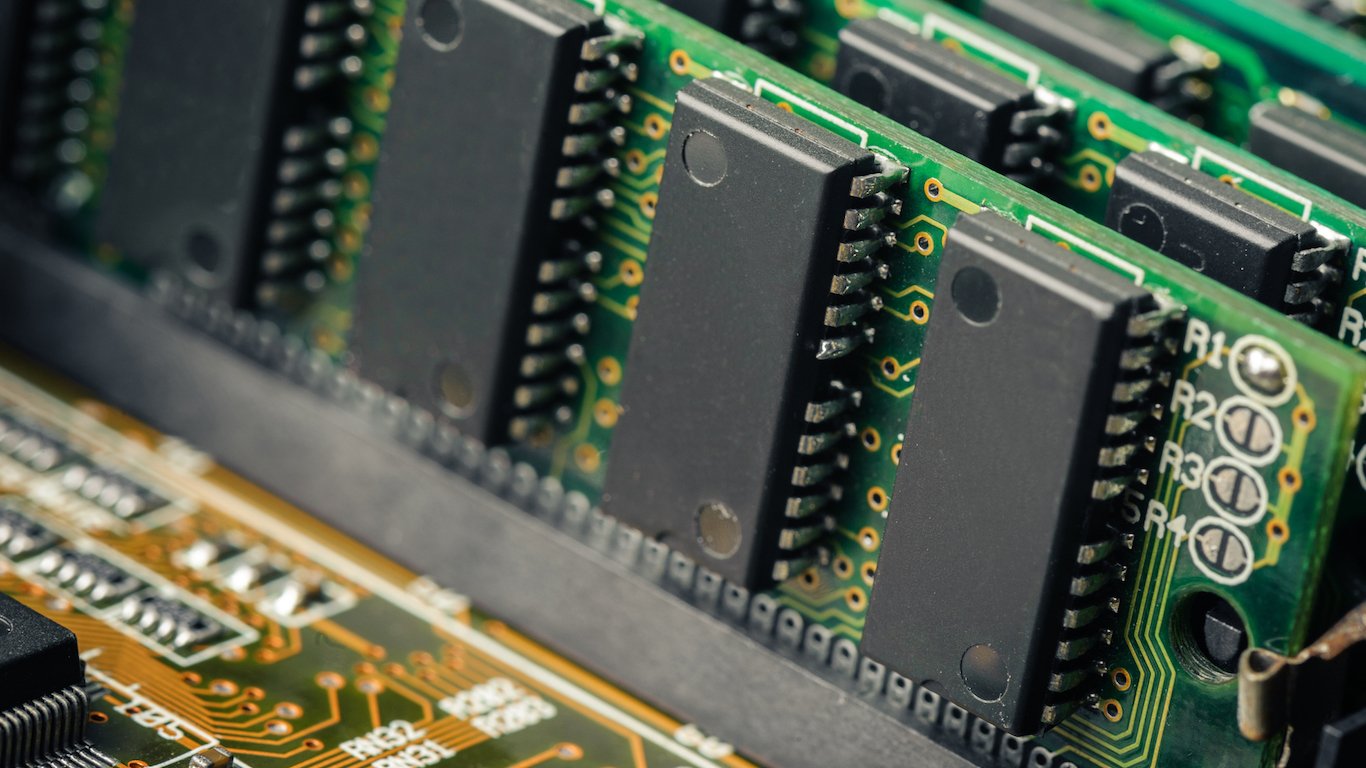
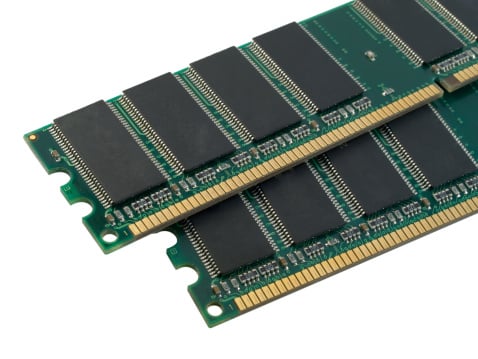
ChangXin Memory Technologies, a Chinese memory maker that isn’t listed in the U.S., said it has made key progress on a denser memory-cell design. The company also plans to release a product aimed at the artificial intelligence (AI) data center market later this year. This work concerns DRAM, a product SanDisk doesn’t make.
Memory and storage stocks have climbed on AI-driven demand. So sector sentiment shifts tend to drag the whole complex together, even names with no direct DRAM exposure. SanDisk stock is declining sharply today, though it’s not alone; STX stock and the Roundhill DRAM ETF are also down on the session along with shares of Micron Technology (NASDAQ:MU), Western Digital (NASDAQ:WDC), and SK Hynix (NASDAQ:SKHY).
Flash and Hard Drives Sit Apart From DRAM
SanDisk sells NAND flash, storage that holds data when power is removed, and its recent results show how strong that business has been. For fiscal Q4 2026, SanDisk’s revenue reached $8.96 billion, up 371.6% year over year, led by $5.43 billion from edge products and $2.98 billion from data centers.
Looking ahead, SanDisk guided fiscal Q1 2027 revenue to $10.3 billion to $10.8 billion after posting its adjusted earnings per share of $39.25 against a $33.28 consensus last quarter. That outlook shows fundamentals running well ahead of the sector mood weighing on SanDisk stock.
Seagate’s business is weighted toward hard disk drives, which serve the mass-capacity storage tier inside data centers. Its leadership has described NAND as “a great technology” that “has many niches that hard drives are not in,” which emphasizes that the two products fill different roles. This distinction matters because ChangXin’s announced work targets DRAM, even as Seagate stock is falling alongside memory makers.
The bearish case concerning SanDisk stock is simple. Memory and storage trade as one complex regardless of which product a company sells, and its outsized run leaves it the most exposed to a pullback. On the bullish side, lasting pressure on SanDisk’s pricing would have to come from new flash supply, and ChangXin’s progress sits in a different chip category. A $14 billion buyback addition, which lifts its remaining authorization to $15.5 billion, gives the company another source of support.
What to Watch Next
What matters next for SanDisk is flash contract pricing and whether Chinese capacity additions reach NAND at all. Its management spoke on the earnings call. It stated, “Demand from our customers is growing faster than our supply.” The company also expects its NAND output to stay on allocation beyond calendar 2027, which offers some buffer while new competition centers on DRAM.
Whether ChangXin’s AI data center product arrives later this year as planned remains to be seen. Moves in the Roundhill Memory ETF can offer a quick read on whether the selling extends beyond the names hit so far, and investors should size their positions with that volatility in mind.
Contact [email protected] for any questions or corrections.
David Moadel is financial writer specializing in stocks, ETFs, options, precious metals, and Bitcoin. David has written well over 1,000 articles for leading online publications, helping investors understand markets, income strategies, and risk.His work has appeared in The Motley Fool, InvestorPlace, U.S. News & World Report, TipRanks, ValueWalk, Benzinga, Market Realist, TalkMarkets, Finmasters, 24/7 Wall St., and others.With a master’s degree in education, David has taught at the elementary, high school, and college levels. That teaching background shapes his writing style: clear, educational, and practical. David has also built a loyal social-media audience by providing trustworthy financial content on YouTube, X/Twitter, and StockTwits.