Jim Cramer Says Most of the Market Is Already in a Bear Market Despite S&P 500 Rally
The S&P 500 just celebrated a four-year bull run, but Jim Cramer says that headline number is hiding something much uglier beneath it. Bank stocks sit at the center of that tension, and their next earnings reports will either confirm…

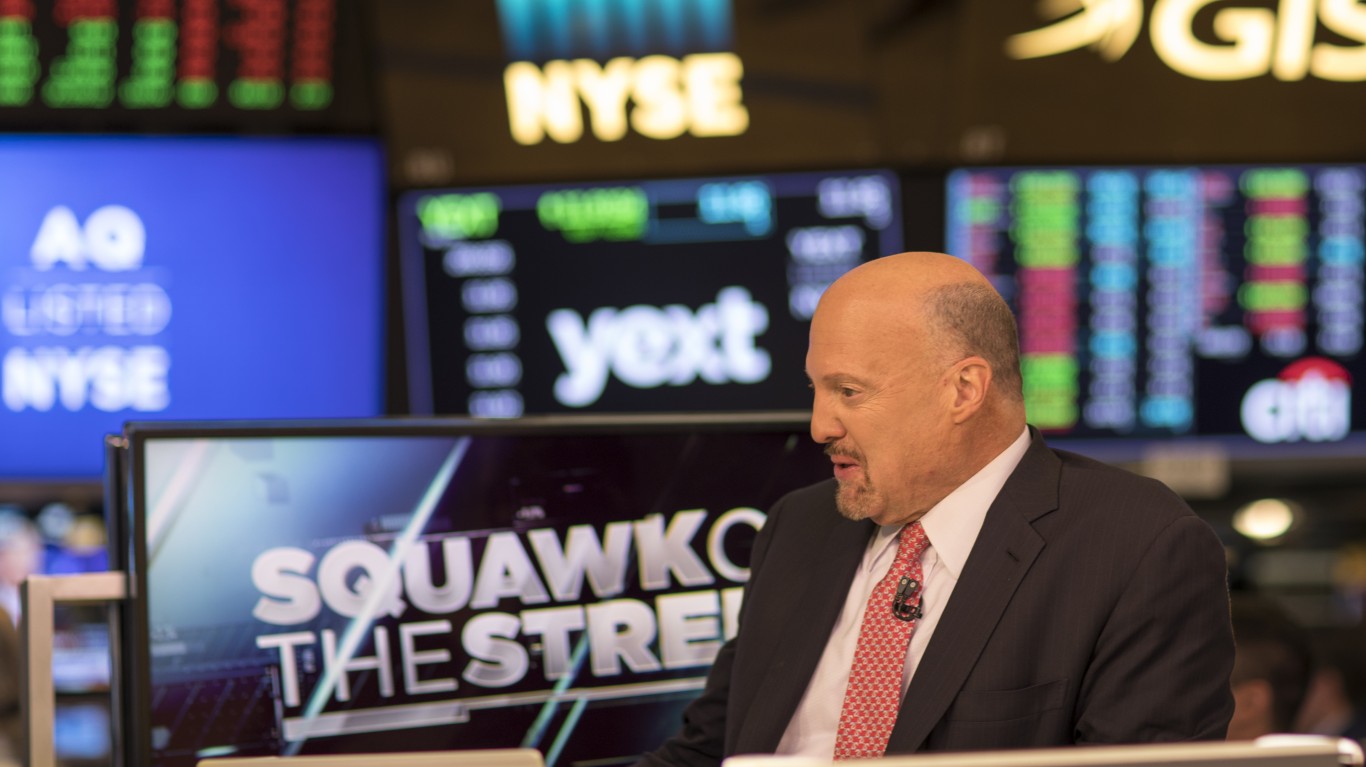
The bull market that began in October 2022 turned four this week. Jim Cramer marked the anniversary on air by noting that the S&P 500 had gained 117% since the bottom, and in the same segment he argued that bonds, housing, and consumer stocks have already rolled over. “I would argue that either you’re in a bear market or you’re close to a bear market for most of the market,” Cramer said.
The data support both claims. An S&P 500 index fund is up 14.1% this year, but Wells Fargo (NYSE:WFC | WFC Price Prediction) is down 9.13%, and Capital One (NYSE:COF) is down 16.02%, even after both posted strong second-quarter results.
That gap matters if you own bank stocks, because the largest U.S. lenders sit where every force Cramer described comes together. Their earnings show what higher rates are doing to borrowers, while their share prices reflect how differently investors are paying for that strength.
Why a Record Index Can Hide a Bear Market
The S&P 500 is weighted by company size, so the largest companies drive most of its return. A few giant winners can lift the index while the median stock falls.
That comes from the math of weighting. One trillion-dollar stock rising moves the index more than dozens of smaller stocks falling together.
Among the banks, Citigroup (NYSE:C) is up 14.76% this year, while Bank of America (NYSE:BAC) is up just 0.82%. The broad financial sector fund has gained 1.73%.
Cost of Money Is Driving Everything Else
The 10-year Treasury yield reached 5.22% on October 8, and the 30-year hit 5.60%, up 0.35 percentage points in a month.
Cramer mentioned an 8% mortgage, which runs ahead of the published data. The national 30-year average is 7.40%, up 0.69 percentage points in a month and well above February’s 5.98% low.
Short rates are also rising. The fed funds upper bound is 4.00%, up 0.25% from a month ago.
Homeowners With Stocks and Renters With Balances Live in Different Economies
Higher mortgage payments freeze housing turnover. Existing home sales fell to a 3.98 million annual pace in August, which hurts brokers, movers and home-improvement retailers. Wells Fargo’s home lending revenue fell 7%.
A household that owns equities has compounded wealth through this period. A household that rents and carries a card balance pays an average APR of 21.19%.
Corporate earnings reflect that divide. Bank of America’s wealth unit posted record revenue, up 16%, while retailers that depend on financed purchases lose the customers who borrow to buy.
What Bank Earnings Will Confirm or Break
When banks report, watch net interest margin, credit provisions, loan growth, and deposit costs. Wells Fargo has guided to modest net interest margin compression in the third quarter.
Rising provisions and deposit costs that outpace loan yields would confirm Cramer’s bear view. Steady loan growth and flat provisions would contradict it.
So far the credit data look healthy. Capital One’s net charge-off rate fell to 3.23%, and it released $662 million in reserves.
The bullish argument is real, because employment has held and the four-year gains are large. If the 30-year yield falls and mortgages head back toward 6%, the market would likely expand into rate-sensitive sectors, and the bear thesis would no longer hold. Riding a four-year run while planning the exit is its own discipline, and we covered both sides in a free bubble survivor’s handbook.
How Bank Stocks Stack Up Against Cramer’s Bear Case
On the bull side, JPMorgan Chase (NYSE:JPM) earned $7.70 per share, which included a one-time gain on an equity stake. Bank of America bought back $6.0 billion of stock, and Wells Fargo and Citigroup each trade near 10 times forward earnings. A positive yield curve at 0.44% supports lending spreads, and U.S. Bancorp (NYSE:USB) expanded its margin to 2.79%.
The bear case covers credit normalization, commercial real estate, deposit competition, and a consumer living on credit. JPMorgan’s chief executive warned, “It’s getting close to as good as it gets. We just don’t know how long it’s going to last.”
On this data, bank stocks look reasonably placed, and the diversified universal banks appear stronger than card-heavy lenders. Their fee income, buybacks, and roughly 10x forward valuations give them a buffer that the rest of the market Cramer described lacks.
Contact [email protected] for any questions or corrections.
Omor Ibne Ehsan is a writer at 24/7 Wall St. He is a self-taught investor with a focus on growth, cyclical, and dividend equities that have strong fundamentals, value, and long-term potential. He also has an interest in high-risk, high-reward investments such as penny stocks.