The IRS Could Take $16,900 of Your Dividend Income. A Roth IRA Changes the Math
Your high-yield BDC and REIT positions may be quietly generating a five-figure tax bill every single year, and the account type holding them determines whether that cost is optional or inevitable.

This post may contain links from our sponsors and affiliates, and Flywheel Publishing may receive compensation for actions taken through them.
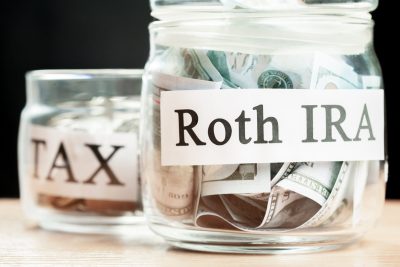
In the 24% federal bracket, a $500,000 portfolio of the five high-yield payers below generates about $70,300 a year and sends roughly $16,900 of it to the IRS. For married joint filers, that bracket covers taxable income from $206,701 to $394,600 under the 2025 tables.
Why Some Dividends Cost More in a Taxable Account
Qualified dividends carry a 0%, 15%, or 20% rate. Payouts from business development companies (BDCs) and REITs mostly fail the qualified test, so they are taxed as ordinary income at your full bracket rate. That gap explains why ordinary-income payers gain the most from sitting in a Roth. This model taxes every dollar at the ordinary rate. REIT holders can reduce part of that bill through the 199A tax break.
Roth Versus Taxable: $500,000 at 24%
Each stock starts with $100,000 in the model, which uses current forward yields.
| Account | Gross Income | Tax | Net Income |
|---|---|---|---|
| Roth IRA | $70,300 | $0 | $70,300 |
| Taxable | $70,300 | $16,900 | $53,400 |
You end up $16,900 ahead each year in the Roth, or $168,700 over 10 years before any growth.
Prospect Capital: 25.8% Yield After a Payout Cut
Prospect Capital (NASDAQ:PSEC) yields 25.8% on its $0.035 monthly payout. That rate was cut from $0.045 in May 2026, and NAV slipped to $5.71 from $6.56. Because every dollar is ordinary BDC income, the Roth saves about $6,200 a year on this position, the most of any name here. Risk: TTM EPS of $0.06 leaves little margin.
Dynex Capital: Payout Running Ahead of Earnings
Dynex Capital (NYSE:DX) yields 18.9%. In Q2 2026, earnings available for distribution of $0.36 fell short of the $0.51 quarterly dividend, one of the classic warning signs we broke down in a free guide to dividend traps. Mortgage REIT income is taxed as ordinary, so the Roth saves about $4,500 a year. Risk: leverage reached 8.6x equity in Q1.
Capital Southwest: First-Lien Book Behind a 10.9% Yield
Capital Southwest (NASDAQ:CSWC) yields 10.9%. Its portfolio is 99% first-lien debt with non-accruals at 1.1%. The Roth saves about $2,600 a year. Risk: quarterly earnings fell 17.8% year over year, which could put the supplemental payout at risk.
Gaming and Leisure Properties: AFFO Covers the 8.6% Yield
Gaming and Leisure Properties (NASDAQ:GLPI) yields 8.6%. AFFO guidance of $4.10 to $4.12 per share covers the $3.28 annualized dividend, with leverage at 4.8x. Holding it in a Roth saves about $2,100 a year. Risk: shares are down 10.36% year to date.
Plains GP Holdings: Midstream Income in Corporate Form
Plains GP Holdings (NASDAQ:PAGP | PAGP Price Prediction) yields 6.2% after raising its quarterly payout to $0.4175 from $0.38. It also lifted its 2026 EBITDA guidance midpoint to $2.88B. The Roth saves about $1,500 a year. Risk: closing and integrating the roughly $1.9B EPIC acquisition.
How Your Bracket Changes the Roth Advantage
| Bracket | Taxable Net | The annual Roth edge |
|---|---|---|
| 22% | $54,800 | $15,500 |
| 24% | $53,400 | $16,900 |
| 32% | $47,800 | $22,500 |
| 37% | $44,300 | $26,000 |
What Compounding Adds to $16,900 a Year
Reinvest the annual tax savings at a conservative 4% and the Roth’s edge reaches about $202,600 after 10 years and $502,400 after 20 years. Note that this model leaves out share-price growth. Those amounts are what it costs over time to own these payers outside a Roth.
Three Moves Before Your Next Tax Filing
- Pull your Form 1099-DIV and amounts the ordinary (nonqualified) dividends from any BDC or mortgage REIT. Multiply that total at your marginal rate.
- Compare the one-time tax on converting these specific positions with the annual savings shown above before concluding a Roth conversion costs too much.
- For a staged conversion, the highest-yield ordinary payers such as Prospect and Dynex produce the largest per-dollar tax savings. Payout coverage matters here: those two currently carry the weakest coverage in this group.
Contact [email protected] for any questions or corrections.
Chris Lange is a financial and geopolitical writer with more than a decade of experience covering a myriad of topics. He has published thousands of articles for 24/7 Wall St., with past coverage focused heavily on stocks, IPOs, healthcare, defense, global affairs, and technology.
His work has been quoted, or referenced by a number of outlets including Business Insider, USA Today, Yahoo Finance, MSN, The Motley Fool, and many other publications. A graduate of Southwestern University, he studied business with a focus on investments and has previous experience in banking and startups.
When not reading or writing the news, he is following his passion for Lacrosse, playing chess, or building solar projects with his dad.