Union Pacific’s Dividend After Earnings: What the Numbers Say for Income Investors
Union Pacific just beat earnings and raised its dividend for the 20th straight year, but a looming merger is redirecting billions away from shareholders. Here is what income investors need to know before the deal closes in 2027.

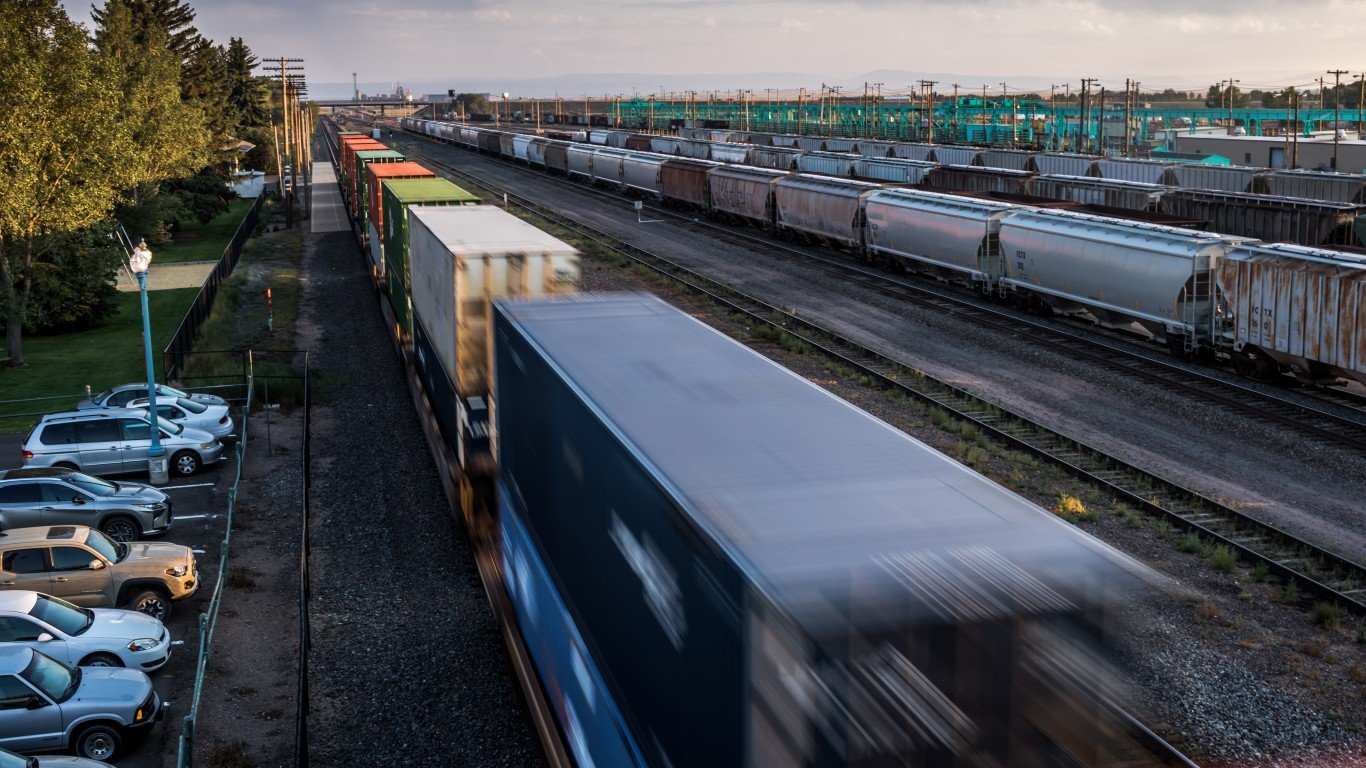
Union Pacific (NYSE:UNP | UNP Price Prediction) reported third-quarter results this morning. The figures beat expectations on both earnings and revenue. Adjusted EPS was $3.53, ahead of the $3.47 consensus, and revenue rose 15.3% to $7.20 billion. Shares were up 2.86% to $296.10 by midday. For income investors, the real story is behind those numbers, as the payout is well covered and capital returns now run almost entirely through the dividend.

Payout Coverage Leaves Room to Grow
Union Pacific declared $1.42 per share for the quarter, up from $1.38. This amounts to about 40% of adjusted quarterly EPS. In 2025, dividends of $5.44 against reported EPS of $11.98 put the payout ratio near 45%. The forward annualized dividend of $5.68 gives a yield of about 1.9%.
Cash flow supports those ratios. Cash from operations rose 18% to $8.3 billion, and free cash flow came to $2.4 billion. Management pointed to the earnings strength behind the payout:
“Union Pacific reported record financial results as net income totaled $2.1 billion, and our adjusted earnings per share grew 15% to $3.53.”

Two Decades of Raises, Checked Against the Record
A 3% increase marks the company’s 20th consecutive year of annual raises. The payment history confirms the steady pattern. The quarterly dividend held at $1.30 into early 2024, then rose to $1.34, then $1.38, and now stands at $1.42. That is about 9% above the $1.30 level. Guidance also commits to “consistent annual dividend increases.”
Buybacks Vanish as Merger Cash Piles Up
Share repurchases fell to $26 million over the first nine months, compared with $2,679 million a year earlier. The reason is the pending Norfolk Southern (NYSE:NSC) acquisition:
“We will continue growing our cash reserves in anticipation of closing the Norfolk Southern merger in the second half of 2027.”
Norfolk Southern also bought back no shares through September. CSX (NASDAQ:CSX) did the opposite, spending $1,049 million to repurchase 23 million shares. Union Pacific held $3.1 billion in cash and short-term investments. It ended the quarter with adjusted debt to EBITDA of 2.4 times.
How Volume and Pricing Fund the Check
The details are simple. Volume grew 6% while headcount fell 1%, so each extra carload added more profit than cost. Intermodal revenue jumped 27%. Pricing increases also continued to outpace inflation. Management expects that to improve:
“Looking forward, you would expect a better position, a better environment for stronger pricing.”
Merger Debt Is the Risk to Track
The company itself flags a credit rating downgrade risk from increased indebtedness linked to the acquisition. If borrowing costs rise, more cash goes to interest, and less is left for dividend growth. Fuel is a pressure point as well, with fourth-quarter prices expected to average about $4.85 per gallon.
Verdict for Income Investors
The dividend looks secure. A payout near 40% of earnings and a 20-year record of raises back that up. Starting income is modest at a 1.9% yield, though, and buybacks are on hold until the merger closes. For now, income growth will come from steady raises like this year’s 3%. Watch the November 18 merger comment date and fourth-quarter fuel costs.
Contact [email protected] for any questions or corrections.
Chris Lange is a financial and geopolitical writer with more than a decade of experience covering a myriad of topics. He has published thousands of articles for 24/7 Wall St., with past coverage focused heavily on stocks, IPOs, healthcare, defense, global affairs, and technology.
His work has been quoted, or referenced by a number of outlets including Business Insider, USA Today, Yahoo Finance, MSN, The Motley Fool, and many other publications. A graduate of Southwestern University, he studied business with a focus on investments and has previous experience in banking and startups.
When not reading or writing the news, he is following his passion for Lacrosse, playing chess, or building solar projects with his dad.