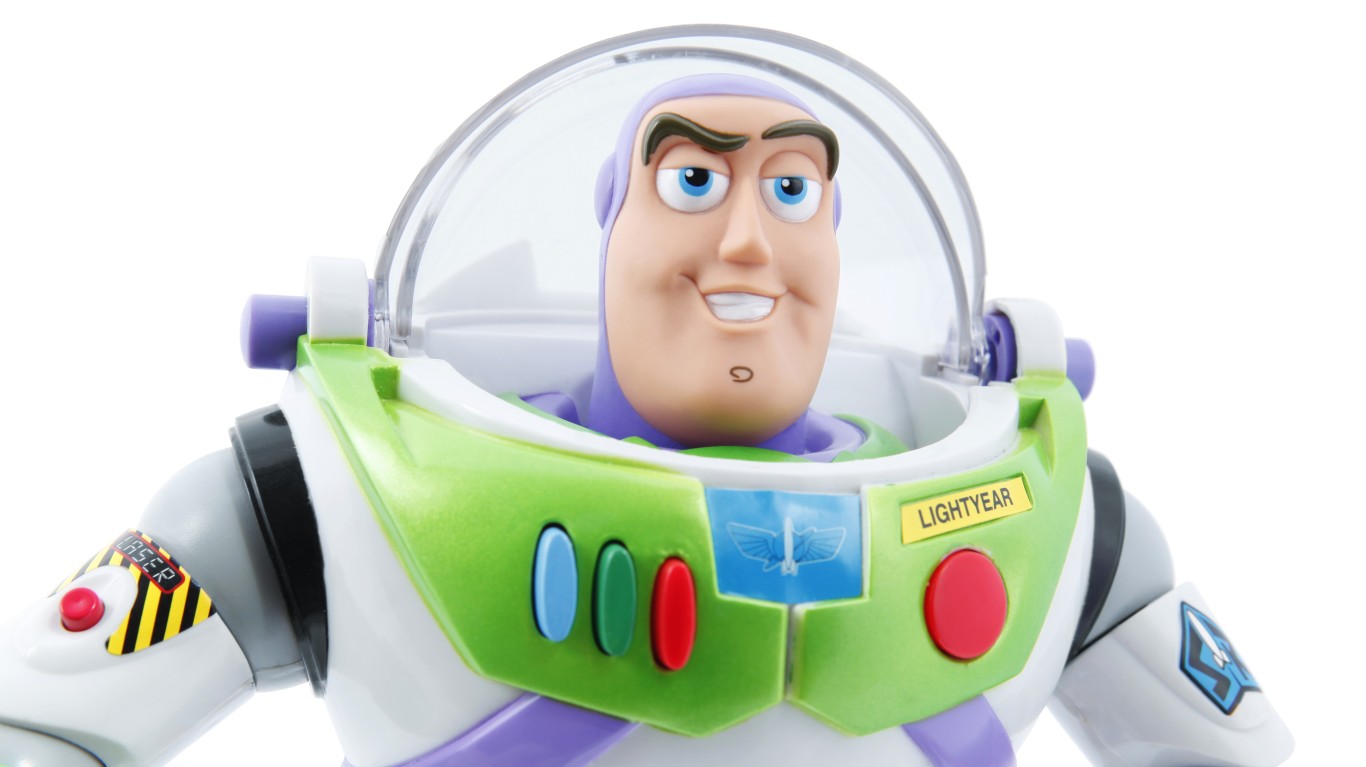
In 1985, He Was Forced Out of the Company He Founded. Months Later He Bet $10 Million On A Graphics Unit He Bought From George Lucas. By 2006, That Bet Was Worth Far More Than His Apple Stock
After Apple pushed Steve Jobs out, he quietly poured $10 million of his own money into a struggling graphics lab few people had heard of. What that gamble eventually revealed about where his real wealth came from would surprise almost…

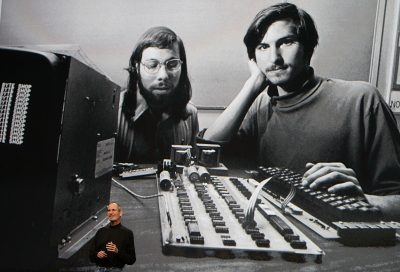
Steve Jobs lost his place at Apple (NASDAQ:AAPL | AAPL Price Prediction) in 1985. What he did next ended up tying his fortune to Disney (NYSE:DIS) as much as to the company he co-founded.
Forced Out, Then Buying a Graphics Lab
Jobs was forced out of Apple in 1985, according to Fortune, and Mac-History reports he sold nearly all his Apple stock after he left. According to the Wall Street Journal, George Lucas first asked $30 million for Lucasfilm’s computer graphics division, and Jobs negotiated the price down to $10 million. Pixar’s history page explains the split: $5 million went to Lucasfilm for exclusive rights to the technology, paid by the new company, and another $5 million funded Pixar’s operations. Lucasfilm kept no equity. Jobs incorporated Pixar on Feb. 3, 1986, per The Register. In exchange for his cash he held 70% of the company in 1986, and management and employees held 30%, per Pixar.
Lean Years Before Toy Story Paid Off
Jobs kept Pixar running with a line of credit and reportedly covered shortfalls with his own money several times, mostly on the hardware side. The Pixar Image Computer sold fewer than 300 units, and he sold the hardware business to Vicom in 1990 for $2 million, per Fortune.
Then came 1995. Toy Story made about $400 million, more than 12 times its production budget. Pixar’s IPO was expected to price at $12 to $14 a share. It closed its first day at $39, which made Jobs a billionaire on paper. The Register reports he owned 80.2% of Pixar at the 1995 IPO.
Back at Apple for $1 a Year
Apple agreed to buy Jobs’s company NeXT for $429 million in 1996, and he came back as interim CEO after the board fired Gil Amelio. Mac-History reports he took a $1 salary, received 10 million restricted shares in March 2003, and held 5.5 million vested shares by 2007. He had not sold any Apple stock since rejoining in 1997.
How the 2006 Disney Deal Dwarfed His Apple Shares
In January 2006, Disney agreed to buy Pixar in an all-stock deal valued at about $7.4 billion. According to Disney’s press release, each Pixar share converted into 2.3 Disney shares, valued at Disney’s $25.52 close on Jan. 23, 2006. At the time of the deal, Jobs owned about 50.6% of Pixar. Fortune reported he held about 138 million Disney shares in 2010, roughly 7% of the company, which made him its largest individual shareholder.
By our calculations, 138 million shares at the deal price come to about $3.52 billion. Apple closed 2006 at $84.84, per Interactive Advisors. That price comes before Apple’s later stock splits.
There is conflicting information about the the number of Apple shares had at that time, some sources say Jobs had 5.5 million Apple shares others say it was closer to 10 million. At the 2006 price, 5.5 million shares come to about $467 million, and 10 million would come to $848 million. Comparing his Disney shares at the January 2006 deal price with his Apple shares at the end of 2006, the Disney stake was about 7.5 times the first Apple figure and 4.2 times the second. Jobs’ exact Apple share count in 2006 is unverified. Even the higher count leaves Disney far ahead.
Why the Gap Narrowed by 2011
When Jobs died on Oct. 5, 2011, Bloomberg (via Business Standard) valued his Disney stake, 7.4% of the company, at $4.35 billion. It valued his 5.55 million Apple shares at $2.05 billion. That split the two holdings roughly 68% Disney and 32% Apple, with the Disney stake worth 2.12 times the Apple stake (calculated). The gap narrowed because Apple’s price rose about 4.35 times from its end-2006 level, while Disney’s rose about 1.23 times from the deal price.
Where Both Companies Stand Now
Apple’s market value is about $5.08 trillion. Fiscal Q3 revenue rose 16.4% to $109.42 billion, and EPS of $2.02 came in ahead of the $1.89 consensus. The shares are up 28.33% year to date and trade at about 45 times earnings.

Pixar still drives results at Disney. In its fiscal Q3 filing, Disney reported revenue of $25.25 billion and adjusted EPS of $2.06. On the call, Josh D’Amaro said “the five Toy Story films have delivered over $4 billion in global box office and over two billion hours streamed on Disney+.” Disney shares are down 0.14% year to date at about 16 times earnings.

The next thing to watch is Disney’s fiscal Q4 report. The company guided to roughly 16% adjusted EPS growth for fiscal 2026, including the 53rd week. The bigger lesson from the Jobs story is about what happened after the setback. He put his own capital into technology he understood, kept funding it through years of losses, and held on long enough for Toy Story to show what it was worth.
Contact [email protected] for any questions or corrections.
AJ spent 10 years writing about financial markets at The Motley Fool. His coverage centers on technology stocks and the broader macroeconomic trends, from interest rates to geopolitics, that shape where markets are headed next. AJ is drawn to the stories where big-picture economics and individual companies collide.