3 Self-Storage REITs With Steady Rent Checks and Very Different Dividend Risks
Self-storage REITs are stabilizing after years of oversupply, but the three biggest names offer yields ranging from under 4% to over 5% and carry very different risks hiding behind those rent checks.


Self-storage makes money from life transitions. People move, downsize, marry, divorce, settle estates, and run out of closet space, and each of those changes can end with a monthly rent check for a 10-by-10 unit. After a long soft patch caused by too much new supply, the group is stabilizing: Public Storage (NYSE:PSA) reported same-store occupancy of 92.2% in the third quarter, up 30 bps year over year. All three names below are equity REITs that own physical storage facilities, so this roster contains no mortgage REITs, and dividend safety is measured by cash flow coverage rather than GAAP earnings.
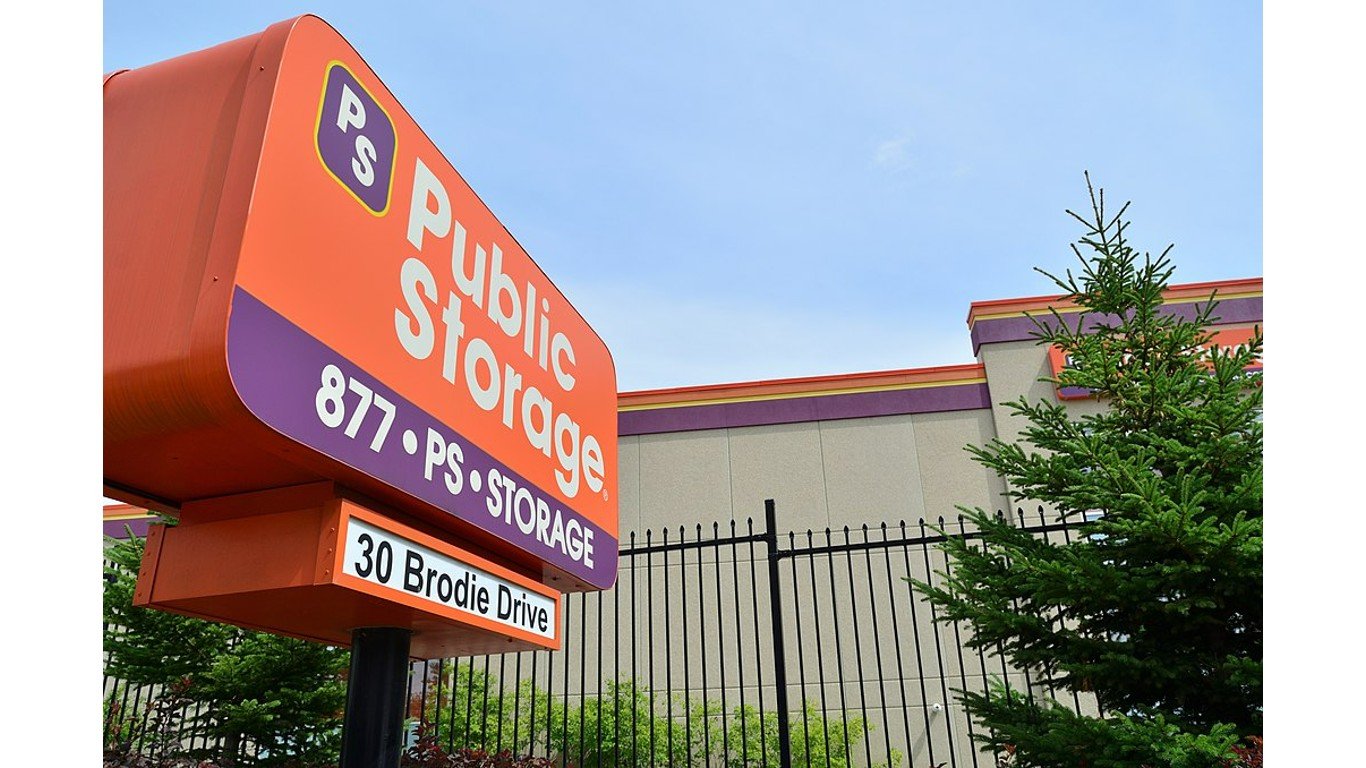
Public Storage Pays $3 a Quarter With the Biggest Cushion in the Group.
Holdings: As of September 30, 2026, Public Storage owned or operated 4,764 self-storage facilities with roughly 339 million net rentable square feet across 42 states, Puerto Rico, and Canada. It also holds a 35% common equity interest in Shurgard, which runs 338 self-storage facilities in Western Europe. The footprint jumped this year after the all-stock National Storage Affiliates deal closed on July 22, 2026, adding 1,100+ stores, and the roughly $1.2B PS Canada purchase closed on Sept 1, 2026.
Demand background: Same-store revenue rose 0.5% in the third quarter, an improvement from a flat year-to-date trend. On the July call, the CFO said: “Average move-in rents turned positive at +1.6%, the first time since 2021 that both new move-in rates and occupancy were up on a year-over-year basis.” Management also raised full-year Core FFO guidance to $16.90–$17.10 per share.
Current yield: The annualized dividend of $12 against a share price of $312.87 works out to about 3.84%. The stock is up 24.2% year to date, which has compressed the yield.
Payout coverage (Core FFO): Third-quarter Core FFO of $4.34 per share covered the $3 quarterly dividend with a payout of roughly 69%. Against the full-year guidance midpoint of $17.00, the payout is about 71%. The dividend has held at $3 per quarter since the 2023-03-14 ex-date, so the margin is wide, but the raises have stalled.
Bull case: Scale plus synergies. Management expects $110–$130M of run-rate synergies from NSA within 3–4 years, and its PS Next platform runs pricing, staffing, and a digital leasing process where “seventy-five percent complete their lease fully digitally.” The development and expansion pipeline stands at $788.9M.
One risk: Leverage and integration. Net debt to EBITDA rose to 3.4x from 3.0x a year earlier, $650M of debt matures in the fourth quarter, and the third quarter carried $114.6M of transaction and integration expenses. Full-year same-store NOI guidance of -0.8% to +0.2% remains slightly negative at the midpoint.
Extra Space Storage Is Growing Same-Store NOI While Peers Wait
Holdings: Extra Space Storage (NYSE:EXR) owns and operates 4,410 self-storage facilities across 42 states and Washington, D.C., with about 341.0 million square feet of rentable space. It is also the largest self-storage manager in the U.S., with 2,373 stores under third-party and joint venture management, plus tenant reinsurance and a bridge lending book.
Demand background: Extra Space posted the best operating quarter of the three. Second-quarter same-store revenue rose 2.4%, same-store expenses fell 0.5%, and same-store NOI grew 3.5%. Quarter-end occupancy was 94.2%. Management credited supply more than demand: “demand is steady; performance is improving because of the continued reduction in supply.” Existing customers are staying about 1.5 months longer than last year.
Current yield: The annualized dividend of $6.48 against a price of $144.39 works out to roughly 4.49%.
Payout coverage (Core FFO): Second-quarter Core FFO of $2.15 per share covered the $1.62 quarterly dividend at a payout of about 75%. Against the raised full-year Core FFO guidance of $8.25–$8.40, the payout is about 78%. That is solid coverage, though the $1.62 payment has not moved since late 2023.
The upside: The operating machine is already producing growth, guidance went up, and the balance sheet has room. The CFO cited “roughly $2 billion available on our revolving lines of credit.” The CEO said that if supply keeps falling and consumers hold up, “we think we can get back to historical levels of revenue growth between 3% and 4%.”
One risk: Extra Space remains an equity REIT, but its bridge lending book of about $1.5 billion brings in a piece of the credit and interest rate exposure that mortgage REITs carry. If storage values fall, those loans are where stress would show up first. Occupancy also fell 20 bps year over year, and the shares are down 3.67% over five years.
CubeSmart Offers the Highest Yield and the Thinnest Coverage
Holdings: CubeSmart (NYSE:CUBE) has 662 consolidated stores with 48.5 million rentable square feet, concentrated in Northeast and urban markets, and manages another 872 stores for third parties.
Demand background: Same-store revenue growth turned positive at +0.6% in the first quarter and rose to +0.8% in the second. Realized annual rent per occupied square foot rose 0.7% to $22.34. The CEO told analysts that “2026 marks a year of inflection as we returned to positive growth throughout the year.”
Current yield: The annualized dividend of $2.12 against a price of $40.52 works out to about 5.23%, the highest of the three.
Payout coverage (FFO as adjusted): Second-quarter adjusted FFO of $0.63 per share covered the $0.53 quarterly dividend at a payout of about 84%. Against the raised full-year guidance of $2.54–$2.60, it is about 82%. The dividend is still covered, but the extra yield comes with less margin. CubeSmart is the only one of the three still raising its payout: $0.51 in 2024, $0.52 in 2025, and $0.53 in 2026.
Bull case: Management is using its capital actively. A joint venture with Heitman takes in 15 stores valued at $197M, with CubeSmart keeping a 20% interest and putting the proceeds toward buybacks. The company bought back 1.1M shares at an average of $38.96 in the second quarter and pushed its revolver due date out to June 2030.
One risk: Costs are rising faster than revenue. Same-store operating expenses rose 4.4%, led by personnel at +7.5% and property taxes at +5.3%, which pushed same-store NOI to -0.7%. If expenses don’t ease in the second half as management expects, the payout ratio gets higher.
How the Three Storage REITs Compare on Income
| REIT | Annual Dividend | Yield | Payout vs. FY FFO Guidance Midpoint |
|---|---|---|---|
| Public Storage | $12 | 3.84% | 71% (Core FFO) |
| Extra Space Storage | $6.48 | 4.49% | 78% (Core FFO) |
| CubeSmart | $2.12 | 5.23% | 82% (FFO as adjusted) |
The yield and coverage rankings run in opposite directions, and that tradeoff is what income investors are choosing between. Public Storage has the largest FFO margin and the most acquisition risk to work through. Extra Space has the clearest same-store growth and a lending book to watch. CubeSmart pays the most and is still raising its dividend, so the return depends on whether expenses ease by year-end as management expects.
Contact [email protected] for any questions or corrections.
Chris Lange is a financial and geopolitical writer with more than a decade of experience covering a myriad of topics. He has published thousands of articles for 24/7 Wall St., with past coverage focused heavily on stocks, IPOs, healthcare, defense, global affairs, and technology.
His work has been quoted, or referenced by a number of outlets including Business Insider, USA Today, Yahoo Finance, MSN, The Motley Fool, and many other publications. A graduate of Southwestern University, he studied business with a focus on investments and has previous experience in banking and startups.
When not reading or writing the news, he is following his passion for Lacrosse, playing chess, or building solar projects with his dad.