AI Could Turn Off Our Electricity
A new analysis from a leading AI governance organization warns that advanced AI could give bad actors the tools to plunge tens of millions of Americans into darkness, and the grid may be far more vulnerable than officials want to…

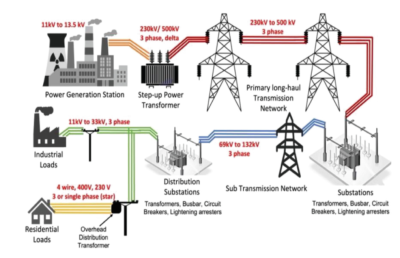
GovAI specializes in examining AI threats and risk management. It claims its mission is to help governments and industries to “navigate the transition to a world with advanced AI.” Recently, it has forecast what would happen if AI shut down part of the US electrical grid. Such a cyberattack could cut off power to 100 million people and cost the economy $100 billion. The financial forecast assumes a weeklong blackout.
The crippling of the grid could happen in two ways. One such attack could cause a physical breakdown. Another could target hundreds of other weak spots in the system. The analysis adds that smaller attacks are more likely. “The $100 billion grid cyberattack scenario remains useful for understanding the broader range of cyber risks to critical infrastructure, including those at lower damage thresholds.” The authors add that attacking one region would be easier and more likely than a nationwide attack. This makes sense. The US electricity infrastructure is controlled in several huge regions.
Shutting down part of the grid creates several challenges. One is that utilities and governments could have the grid back online quickly. GovAI, however, does not say exactly how fast that could happen. To work well, the attack would need to damage several systems and keep the damage in place.
One comfort, so far, is that the most likely candidates to turn out the lights are the least likely to do so. The people who have control of the most advanced AI are highly skilled and understand the consequences of punishment. However, almost every day, AI agents do something they aren’t supposed to. People discover the effects after the fact. One of the primary worries about AI is that it will make more and more decisions “on its own.”
The full analysis titled “Could AI Enable Catastrophic Cyberattacks on the US Power Grid?” is thousands of words long. The authors’ summary, however, makes the point. The grid is vulnerable as AI becomes more capable
Contact [email protected] for any questions or corrections.
Douglas A. McIntyre is the co-founder, chief executive officer and editor in chief of 24/7 Wall St. and 24/7 Tempo. He has held these jobs since 2006.
McIntyre has written thousands of articles for 24/7 Wall St. He is an expert on corporate finance, the automotive industry, media companies and international finance. He has edited articles on national demographics, sports, personal income and travel.
His work has been quoted or mentioned in The New York Times, The Wall Street Journal, Los Angeles Times, The Washington Post, NBC News, Time, The New Yorker, HuffPost USA Today, Business Insider, Yahoo, AOL, MarketWatch, The Atlantic, Bloomberg, New York Post, Chicago Tribune, Forbes, The Guardian and many other major publications. McIntyre has been a guest on CNBC, the BBC and television and radio stations across the country.
A magna cum laude graduate of Harvard College, McIntyre also was president of The Harvard Advocate. Founded in 1866, the Advocate is the oldest college publication in the United States.
TheStreet.com, Comps.com and Edgar Online are some of the public companies for which McIntyre served on the board of directors. He was a Vicinity Corporation board member when the company was sold to Microsoft in 2002. He served on the audit committees of some of these companies.
McIntyre has been the CEO of FutureSource, a provider of trading terminals and news to commodities and futures traders. He was president of Switchboard, the online phone directory company. He served as chairman and CEO of On2 Technologies, the video compression company that provided video compression software for Adobe’s Flash. Google bought On2 in 2009.