Mark Cuban Warns Hyperscaler Borrowing Could Create A “Debt Bubble In The United States Of America”
Mark Cuban calls himself the biggest AI proponent alive, yet he sees the debt financing behind the AI buildout as a potential catastrophe for the entire U.S. economy. His warning puts NVIDIA and the hyperscalers at the center of a…

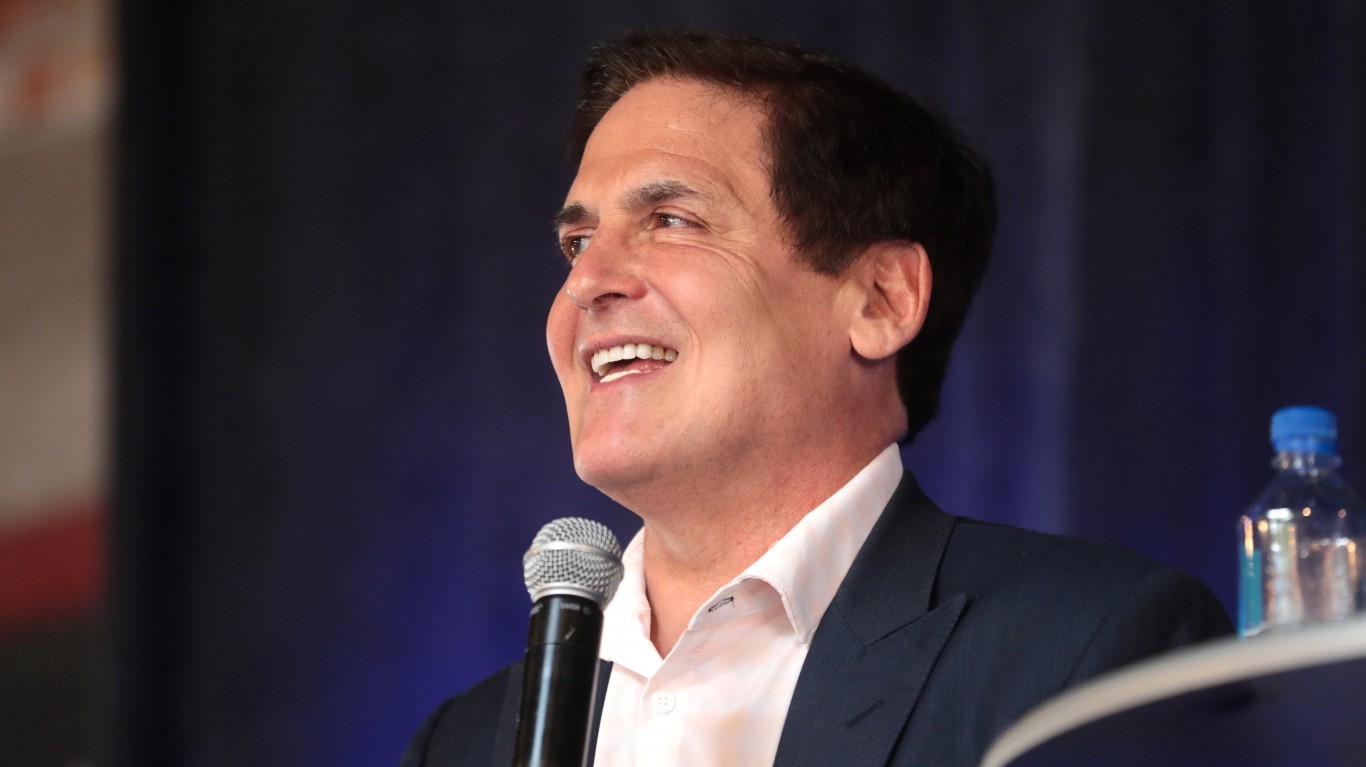
Mark Cuban calls himself an AI champion. He still worries that the money behind the AI buildout could drive the country into trouble. In an episode of Diary of a CEO released Monday, Oct. 26, 2026, he told host Steven Bartlett: “We literally could get into a debt bubble in the United States of America.” He also said: “I am the biggest proponent of AI that there is.”
The word that matters most is “could.” Cuban did not say when a debt bubble would form, or whether one will form at all. His warning matters for NVIDIA (NASDAQ:NVDA | NVDA Price Prediction), the main chip supplier to the companies doing the borrowing. The stock closed at $215.38 on Oct. 28. That is down 5.89% over the past month and up 15.76% year to date.

Cuban Sees Corporate and Federal Debt Piling Up Together
Hyperscalers are the biggest cloud computing companies, the ones building AI data centers. Cuban said: “And the hyperscalers are borrowing more than they’re making.” He linked that to Washington’s borrowing: “Yeah, of course it is because our deficit keeps on rising in the United States, which means we have to borrow more money.” He also pointed to Ray Dalio: “If you read what Ray Dalio says, Ray says we’ve already crossed the curve, right?”
Cuban praised NVIDIA and Jensen Huang. He also said the chipmaker is in effect “subsidizing half the industry” because it has the cash. NVIDIA’s own disclosures help explain the comment. On its latest earnings call, management said it has invested nearly $50 billion in frontier AI labs. It also announced partnerships with Apollo, BlackRock, Blackstone, Brookfield, Goldman Sachs and KKR to raise over $500 billion in third-party capital. NVIDIA’s guarantee obligations are capped at $108.5 billion. Management responded to the criticism head-on: “We recognize the scale of this support, and we know some will call this circular financing. We see it differently.”
Cuban’s Rate and Interest Numbers, Checked
Cuban said “now the 10-year is like 5.2%” and that “right now at current interest rates, we’re paying $1 trillion in interest every year in this country.” He added: “If it goes to 6%, 8%, 10%, something’s got to give.”
Federal Reserve data put the 10-year Treasury yield at 4.99% on Oct. 27, which is below his figure. The yield was above his number on most days from Oct. 1 through Oct. 13, with a high of 5.31% on Oct. 5. The interview may have been recorded before it was released, so his figure matches early-October levels.
The data back up his interest figure. Bloomberg, reporting Treasury data via The Star on Oct. 19, said U.S. net interest costs came to $1.05 trillion in fiscal 2026. A separate measure from the Congressional Budget Office, cited by the American Action Forum, shows interest payments on the national debt rose $115 billion, or 11%, in fiscal 2026. The CBO put the fiscal 2026 deficit at $2.0 trillion.
Hyperscaler Bond Sales Show the Size of Cuban’s Concern
Per S&P Global, as reported by Fortune on July 31, 2026, hyperscalers and related companies such as NVIDIA had issued $225 billion in bonds as of late July. They were on pace for $400 billion for the full year. On NVIDIA’s call, management said capex by the top five hyperscalers is expected to reach nearly $800 billion in 2026 and $1.3 trillion in 2027.
NVIDIA’s own balance sheet has little debt, with a debt-to-equity ratio of 0.07 and fiscal 2026 free cash flow of $96.58 billion. Data Center revenue reached $89.02 billion last quarter, according to its Q2 fiscal 2027 filing. Huang’s view: “Now, compute is revenue.”

How Cuban Says He Is Protecting Himself
Asked if he is playing defense, Cuban said: “I’ve got money in this country, in that country, and I haven’t invested nearly as much,” and accepted that he may miss some gains. He told average listeners to stay patient and “have some cash because at some point it’s going to turn.” According to TheStreet, he also said the stock market is in a bubble, then added: “What causes it to burst? I have no idea.” That is the harder half of the problem, and the one our free bubble survivor’s handbook spends most of its pages on: riding the mania while planning the exit.
What to Track Next
In Cuban’s view, rising government and corporate debt matters to anyone holding bonds, bond funds or retirement accounts heavy in big tech. More borrowing competes for the same pool of capital, and higher yields lower the prices of bonds already outstanding. NVIDIA’s growth also depends partly on its customers being able to finance their purchases. Management said the AI labs it expects to support with its balance sheet could make up roughly a quarter of its business next year.
Three things are worth tracking: the 10-year yield, hyperscaler capex updates, and NVIDIA’s supply obligations, which stood at $279.00 billion. NVIDIA has guided to third-quarter revenue of $108.0 billion, plus or minus 2%.
Contact [email protected] for any questions or corrections.
AJ spent 10 years writing about financial markets at The Motley Fool. His coverage centers on technology stocks and the broader macroeconomic trends, from interest rates to geopolitics, that shape where markets are headed next. AJ is drawn to the stories where big-picture economics and individual companies collide.