Satya Nadella Says Renting AI Capacity to a Few Big Customers Is “Not a Business”
Satya Nadella drew a sharp line between the AI customers Microsoft wants and the ones it will tolerate, and the distinction reveals something uncomfortable about how the biggest names in cloud infrastructure actually make their money.

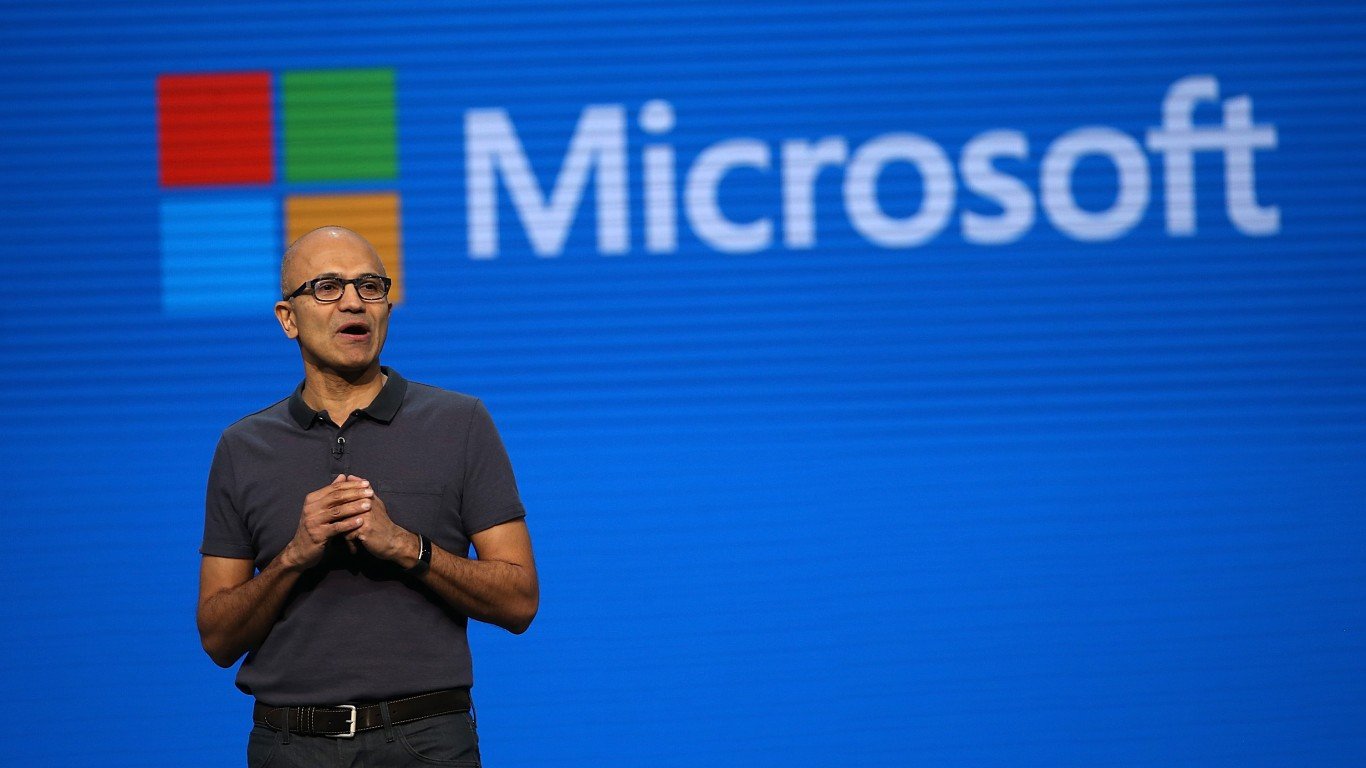
On the September-quarter earnings call of Microsoft (NASDAQ:MSFT | MSFT Price Prediction), held October 28, 2026, Satya Nadella compared the enterprise customers he wants with “like 4 customers who buy a lot of capacity from you and you can show a few quarters of growth.” He added, “And that’s not a business as far as I’m concerned.”
The remark came from results in which Microsoft reported revenue of $92.3 billion, up 19%, with Azure revenue up 48%. Shares closed at $531.01 before the release, down 0.06%, leaving the company worth $3.94 trillion. After the call, they traded at $546.39 at about 7:59 p.m. ET, up 2.90%.

Nadella’s Remark Is About Pricing Discipline
A Bernstein Research analyst asked how much of Azure’s AI demand comes from enterprises. Satya Nadella said Rolls-Royce runs jet-engine maintenance across 30,000 parts on Foundry, Microsoft’s platform for building AI agents, and that Austrian bank RBI showed him 20-plus business processes end to end.
These are recurring workflows that use compute every day, so they last longer than a one-time capacity purchase. Nadella did not name any company. He said Microsoft is “open for business” with large buyers because “as long as the pricing is right, we may sell them some.”
One Pool of Capacity in a Supply Shortage
Nadella told Morgan Stanley’s Adam Wood that “we have one pool and we want to get the pool to be as efficient and fungible.” Fungible capacity is hardware that can shift among many customers and workloads, which lowers the risk that one departing buyer leaves expensive chips idle.
Amy Hood said capex of $45.2 billion came in below her July 29 guide of over $50 billion “as some third-party capacity deliveries we expected in Q1 were delayed.” She added that “Customer demand continues to exceed available supply.”
For the December quarter, Amy Hood guided Azure growth of 49% to 50% in constant currency and capex of over $50 billion, with calendar-year spending of approximately $170 billion. A company that is short on supply can afford to be choosy on price, so the stance costs Microsoft little.
Microsoft Carries Its Own Big-Customer Exposure
Commercial remaining performance obligation, which is contracted revenue not yet recognized, rose 73% to $677 billion, while commercial bookings fell 12%. Hood tied the decline to “large Azure commitments in the prior year,” partly offset by “a large Azure commitment this quarter.”
Microsoft also recorded $10.0 billion of revenue from commercial arrangements with OpenAI out of $92.279 billion, or about 10.8%. It also buys third-party capacity, so it sits on both sides of the model Nadella questioned.
For comparison, CoreWeave (NASDAQ:CRWV) closed at $63.93 on October 28. For the June 2026 quarter, it reported three unnamed customers at 36%, 26% and 10% of revenue. Oracle (NYSE:ORCL) closed at $144.54 with $638 billion of remaining performance obligations. S&P Global Ratings (SGR) estimates OpenAI accounts for roughly half of that total.
What Investors Should Track in Microsoft’s Next Report
Microsoft’s results support its growth case. Demand is running ahead of supply, so capacity is what limits revenue, and the growing backlog shows customers are signing commitments years in advance.
The risks are heavy capex, delayed third-party deliveries, and the share of revenue that comes from OpenAI. Spreading AI across many enterprise workflows is how Microsoft reduces that concentration over time, and this quarter showed that spread growing.
All of that capex has to be powered and cooled by somebody, which is why the suppliers behind the data centers keep showing up alongside the hyperscalers themselves. We pulled together seven of them in a free report on the AI infrastructure buildout.
Microsoft has not confirmed the date of its next report. If Azure growth falls short of Amy Hood’s 49% to 50% guidance, or OpenAI’s share of revenue rises above about 10.8%, the case for breadth gets weaker.

Contact [email protected] for any questions or corrections.
Omor Ibne Ehsan is a writer at 24/7 Wall St. He is a self-taught investor with a focus on growth, cyclical, and dividend equities that have strong fundamentals, value, and long-term potential. He also has an interest in high-risk, high-reward investments such as penny stocks.