Seagate vs. Western Digital: Which AI Storage Stock Wins?
AI is minting money for hard disk drive makers, but Seagate and Western Digital are betting on rival technologies to sustain it. The wrong bet could leave one of them behind just as the cycle turns.


- Seagate and Western Digital are benefiting from AI data center expansion, with fiscal first-quarter 2027 revenue increasing 61.0% and 55.5%, respectively.
- HDD revenue is growing considerably faster than storage capacity shipments, reflecting stronger pricing, product mix, and the increasing importance of high-capacity nearline drives.
- Seagate’s HAMR technology offers greater long-term recording density potential, while Western Digital maintains its capacity leadership through an UltraSMR strategy.
AI Storage Demand Is Creating a New Investment Opportunity
Artificial intelligence has transformed investor expectations for semiconductor manufacturers, memory suppliers, and data center infrastructure companies. However, one of the less appreciated beneficiaries of the AI investment cycle is the hard disk drive industry, where demand for high-capacity storage is accelerating and manufacturers are capturing substantially more revenue from the storage capacity they ship.
Two companies dominate this opportunity: Seagate Technology (STX | STX Price Prediction) and Western Digital (WDC). Both are benefiting from the expansion of hyperscale cloud infrastructure, but they have pursued different technological strategies for increasing drive capacity and improving manufacturing economics.
Seagate has committed to heat-assisted magnetic recording, or HAMR, through its Mozaic technology platform. Western Digital has emphasized UltraSMR, an approach that increases storage density through improvements to established magnetic recording technologies. The distinction is important because the next phase of HDD industry growth will depend not simply on producing more drives but on delivering more terabytes per drive at competitive manufacturing costs.
The Information Network’s latest data through fiscal 1Q27 reveal a substantial acceleration in industry revenue. Combined Seagate and Western Digital revenue increased from $5.447 billion in fiscal 1Q26 to $8.614 billion in fiscal 1Q27, representing growth of 58.1%. During the same period, combined storage capacity shipments increased only 21.2%.
That difference is the central investment issue. HDD manufacturers are generating significantly more revenue without a proportional increase in the amount of storage capacity shipped. This suggests that pricing and product mix are contributing substantially to financial performance, potentially creating earnings leverage that investors have not historically associated with the HDD industry.
Yet despite strong earnings, both stocks have experienced considerable volatility. Investors remain concerned that the industry’s historical cyclicality could eventually reassert itself, particularly if manufacturers expand production or hyperscale customers moderate spending. Recent trading also illustrates how demanding expectations have become following substantial stock appreciation.
Seagate and Western Digital: Revenue Growth Is Outpacing Capacity
The HDD industry’s current recovery differs from earlier cycles because demand is concentrated in high-capacity nearline storage rather than consumer computers. Hyperscale data centers require enormous quantities of storage for training datasets, model checkpoints, generated content, enterprise archives, and conventional cloud applications.
While solid-state drives provide the performance required for low-latency applications, HDDs retain a substantial cost advantage for storing large amounts of information that do not require immediate access. This distinction supports continued demand for mechanical storage even as NAND flash technology advances.
According to Table 1, Western Digital shipped more storage capacity than Seagate in fiscal 1Q27, delivering 248 exabytes compared with Seagate’s 220 exabytes. Nevertheless, Seagate recorded stronger revenue growth, increasing 61.0% year over year compared with Western Digital’s 55.5%.
The table also highlights the importance of nearline storage, which accounted for approximately 90% of combined capacity shipments. Both manufacturers are increasingly dependent on enterprise and hyperscale customers, making their financial performance closely tied to data center infrastructure investment.
| Table 1. Seagate vs. Western Digital: Fiscal 1Q27 HDD Performance | ||
| Metric | Seagate (STX) | Western Digital (WDC) |
| HDD revenue ($ billions) | 4.233 | 4.381 |
| Revenue growth YoY | 61.0% | 55.5% |
| Capacity shipped (EB) | 220 | 248 |
| Capacity growth YoY | 20.9% | 21.6% |
| Nearline capacity (EB) | 198 | 223 |
| Nearline growth YoY | 24.5% | 21.9% |
| Implied revenue per TB | $19.24 | $17.67 |
| Source: The Information Network | ||
The most revealing comparison is implied revenue per terabyte. Seagate generated approximately $19.24 per terabyte in fiscal 1Q27, compared with Western Digital’s $17.67, a difference of approximately 8.9%.
This does not necessarily mean Seagate is manufacturing drives more cheaply or earning higher margins on every product. Differences in customer contracts, capacity configurations, and product mix influence the calculation. Nevertheless, it demonstrates that Seagate is capturing more revenue from each unit of capacity shipped.
Western Digital remains the larger manufacturer by both revenue and capacity, but Seagate is closing the gap in revenue. That raises an important question for investors: Could Seagate’s technology strategy eventually allow it to overtake Western Digital in financial performance even without matching its shipment volume?
Seagate’s HAMR Technology Could Change HDD Economics
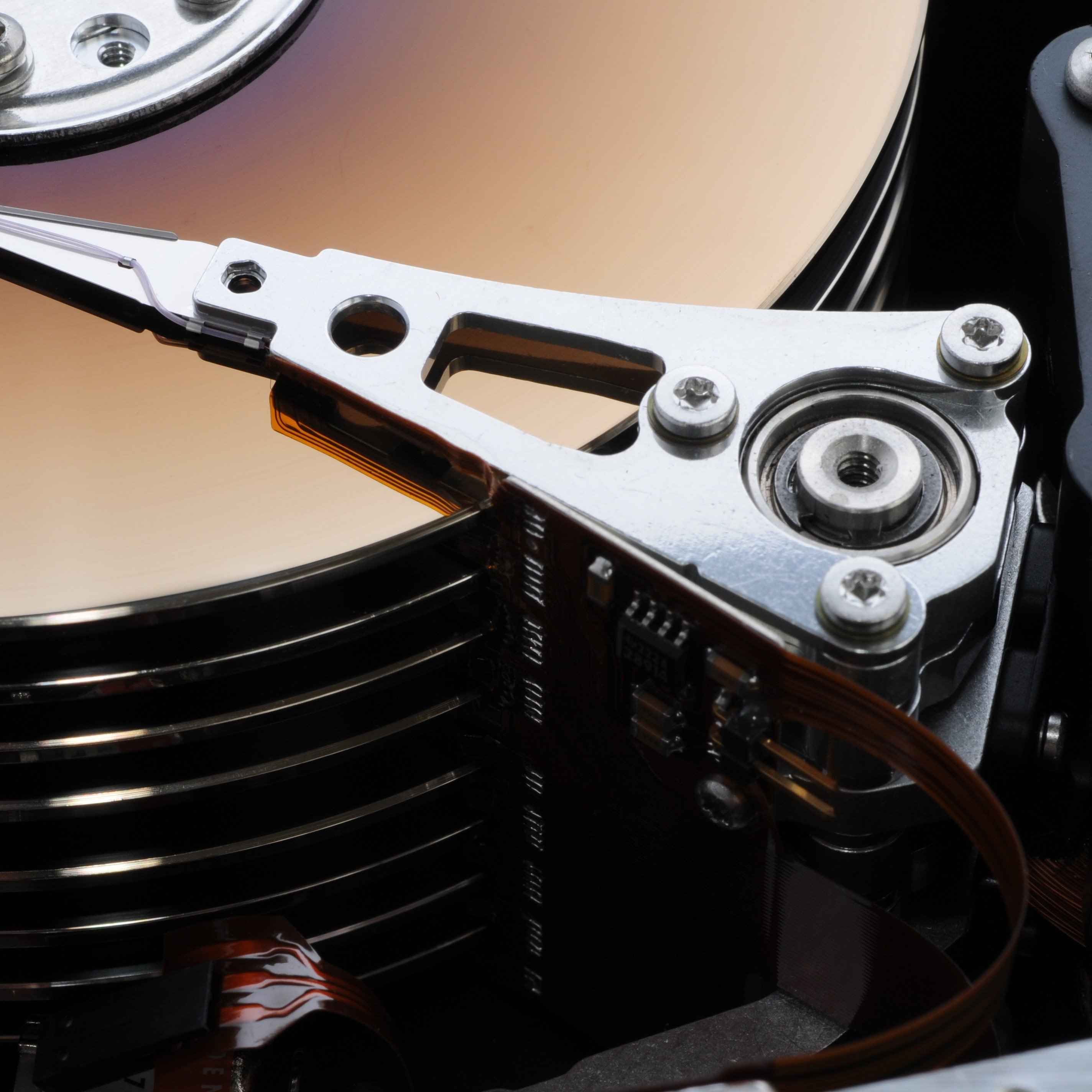
Seagate’s principal technological advantage is its investment in HAMR, which uses laser-assisted heating to increase the amount of information that can be stored on magnetic media.
Traditional HDD recording technologies face physical limitations as manufacturers attempt to write increasingly small magnetic regions. HAMR addresses these constraints by temporarily heating a localized portion of the recording medium, allowing the use of materials with greater magnetic stability and supporting higher recording densities.
The technology offers a pathway toward substantially higher-capacity drives, potentially reducing the number of units required to satisfy a hyperscale customer’s storage requirements. Higher-capacity drives can also improve rack density, reduce the physical footprint of storage infrastructure, and lower power consumption per terabyte.
However, HAMR introduces manufacturing complexity. Laser-integrated recording heads, specialized magnetic media, and demanding reliability requirements create challenges that must be managed through production yields and process control.
Seagate’s opportunity is to convert its technological lead into a sustained economic advantage. If the company can increase drive capacities while maintaining competitive manufacturing costs, it could generate additional revenue without proportionately increasing unit production.
This strategy is consistent with management’s emphasis on areal density improvements, value-based pricing, and supply discipline. In its October 27 earnings announcement, Seagate reported fiscal 1Q27 revenue of $4.233 billion, non-GAAP gross margin of 57.8%, and non-GAAP operating margin of 50.7%. The company also generated approximately $1.5 billion in free cash flow.
These results demonstrate that the company’s improving economics are already translating into substantial profitability. They do not establish how much of that profitability is directly attributable to HAMR, but they provide evidence that Seagate’s broader high-capacity storage strategy is producing meaningful financial benefits.
Western Digital’s UltraSMR Strategy Offers a Different Advantage
Western Digital has pursued a more incremental approach to increasing HDD density through UltraSMR and improvements to established recording technologies.
Shingled magnetic recording increases storage density by overlapping adjacent data tracks, allowing manufacturers to store additional information on a disk surface. Western Digital’s UltraSMR implementation builds on this approach through recording and drive-level improvements.
The advantage is manufacturing continuity. Western Digital can increase capacity while relying substantially on existing production infrastructure, potentially limiting the capital requirements and manufacturing disruption associated with a more fundamental recording technology transition.
This approach is particularly attractive in the nearline market, where hyperscale customers prioritize storage capacity, reliability, and total cost of ownership.
Western Digital’s latest results demonstrate that incremental technology improvements can produce substantial financial returns. The company reported fiscal 1Q27 revenue of $4.381 billion, non-GAAP gross margin of 58.1%, and non-GAAP operating margin of 49.1%. It also generated approximately $1.38 billion in free cash flow.
Those figures are important because they challenge the assumption that HAMR automatically provides Seagate with superior near-term economics. Western Digital’s non-GAAP gross margin was slightly higher than Seagate’s in the latest quarter, although Seagate reported a higher non-GAAP operating margin.
Western Digital therefore remains a formidable competitor. Its leadership in shipped capacity and established hyperscale relationships provide advantages that Seagate must overcome.
The longer-term issue is whether UltraSMR and related recording technologies can continue delivering the capacity increases required by hyperscale customers without a more extensive technological transition.
HAMR vs. UltraSMR: The Technology Comparison
According to Table 2, the principal difference between HAMR and UltraSMR is the tradeoff between long-term recording density potential and near-term manufacturing complexity.
HAMR offers a more fundamental pathway toward higher areal density but requires specialized recording components and materials. UltraSMR provides capacity improvements through an established recording architecture, potentially reducing manufacturing risk during the current demand cycle.
The technologies are not entirely mutually exclusive. HAMR is a recording method, while SMR concerns the arrangement of recording tracks. Advanced recording technologies can therefore incorporate shingled track layouts.
| Table 2. Seagate HAMR vs. Western Digital UltraSMR | ||
| Characteristic | Seagate HAMR | Western Digital UltraSMR |
| Recording approach | Laser-assisted magnetic writing | Shingled recording tracks |
| Specialized laser | Required | Not required |
| Recording media | Advanced high-anisotropy media | Conventional magnetic media |
| Manufacturing transition | More complex | More incremental |
| Near-term implementation risk | Higher | Lower |
| Long-term density potential | Very high | More limited without complementary advances |
| Principal market | Nearline and hyperscale storage | Nearline and hyperscale storage |
| Strategic advantage | Higher-density roadmap | Manufacturing continuity |
| Principal risk | Yield, reliability, production cost | Density scaling limitations |
| Source: Company reports, The Information Network | ||
The investment significance of this comparison extends beyond technical specifications. Higher areal density can improve manufacturing economics by increasing the amount of storage delivered per drive. However, those benefits depend on manufacturing yields, production costs, and the prices customers are willing to pay.
For Seagate, HAMR could provide a longer-term advantage if its density improvements exceed the additional manufacturing costs. For Western Digital, UltraSMR offers the opportunity to continue improving capacity while minimizing near-term production disruption.
The current financial results indicate that both approaches remain competitive. Consequently, investors should avoid assuming that technological leadership automatically translates into superior profitability.
Why Strong Earnings Have Not Prevented Stock Declines
One of the most interesting developments in the HDD industry is the contrast between improving fundamentals and investor concerns about future supply.
Both Seagate and Western Digital reported earnings that exceeded analyst expectations. Yet their shares declined following the announcements as investors questioned whether strong pricing and margin expansion could be sustained.
Western Digital’s fiscal 1Q27 adjusted earnings reached $4.64 per share, compared with analyst expectations of approximately $4.11. Management subsequently projected fiscal 2Q27 revenue of approximately $5.1 billion and non-GAAP gross margins of 60% to 61%.
Seagate reported adjusted earnings of $7.68 per share, exceeding expectations of approximately $7.45, and projected fiscal 2Q27 revenue between $4.7 billion and $4.9 billion.
The concern is that HDD manufacturing has historically been cyclical. During periods of strong demand, manufacturers may increase capacity, eventually creating excess supply and pricing pressure.
That possibility is especially relevant because Toshiba remains the industry’s third major manufacturer. Any meaningful increase in unit production could affect the supply-demand balance, particularly if hyperscale purchasing growth slows.
Recent market commentary has highlighted concerns about increased capital expenditures, manufacturing costs, and potential production expansion. However, spending on technology transitions does not necessarily translate into a proportional increase in drive-unit capacity.
This distinction is critical. If manufacturers satisfy increasing exabyte demand primarily through higher-capacity drives rather than substantial increases in unit output, they may preserve more favorable pricing conditions.
Conversely, if the industry begins adding significant unit capacity while demand moderates, the current revenue growth and margin expansion could become difficult to sustain.
The Investment Case: Seagate or Western Digital?
Seagate and Western Digital offer different investment opportunities within the same favorable industry environment.
Seagate has the stronger technology-driven growth argument. Its HAMR roadmap provides the potential for sustained increases in recording density, while its latest revenue performance suggests that it is capturing greater value from the capacity it ships.
The company’s 61.0% year-over-year revenue growth and 57.8% non-GAAP gross margin demonstrate substantial operating strength. Its challenge is to maintain these economics as HAMR adoption expands and manufacturing requirements become more demanding.
Western Digital offers a different investment proposition. It remains the larger manufacturer by capacity shipments, has established hyperscale relationships, and continues generating strong financial results through its UltraSMR strategy.
Its 58.1% non-GAAP gross margin demonstrates that manufacturing continuity and incremental technology improvements remain competitive with Seagate’s more ambitious recording roadmap.
Both companies also benefit from the structural shift toward nearline storage. Approximately 90% of their combined shipped capacity now serves this market, reflecting the growing importance of cloud and enterprise applications relative to traditional consumer HDD demand.
The risk is that investors may be extrapolating unusually favorable pricing conditions too far into the future. Both stocks have experienced substantial appreciation, making them vulnerable to corrections when quarterly results fail to exceed already elevated expectations.
The Information Network’s data nevertheless indicate that the HDD industry has entered a period in which revenue growth is substantially exceeding capacity growth. That relationship supports the potential for sustained profitability, provided manufacturers maintain production discipline and continue improving drive density.
For investors seeking greater exposure to technological differentiation, Seagate offers the more compelling long-term growth opportunity because of HAMR’s potential to extend recording density. Western Digital remains attractive for investors who place greater emphasis on capacity leadership, manufacturing continuity, and current operating performance.
The deciding factor will be whether Seagate can convert its technology advantage into sustained financial outperformance while Western Digital continues advancing its own density roadmap.
The HDD industry is no longer simply a declining consumer-storage market. It has become an important part of the infrastructure supporting AI and cloud computing, with two manufacturers positioned to capture much of the resulting economic value.
Contact [email protected] for any questions or corrections.
Dr. Robert Castellano has over 40 years of experience analyzing the high-tech industries. He is president of The Information Network (www.theinformationnet.com). He earned a PhD degree in Chemistry from Oxford University (UK). His PhD thesis advisor, John Goodenough, won the Nobel Prize in Chemistry in 2019 for the invention of the Lithium Ion Battery. He writes with George Gilder, novelist, futurist, and economist, and his team for Eagle Financial Publishing.