Clorox vs. Procter & Gamble: Which Dividend Is Safer for Retirement?
Clorox yields more than twice what P&G pays, but one of these household-name dividend stocks carries a hidden risk that could blindside retirees counting on that income to grow.

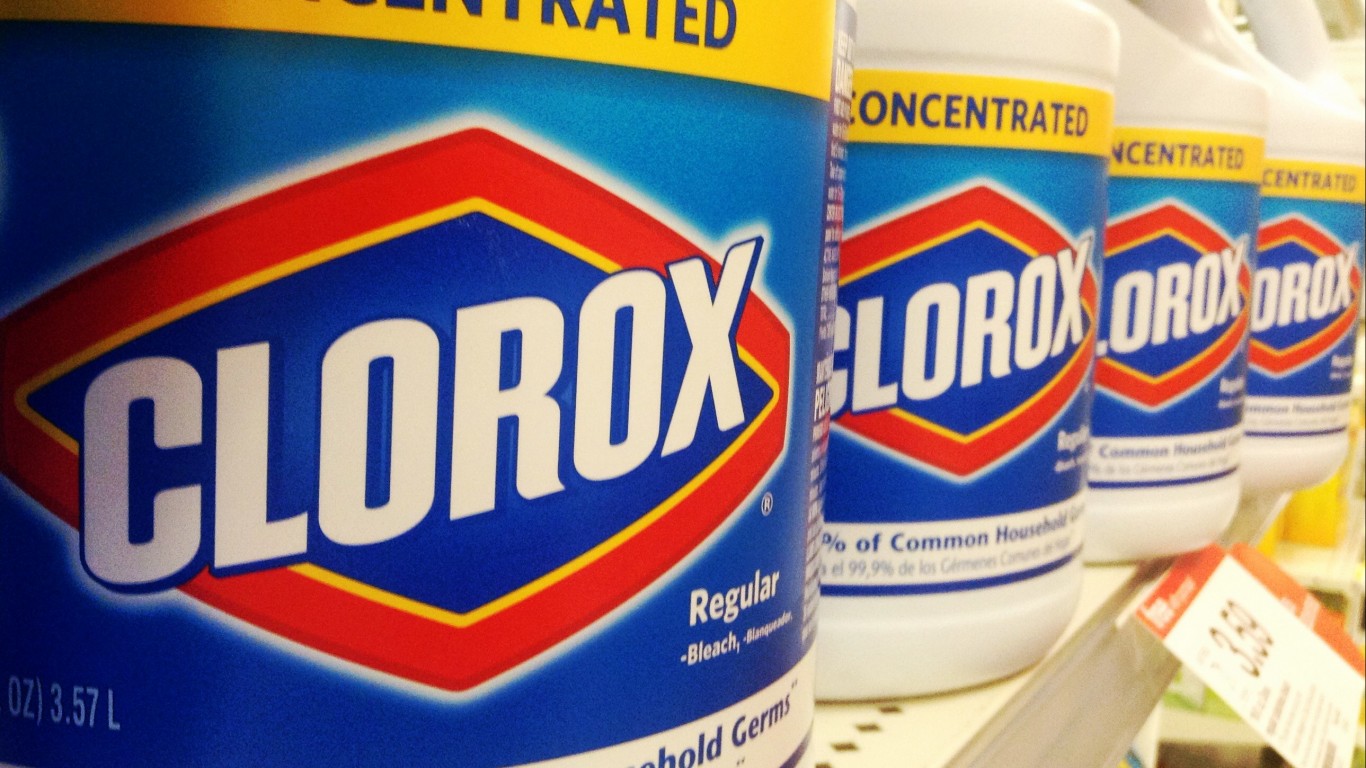
Should a retirement-focused investor own Clorox (NYSE:CLX | CLX Price Prediction) or Procter & Gamble (NYSE:PG) right now? The gap between them has widened this year. Clorox shares have fallen 17.73% over the past year, which drove its yield sharply higher. P&G is up 15.99% year to date and just posted its 6th consecutive quarterly EPS beat. Clorox is a high-yield turnaround. P&G is a Dividend King that keeps compounding. Here is how they compare on the three measures that matter most for retirement income.
Current Yield: Clorox Pays More Per Dollar Invested
Clorox pays an annualized forward dividend of $5 per share. At an $88 share price, that works out to a forward yield of about 5.7%. P&G’s $4.354 forward dividend on a $161.57 share price yields about 2.7%.
Clorox is also cheaper. It trades at about 15 times the midpoint of its fiscal 2027 adjusted EPS guidance of $5.70 to $6.00. P&G trades at about 23 times its $7.00 core EPS guidance midpoint. On September 30, investor Jenny Harrington told CNBC’s Halftime Report that Clorox’s decline was a buying opportunity if you expect the real economy to be still standing in 2030 (Sept. 30, 2026). Winner: Clorox.

Dividend Safety: P&G Has Room to Spare
Clorox’s dividend uses up about 90% of its fiscal 2026 adjusted EPS of $5.53. Chief financial officer Luc Bellet said that “the current payout is a bit elevated, but we see this as something more transitory as we rebuild our gross margin and not something structural.”
The balance sheet is under pressure too. After the deal for GOJO, the maker of Purell, total debt reached $5.52 billion as of June 30, 2026, up from $2.88 billion a year earlier. Cash fell to $143 million, shareholder equity was just $90 million, and fiscal 2026 operating cash flow dropped 37.61% to $612 million.
P&G’s dividend equals about 62% of its guidance midpoint. The company generated $15.835 billion of free cash flow in fiscal 2026, held $15.365 billion in cash at September 30, and plans more than $10 billion in dividends and about $5 billion in buybacks in fiscal 2027. Winner: P&G.

Growth and Track Record: P&G Keeps Compounding While Clorox Rebuilds
In its fiscal first quarter, P&G grew organic sales 4%, and all five business divisions grew. Core EPS came in at $2.00, ahead of the $1.89 estimate. The company has raised its dividend for 70 consecutive years and paid one for 136 consecutive years. Its latest raise, from $1.0568 to $1.0885 per quarter, was about 3%.
Clorox’s most recent raise, from $1.24 to $1.25, was under 1%. Fiscal 2026 revenue fell 5.41%, and gross margin shrank by 520 basis points to 41.3% in the fourth quarter. Management expects gross margin to start recovering only in the back half of fiscal 2027. Over the long run, Clorox shares are down 35.16% over five years and up just 0.3% over ten. P&G shares gained 28.54% and 144.15% over the same periods. Winner: P&G.

Verdict: P&G Offers Retirees Stronger Income Durability
P&G wins two of the three categories, and its wins matter most to someone living on dividend checks. Its payout is well covered, its cash generation keeps growing, and its 70-year record of increases has held up through every kind of market. For a retiree who wants income to rise every year, P&G’s record lines up more closely with that goal.
Clorox fits a smaller group: income-focused investors who can handle risk, want the higher yield today, and can live with an extended payout while management pays down debt from free cash flow over the next 12 to 18 months. Clorox reports its next quarterly results soon. That report could change the dividend picture. The key numbers to watch are gross margin, cash flow, and short-term debt. If they don’t improve, the dividend that makes Clorox appealing will start to look risky.
Contact [email protected] for any questions or corrections.
Chris Lange is a financial and geopolitical writer with more than a decade of experience covering a myriad of topics. He has published thousands of articles for 24/7 Wall St., with past coverage focused heavily on stocks, IPOs, healthcare, defense, global affairs, and technology.
His work has been quoted, or referenced by a number of outlets including Business Insider, USA Today, Yahoo Finance, MSN, The Motley Fool, and many other publications. A graduate of Southwestern University, he studied business with a focus on investments and has previous experience in banking and startups.
When not reading or writing the news, he is following his passion for Lacrosse, playing chess, or building solar projects with his dad.