SpaceX Vs. Tesla: Both Troubled, But SpaceX Faces The Tougher Q4
SpaceX posted the flashier quarter and Tesla posted the messier one, but the balance sheets tell a different story about which company walks into Q4 on shakier ground.

SpaceX (NASDAQ:SPCX | SPCX Price Prediction) and Tesla (NASDAQ:TSLA) reported third-quarter results a day apart in October. Each is spending at a historic pace. SpaceX had the flashier report and Tesla had the messier one. The two share a chip fab project, but SpaceX takes the weaker financial setup into Q4.
Grok and Starlink Carry SpaceX as Batteries Cap Tesla
SpaceX revenue reached $14.60 billion, ahead of the $13.02 billion consensus. Super Intelligence sales rose 830% to $7.60 billion on cloud contracts, Cursor, and Grok. That means a launch company now makes most of its revenue renting out computing power. Connectivity grew 69%. Space revenue rose just 6%, a weak showing for the segment that pays for Starship.
Tesla’s revenue was flat at $28.05 billion, and adjusted EPS of $0.48 beat the $0.45 estimate. Operating income fell 55.79% as R&D rose to $2.76 billion. That is the cost of autonomy and Optimus. Demand held up. CFO Vaibhav Taneja said Tesla ended the quarter with “our highest backlog in four years, with deliveries constrained primarily by production.”
| Business Driver | SpaceX | Tesla |
|---|---|---|
| Growth Engine | SI cloud and Grok | FSD and Megapacks |
| Weak Spot | Space segment, up 6% | Operating income, down 55.79% |
| Capex Signal | $18.37 billion in Q2 alone | About $20 billion for 2026 |
SpaceX’s Spending Bill Looks Far Heavier
Of that Q2 capex, $15.83 billion went to AI compute. Cursor added $1.2 billion of stock compensation in Q3, and another $23.4 billion is tied to future service. That stock compensation dilutes existing holders. A $25 billion bond sale and a pending 800 MHz spectrum purchase add to the pressure.
Tesla holds $45.4 billion in cash and produced $1.53 billion of free cash flow, though that figure fell 61.63%. It also arranged $30 billion of borrowing capacity and does not plan to use it this year.
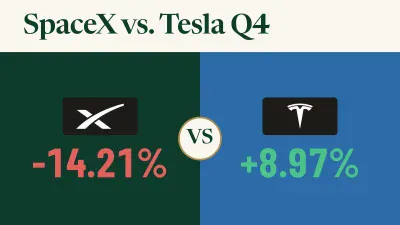
Investors reacted: SpaceX shares fell 14.21% over the past month and trade 15.27% below their June 12 level. Tesla gained 8.97% over the same month. Tesla also marked down its SpaceX stake by $142 million.
A Starship Catch Attempt Sets the Q4 Tone
Musk said SpaceX will try to catch Starship and its booster next month, which means November. A clean catch would support the case for cheaper Starlink launches. A failure would hit a stock that is already falling. On the Tesla side, I will be watching the Dallas Cybercab launch and whether 24/7 Robotaxi operation starts by year-end.
Why Tesla Enters Year-End on Firmer Financial Footing
I see two troubled stocks with different problems. Tesla is dealing with shrinking margins and limited battery supply, and it has the cash to fix both. SpaceX’s pressure sits in how it pays for growth: huge compute spending, dilution from Cursor, and a Starship program that still loses money. SpaceX leadership said in September that Starlink has reached only 1.5 to 2% of its potential market, so the long-term room to grow is real. For Q4, though, Tesla stands apart as the company that funds its expansion from operating cash. A successful catch and slower capex would improve SpaceX’s position.
Contact [email protected] for any questions or corrections.
Alex Sirois is a financial writer with experience spanning both retail and institutional investing. He has written for InvestorPlace and held roles at BNY Mellon and Bernstein, giving him a perspective that bridges Main Street portfolios and Wall Street analysis.
Alex holds an MBA from George Washington University and has built his career across multiple industries, including e-commerce, education, and translation — a breadth of experience that informs how he breaks down complex financial topics for everyday investors. His writing is conversational, actionable, and grounded in long-term, buy-and-hold investing principles.
At 247 Wall St., Alex focuses on delivering analysis that is both accessible and useful, with a clear emphasis on helping readers make more informed decisions with their money.