First Solar Jumps 9% as Democratic Sweep Revives Clean-Energy Hopes; Enphase Surges 9%, SolarEdge Sinks 8%
A Democratic sweep of Congress sent solar stocks surging, but not every company in the sector is celebrating. Find out which name is defying the rally and why the veto math could unravel the whole trade.


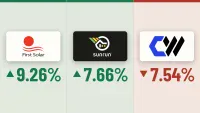
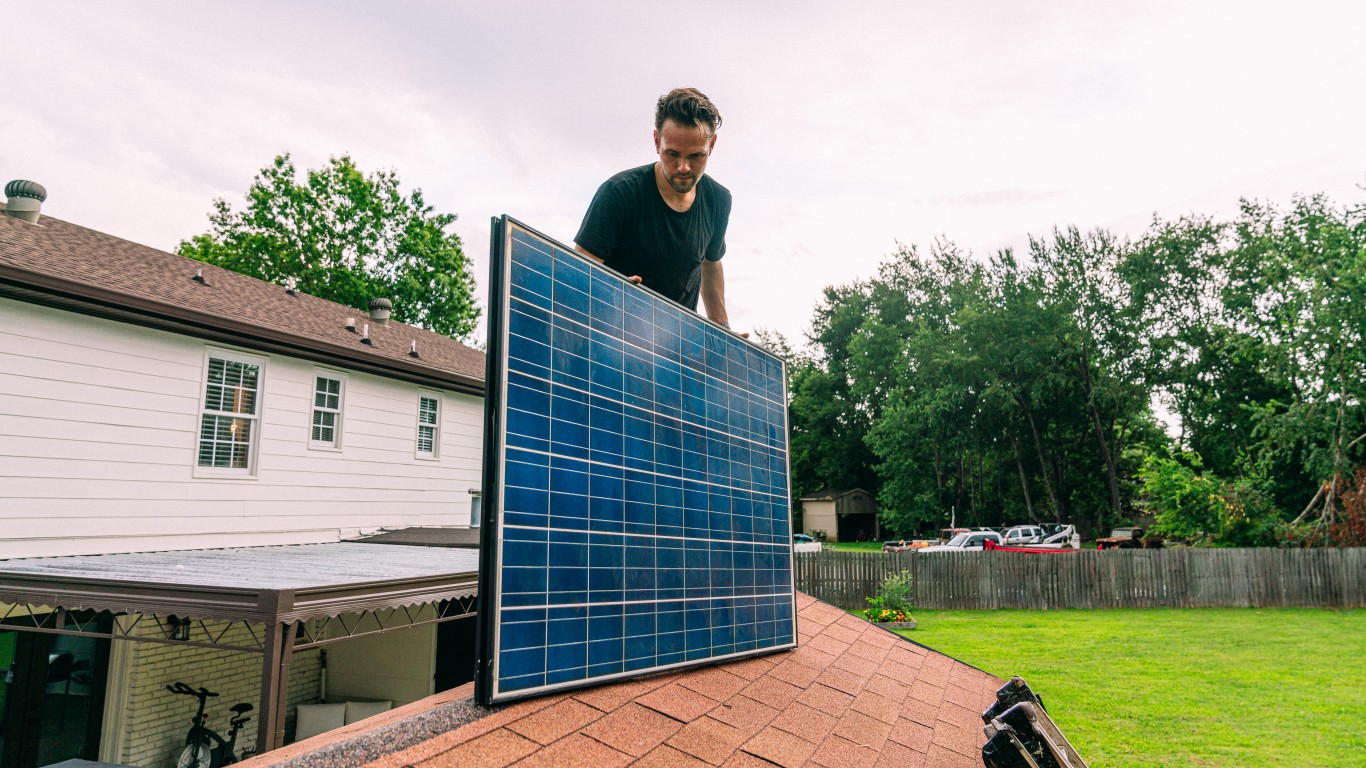
Solar stocks are rallying after Democrats won control of both chambers of Congress in the November 3 elections, while one name is bucking the trend. First Solar (NASDAQ:FSLR | FSLR Price Prediction) stock is at $202.09, up 9% in early trading. Even after that jump, First Solar stock is down 23% year to date (YTD), so the move is a rebound from low levels.
Checking on the peers, Enphase Energy (NASDAQ:ENPH) stock is at $33.16, up 9%. Sunrun (NASDAQ:RUN) stock is at $9.35, up 8%. That gain still leaves Sunrun stock down 49% YTD. Moreover, SolarEdge Technologies (NASDAQ:SEDG) stock is at $30.22, down 8%.
Why Democratic Control of Congress Has Solar Stocks Rallying
Democrats could seek to restore incentives for new solar projects that the 2025 tax law curbed, a shift that could lift demand for First Solar’s panels. Under the federal advanced manufacturing production credit, eligible components include solar modules and photovoltaic cells, the products First Solar builds in its U.S. plants. Per Benzinga, on the company’s October 29 earnings call, CFO Alexander Bradley said “the forecast is about $2.1 billion of credit to be generated this year.”
The hurdle for First Solar and its peers is the president’s veto. Kalshi traders put the probability that Congress overrides at least one presidential veto before January 1, 2028, at 28%. That contract covers any veto, including those on non-energy bills.
First Solar’s Tariff Edge Collides With a Lower Sales Forecast
Recent reports indicated a minimum price of 38 cents per watt on covered imported solar panels and an added 15% duty on many covered imports take effect December 4. Those measures favor domestic makers such as First Solar. CEO Mark Widmar asserted on the call that First Solar is “the only fully integrated utility-scale solar manufacturer without dependency on a Chinese crystalline silicon supply chain.” Management flagged uncertainty around minimum import prices and anti-stocking enforcement, and Widmar warned that “the price discovery is going to take a while before you’ll start to see that volume being executed.”
First Solar disclosed on October 29 that it lowered its annual sales forecast to $4.6 billion to $4.9 billion, from $4.9 billion to $5.2 billion. Alongside that cut, First Solar’s board authorized a $500 million share repurchase program. Mizuho raised its First Solar price target to $328 from $324 on November 4 and kept its Outperform rating.
SolarEdge Breaks From the Solar Rally After Its Earnings
SolarEdge released its Q3 2026 results before the open on November 4, and the stock slid on weak Q4 2026 guidance despite an earnings-per-share beat. The stock had initially traded higher with the rest of the group, so the results changed its direction. Management said the quarter included a one-time benefit tied to International Emergency Economic Powers Act (IEEPA) tariff matters, and that SolarEdge’s gross margin was significantly lower without it.
CEO Shuki Nir stated, “As near-term market uncertainty persists and given reduced revenue expectations for the fourth quarter, we are taking decisive steps to reduce costs, sharpen our focus, and support profitability amid softer demand.” On the call, SolarEdge pointed to soft U.S. residential demand, higher interest rates and possible changes to Germany’s renewable policy.
How First Solar’s Model Differs From Enphase and SolarEdge
First Solar makes thin-film cadmium telluride modules for utility-scale power plants, and its manufacturing base is centered in the U.S. That model ties First Solar to developers, utilities and federal manufacturing credits.
Enphase sells microinverters and home batteries, so its business tracks U.S. residential tax policy closely. Higher interest rates and the expiration of the Section 25D federal tax credit have weighed on Enphase demand, according to chief executive Badri Kothandaraman. Chief Products Officer Raghuveer Belur noted on the October 27 call that “there is a broad view that the election results may help renewables in general.”
SolarEdge builds inverters and power optimizers for homes and businesses, with heavy exposure to Europe as well as the U.S. Sunrun, the largest U.S. residential solar installer, sells subscriptions to homeowners and shares Enphase’s sensitivity to tax policy and borrowing costs.
What Could Make or Break First Solar’s Rebound
The next test for First Solar is whether the incoming Congress moves to restore incentives for new solar projects or merely slows down further cuts. Gains across the group could fade if support means fewer rollbacks and no new incentives. Backing the other side, First Solar held a contracted backlog of 44 gigawatts as of September 30, and the coming import price floor favors its domestic plants.
Watch for any early bill touching the 2025 tax law’s solar provisions, since it could show how far Democrats intend to push and whether a veto stands in the way. Volatility across solar names could stay elevated until the fight over solar tax credits resolves.
Contact [email protected] for any questions or corrections.
David Moadel is financial writer specializing in stocks, ETFs, options, precious metals, and Bitcoin. David has written well over 1,000 articles for leading online publications, helping investors understand markets, income strategies, and risk.His work has appeared in The Motley Fool, InvestorPlace, U.S. News & World Report, TipRanks, ValueWalk, Benzinga, Market Realist, TalkMarkets, Finmasters, 24/7 Wall St., and others.With a master’s degree in education, David has taught at the elementary, high school, and college levels. That teaching background shapes his writing style: clear, educational, and practical. David has also built a loyal social-media audience by providing trustworthy financial content on YouTube, X/Twitter, and StockTwits.