A 64-Year-Old Who Bought 10,000 Wendy’s Shares at $9 for the Dividend Just Watched the Board Turn Down $7.35 a Share. Here Is What the Rejection Costs Her, and How to Tell Whether Nelson Peltz Comes Back for Your Shares.
Wendy's board just refused a cash exit, and a retiring shareholder who bought for the dividend now has to choose between selling, holding, and waiting on Peltz. Three numbers will tell her which choice the board has actually made.

This post may contain links from our sponsors and affiliates, and Flywheel Publishing may receive compensation for actions taken through them.
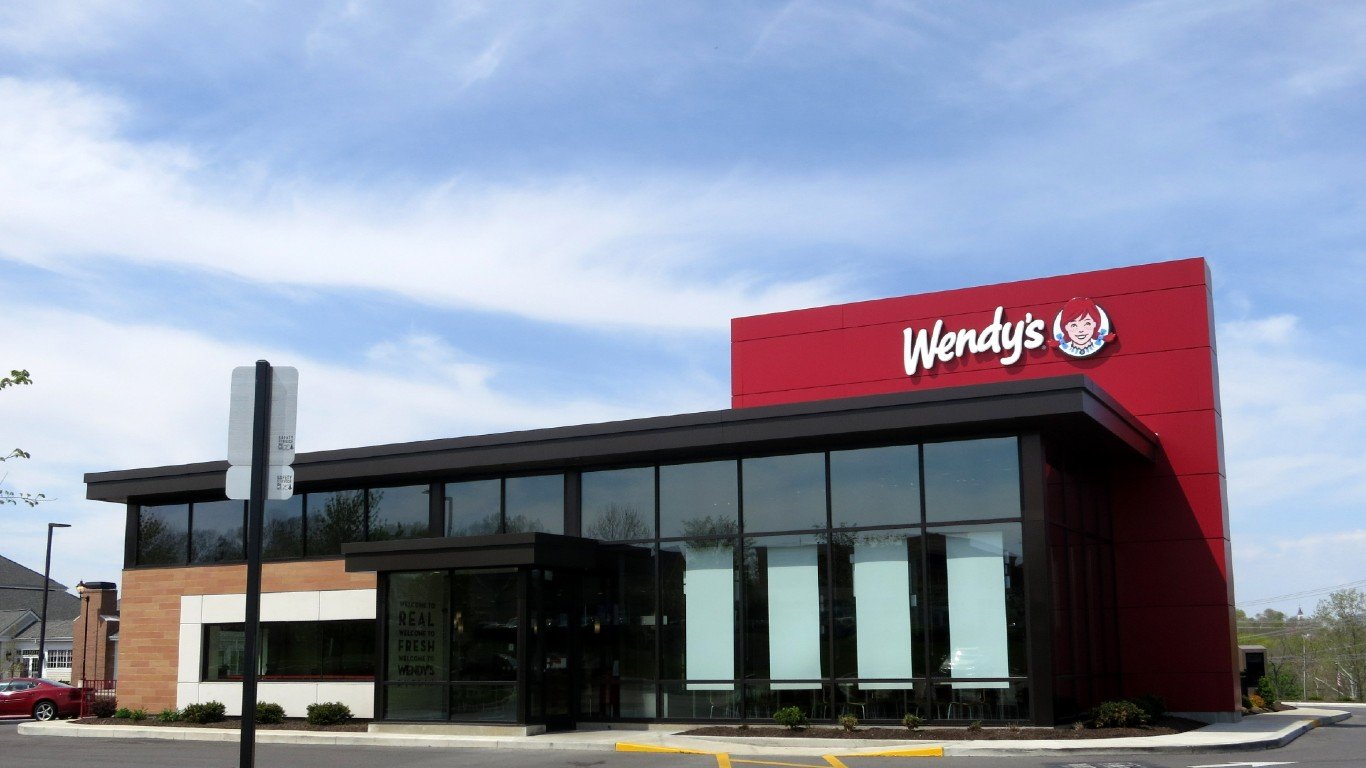
Wendy’s turned down $7.35 a share on Thursday. The independent committee of its board rejected a $1.4 billion cash offer from a group led by Nelson Peltz’s Trian Fund Management, said the bid “substantially undervalues” the company, and adopted a poison pill so the group cannot come back the hard way. The stock closed Wednesday at $7.65, which is already above the offer, and the company reported a quarter that beat expectations the same morning.
That is the news. Here is what it means for the kind of person who actually owns this stock, which is not a hedge fund.
The retiree who bought it for the check
She is 64, a year from retiring, and she bought 10,000 shares of Wendy’s last winter at $9. The reason was the dividend. Wendy’s was paying 14 cents a quarter at the time, 56 cents a year, which at $9 was a 6.2% yield from a hamburger chain everyone has heard of. Her $90,000 was going to throw off $5,600 a year, more than a 10-year Treasury paid, from a chain that was once the second-largest burger seller in the country.
Two things have gone wrong since.
The first is the price. At $7.65 her stake is worth $76,500, a paper loss of $13,500. The 52-week range runs from $5.94 to $9.51, so she bought near the top of it.
The second is the dividend. With the September payment Wendy’s halved it, to 7 cents a quarter. Her $5,600 a year became $2,800. On her original $90,000 that is a 3.1% yield, below the 4.95% a 10-year Treasury pays today with no risk of another cut.
What the offer would have given her
The Peltz group’s $7.35 a share would have handed her $73,500 in cash and ended the story. She would have locked in a $16,500 loss, kept the four dividend checks she already collected, and been out.
The board said no on her behalf. Its argument is that the offer was about a 20% premium to where the stock sat before the group showed up, and that the stock sat there because the company has had four chief executives since early 2024 and sales have been falling. The new one, Bob Wright, has been in the job since May. He laid out a five-part turnaround plan at the company’s franchisee convention and the board chairman, Art Winkleblack, said in Thursday’s statement that “our confidence rests firmly in Bob Wright’s proven track record of seasoned industry leadership, including restaurant business turnarounds.”
The quarter gives the board some cover. Adjusted earnings were 13 cents a share against the 9 to 10 cents analysts expected. Revenue was $547 million, flat, but above forecasts. Same-restaurant sales in the U.S. fell 5.7%, which sounds bad until you see that they fell 7% the quarter before.
That is also the problem. Operating margin was 10.2% against 16.8% a year earlier. A company whose sales are shrinking more slowly is still a company whose sales are shrinking.
The three numbers that decide what happens next
For the retiree, and for anyone holding Wendy’s because of what it used to pay, the next few quarters come down to three numbers.
The first is $7.35. The stock closed above the offer price on Wednesday, which means the market is pricing in either a higher bid or a successful turnaround. Peltz’s group already owns about 16% of the company, Flynn Group operates more than 340 Wendy’s restaurants, and his son sits on the board. Groups that deep into a chain do not usually walk away after one no. Trian did walk away once already, in August, after shopping the company to other investors, and the stock fell when it did. If the shares drift back below $7.35, the pressure on the board to take the next offer grows with every quarter the plan does not show in the numbers.
The second is 5.7%. That is how much U.S. same-restaurant sales fell in the third quarter. The board’s whole case is that the decline is narrowing: 7% in the second quarter, 5.7% in the third. If the fourth quarter prints a number closer to zero, Wright’s plan is working and the stock earns the premium the board says it deserves. If it prints another 5% or 6% decline, the board has rejected cash for a story that is not coming true, and the next offer, if there is one, will be lower.
The third is 7 cents. The dividend was 14 cents a quarter in June and 7 cents in September. A company that halves its payout is telling you it needs the cash for the turnaround. The thing to watch is not whether Wendy’s raises the dividend, which it will not do soon, but whether the next cut takes it to zero. For a retiree holding the stock for income, a dividend going to zero changes the reason to own it at all.
What to do if you own it
The honest answer is that the easy decision was taken away from you on Thursday. If you sell at $7.65 today you get $3,000 more per 10,000 shares than the offer you never got to accept, and you end the income question. If you hold, you are betting that a fourth CEO in three years can turn around a chain that has slipped from second place in burgers, and that Peltz comes back with a bigger number if he cannot.
What you should not do is hold for the dividend. At 7 cents a quarter the yield on today’s price is 3.7%, and the 10-year Treasury pays 4.95% with no board meeting required. If your reason to own Wendy’s was the check, that reason left with the September payment. If your reason is the turnaround, the number to circle on your calendar is the fourth-quarter same-restaurant sales figure in February, and the price to watch between now and then is $7.35.
Analysts are not much help to you. Twenty-one cover the stock: two say buy, sixteen say hold, three say sell, and the average target is $7.30, below where it trades. That is a crowd waiting to see the same number you are.
The same test applies to any dividend stock you hold through a takeover fight. Ask what the check is now, not what it was when you bought. Ask whether the price sits above or below the offer the board refused. And ask what one number the board’s own case depends on, then wait for it. For Wendy’s that is a $1.46 billion company, a $1.4 billion offer, and a sales decline that has to reach zero.
Contact [email protected] for any questions or corrections.
I've been writing about stocks and personal finance for 20+ years. I believe all great companies are tech companies in the long run, and I invest accordingly.