Gold Just Had Its Best Day Since August, Back Above $4,000
Gold's rebound lit a fire under the miners, and one stock nearly tripled the metal's move. Yet the Fed, a brutal year, and rising costs could turn that leverage against anyone holding for retirement.

This post may contain links from our sponsors and affiliates, and Flywheel Publishing may receive compensation for actions taken through them.
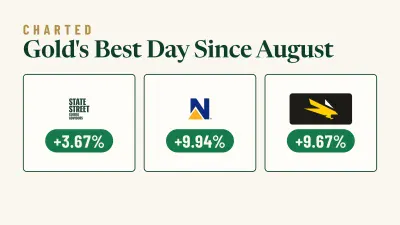
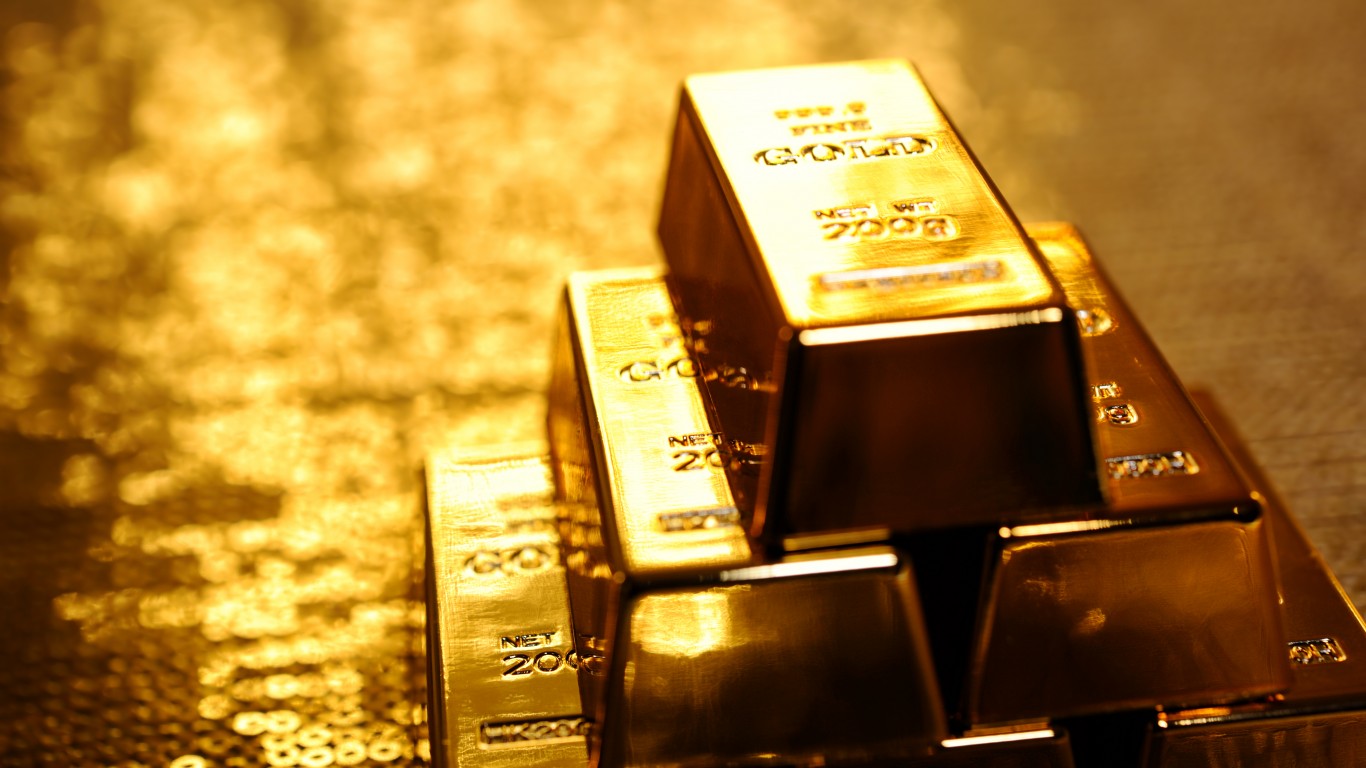
Gold rose about 3.5% on November 4, 2026, its best day since August 19. It also moved back above $4,000 an ounce, the round number it lost in late October. December gold futures settled at $4,073, up 3.4% from $3,940.40 in the prior session.
The miners moved far more than the metal. SPDR Gold Shares (NYSEARCA:GLD) rose 3.67% to close at $372.49, while Newmont (NYSE:NEM | NEM Price Prediction) climbed 9.94%.
That gap determines the choice for anyone holding gold into retirement. On Friday, October 30, spot gold had dropped to $3,869.85, its lowest since October 2025.
One strong session leaves a difficult year in place. Traders still see about an 83% chance the Fed raises rates in December. Higher rates raise the cost of holding a metal that pays no yield.
Spot gold traded at $4,059.95 at 2:04 p.m. EST, up 3.4%. That was an early-afternoon quote taken before the close.
The rally kept going into the evening. December futures reached $4,134.10 at 9:27 p.m. ET, and gold pushed above $4,100.
Dollar, Yields and Oil Moved Together
The dollar fell to more than a one-month low after Democrats swept the midterms, pushing the dollar index to 101.51 from 101.87. A weaker dollar makes bullion cheaper for overseas buyers.
Jim Wyckoff, a market analyst at American Gold Exchange, said a deadlocked Congress would probably weigh somewhat on the economy, and that could let the Fed lean toward easier policy. The ten-year Treasury yield eased to 4.894% from 4.952%.
Crude oil also fell about 8%, so the election was one of several inputs. Silver, platinum and palladium all rose more than gold.
Why Newmont Outran Bullion
Agnico Eagle (NYSE:AEM) rose 9.67%, and the VanEck Gold Miners ETF (NYSEARCA:GDX) gained 9.01%. The miners rose alongside gold. Because a miner’s costs are largely fixed, a higher gold price flows to profit faster than it raises revenue.
In the third quarter, Newmont realized $4.32 thousand per ounce. Its all-in sustaining costs (AISC, the full cost of keeping its mines running) were $1.45 thousand. Management expects fourth-quarter AISC of $1.9 thousand, the highest of the year.


A Rebound Inside a Losing Year
GLD is still about 6% lower in 2026 and about 25% below its January 29 closing peak of $495.90. Spot gold set a record high of $5,589.38 on January 28.
Daniel Ghali, head of metals research at Deutsche Bank, said a strong jobs report on November 6 could back up expectations for Fed hikes. That view runs against Wyckoff’s call for easier policy.
The July-to-September demand data supports the longer-term case. Central banks bought 321.2 tonnes, up 42% from a year earlier and above the 227-tonne five-year quarterly average, led by China and Poland. Gold ETFs added 211 tonnes.
Jewelry demand fell 17%. Bar and coin demand dropped 19%.
What Could Drive GLD’s Next Move
GLD has solid longer-term support. Central banks buying at that pace gives the metal a steady source of demand that doesn’t depend on the Fed.
The near-term risk is the Fed. Any of these could bring back concerns of a rate increase: Fed speakers on November 5, the November 6 jobs report, October CPI on November 10, and the December 8-9 meeting.
Newmont offers more exposure to the gold price, along with larger swings. Its full-year AISC guidance of about $1.52 thousand leaves a wide margin with gold above $4,000. That exposure works in both directions, though, and a drop in gold would hit the stock harder than the ETF.
Contact [email protected] for any questions or corrections.
Omor Ibne Ehsan is a writer at 24/7 Wall St. He is a self-taught investor with a focus on growth, cyclical, and dividend equities that have strong fundamentals, value, and long-term potential. He also has an interest in high-risk, high-reward investments such as penny stocks.