Apple Is Borrowing $7.5 Billion, Its First Bond Sale Since 2025
Apple is sitting on a mountain of cash, yet it just went to the bond market anyway. The reason points to a shift in strategy, and a trade-off shareholders paying a premium for the stock may not love.

This post may contain links from our sponsors and affiliates, and Flywheel Publishing may receive compensation for actions taken through them.
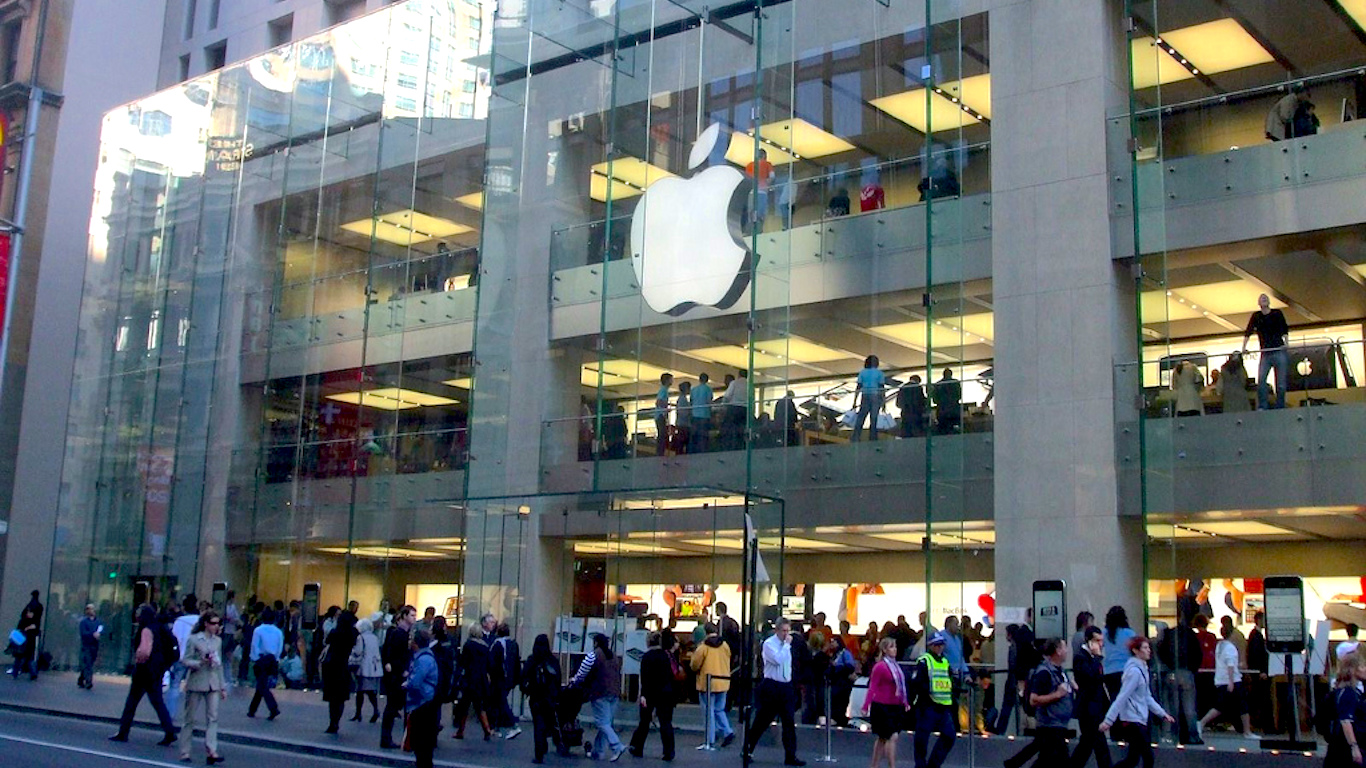
Apple (NASDAQ:AAPL | AAPL Price Prediction) sold $7.5 billion of bonds on November 5, 2026, in a seven-part deal laid out in a term sheet seen by Reuters. It was the company’s first bond sale since May 2025. That earlier deal raised $4.5 billion in four parts on $10 billion of orders.
The stock closed lower at $344.17 during a broad tech selloff. After hours, it slipped to $343.32, down 0.25% as of 7:59 p.m. ET.
Apple ended fiscal 2026 with $136.9 billion of cash, cash equivalents, and marketable securities, so it has little need for the money. It borrowed anyway to keep buybacks and dividends going at a $5.02 trillion valuation.

What Apple Locked In on November 5, 2026
The signed terms include floating-rate notes due 2028 and 2029 of $500 million and $750 million. Their rate is set off the Compounded SOFR (the Secured Overnight Financing Rate, a benchmark for overnight lending).
Fixed-rate notes due 2028, 2029, 2031, 2033 and 2036 make up the rest. The two longest are $1.25 billion and $2 billion, and interest payments begin in 2027.
The money goes to general corporate purposes. Buybacks and dividends come first, followed by working capital, capital spending, acquisitions, and debt repayment. Apple named these as options and linked the money to none of them. Bloomberg reported orders of about $31 billion, about 4.4 times the planned size, although Apple has not disclosed its order book.
Why Apple Borrows While Holding a $136.9 Billion Cash Pile
At fiscal year-end, Apple owed $78.7 billion in fixed-rate notes and $2.0 billion in commercial paper (short-term corporate IOUs). On the November 2, 2026 earnings call, CFO Kevan Parekh said Apple is “no longer using net cash neutral as a target,” which ends its old goal of running cash down until it matched debt.
In fiscal 2026, Apple spent $85.8 billion on buybacks and $15.7 billion on dividends. Net income was $132.2 billion on $478.8 billion of net sales, and a new buyback program of up to $100 billion followed on April 30, 2026.
Spending on property, plant and equipment was just $9.0 billion. Other Big Tech companies borrow to build AI data centers, but Apple’s debt pays shareholders.
Coupons Show How Much Lenders Trust Apple
Longer money costs more: coupons run from 4.65% on 2028 notes to 5.35% for 2036, with 4.75%, 4.90% and 5.10% in between.
The 10-year Treasury yielded 4.84% on November 5, so lenders asked only a modest premium to hold Apple paper for a decade. Strong demand at those rates places Apple among the safest corporate borrowers.
Reality Check: A Small Deal With a Real Trade-Off
The bond is small next to the $145.097 billion of operating cash flow Apple generated in fiscal 2026. The November 5 decline also followed the rest of the sector down.
The trade-off is that Apple is buying back shares at 45 times earnings in part with borrowed money. At the same time, its December-quarter gross margin guidance of 45% to 46% reflects memory costs that are still climbing.
What Apple’s Borrowing Means for Shareholders Next
The stock looks expensive at this price. The bond shows Apple’s credit is excellent, but it also shows management reducing the share count at a premium multiple while memory costs squeeze margins.
The 2036 notes pay 5.35%. That is far more than the stock’s 0.31% dividend yield.
The final prospectus supplement on SEC EDGAR should confirm these terms. The next quarterly report will show whether buybacks top the $24 billion repurchased in the September quarter, and if they do while gross margin falls below 45%, the valuation concern gets stronger.

Contact [email protected] for any questions or corrections.
Omor Ibne Ehsan is a writer at 24/7 Wall St. He is a self-taught investor with a focus on growth, cyclical, and dividend equities that have strong fundamentals, value, and long-term potential. He also has an interest in high-risk, high-reward investments such as penny stocks.