Google Is Spending $17 Billion on a Wyoming Data Center and Says It Will Pay for 100% of Its Power
Google just answered the loudest objection to AI data centers, yet the market barely noticed and one key supplier tumbled. The fine print on who supplies the power, and what the pledge leaves out, may matter more than the headline.

This post may contain links from our sponsors and affiliates, and Flywheel Publishing may receive compensation for actions taken through them.
Google responded to the biggest complaint against AI data centers on November 5, 2026. In a company blog post, it said it will pay for 100% of the power used at its first Wyoming data center. The site is a $17 billion long-term investment in Laramie County near Cheyenne.
All three listed companies tied to the project closed lower. Alphabet (NASDAQ:GOOGL | GOOGL Price Prediction) Class A fell 2.20% to $282.57 and is down 18.73% over the past month.
Bloom Energy (NYSE:BE) fell 16.41% to $167.52, then rose 3.89% after hours. American Electric Power (NASDAQ:AEP) fell 1.91% to $126.77.

AI-linked stocks sold off generally after Democrats won the November 3 midterms. In Texas, Gina Hinojosa defeated Gov. Greg Abbott after campaigning on a statewide moratorium on new data centers.
Google may have found a political answer to the backlash against data centers, but the market responded first. That gap between Google’s policy response and the market’s reaction is worth tracking over the coming quarters.
What Google Committed Versus What Was Reported
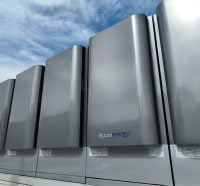
Google named three power sources. Two are gas-fired generation from Tallgrass Energy and from Black Hills Energy, a unit of Black Hills (NYSE:BKH). The third is a 702-megawatt natural gas fuel cell development signed with AEP that uses U.S.-made Bloom units.
Carbon capture at Tallgrass’s Eastern Wyoming Sequestration Hub will store most of the fuel cell project’s emissions. Adding capture to Tallgrass’s gas turbines is still only under engineering study.
The campus details come from earlier site-plan reporting. That reporting describes Project Tembo as a 716-acre site about 8 miles south of Cheyenne, sized at 2.7 gigawatts and planned for completion in 2031. Google’s post disclosed no campus size or completion date.
Who Gains From Wyoming and by How Much
For Alphabet, a $17 billion commitment spread over several years is small next to its third-quarter capital spending of $51.36 billion. Google Cloud revenue grew 103% that quarter, so the site serves demand that already shows up in results.
AEP’s interest is the most concrete. Its reported $4 billion plant sits in Cheyenne Fuel Cell LLC, which AEP owns about 92% of. The plant sells to Google under a 20-year take-or-pay contract, which means Google pays whether or not it uses the power.
AEP’s management expects earnings contributions in 2027 and full service by December 2028. That makes the plant a steady, signed piece of a $100 billion five-year capital plan.
Bloom gains a marquee reference project, but its full-year revenue guidance of $4.4 billion to $4.6 billion already assumes strong demand. Bloom also announced a 900-MW agreement with NTT DATA the same day, and no source ties its drop to Google.
What Google Left Unsaid
The pledge covers this site only. Black Hills service starts in late 2027 and ramps to peak demand in 2030. Crusoe, an earlier developer, has already left the project.
The fuel cells burn natural gas, so the site will produce emissions. Google did not disclose how swings in gas prices flow through its contracts. Bloom’s chief executive called the AEP plant a “first-of-its-kind project,” which also means it has no track record at this scale.
What Wyoming Means for Alphabet, AEP and Bloom Investors
Alphabet looks better positioned than its recent decline suggests. The 18.73% drop over the past month already reflects political risk that the Wyoming model reduces. When Google pays for its own power, the ratepayer argument behind moratorium campaigns loses much of its force.

AEP’s profile tends toward income. Its 3.06% yield now comes with growing, signed cash flow from a 20-year deal with a large, creditworthy buyer.
Bloom carries more risk after a 92.8% gain so far in 2026, even with its contract wins.
Contact [email protected] for any questions or corrections.
Omor Ibne Ehsan is a writer at 24/7 Wall St. He is a self-taught investor with a focus on growth, cyclical, and dividend equities that have strong fundamentals, value, and long-term potential. He also has an interest in high-risk, high-reward investments such as penny stocks.