The Insane Number HPE’s CEO Just Threw Out Shows Why Bloom Energy Is a Buy Today
The artificial intelligence boom has shifted from a race for chips to a race for electricity. Every new AI data center requires enormous amounts of reliable power, yet the U.S. electric grid is struggling to keep pace. That mismatch is…

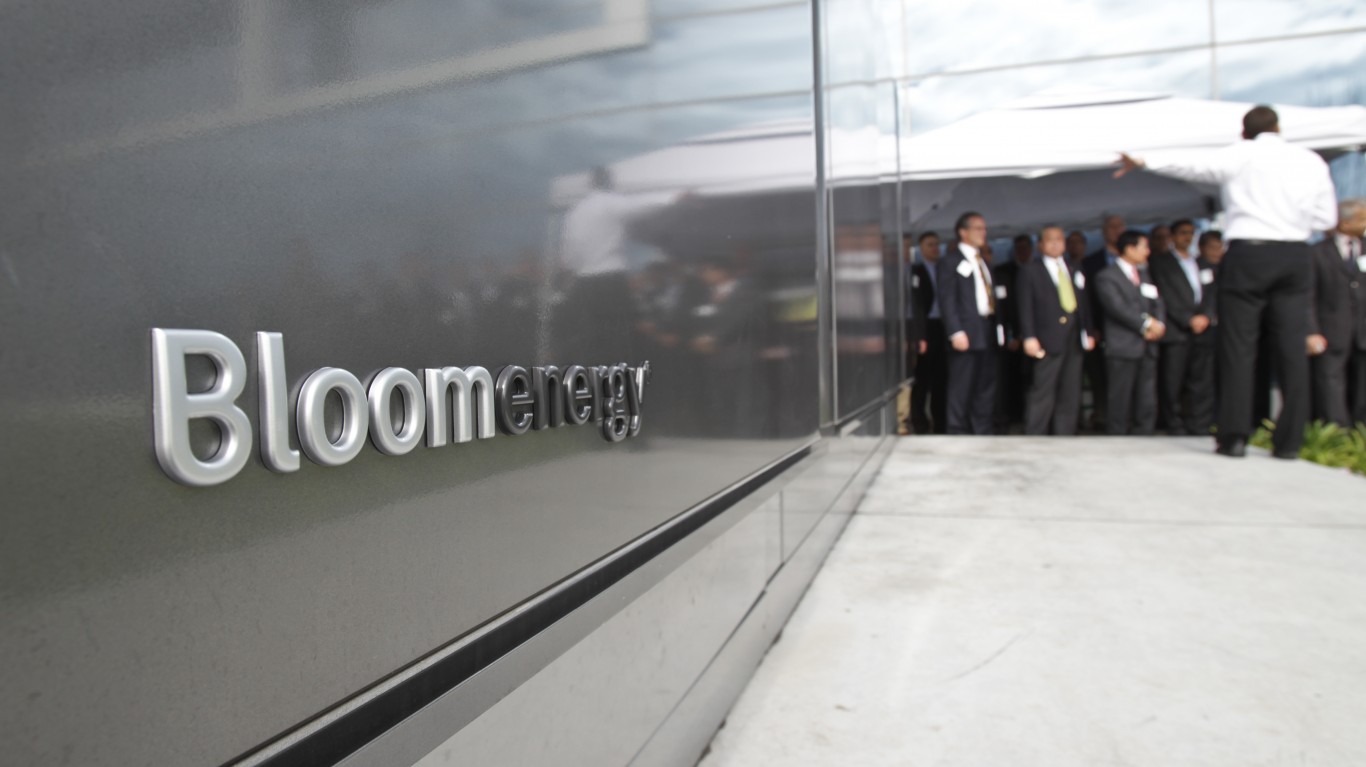
The artificial intelligence boom has shifted from a race for chips to a race for electricity. Every new AI data center requires enormous amounts of reliable power, yet the U.S. electric grid is struggling to keep pace. That mismatch is becoming one of the defining investment themes of the decade.
While semiconductor companies remain at the center of AI spending, the companies capable of supplying power quickly may become just as important. Hewlett Packard Enterprise‘s (NYSE:HPE | HPE Price Prediction) latest outlook illustrates just how large the challenge has become — and why Bloom Energy (NYSE:BE) appears uniquely positioned to benefit.
HPE’s Warning Sizes the Opportunity
Speaking at HPE’s 2026 Discover IR Summit, CEO Antonio Neri cited one statistic that should catch every investor’s attention: the U.S. is on track to face a 19-gigawatt power gap by 2028. He added that is enough electricity to power roughly 16 million homes, while data centers could account for nearly half of U.S. electricity demand through 2030.
Those numbers explain why “time to power” has become almost as valuable as computing power itself. The shortage creates opportunities across several industries:
| Sector | Why it Benefits | Limitation |
| Nuclear power | Reliable baseload generation | Years of permitting and construction |
| GE Vernova (NYSE: GEV) | Near-monopoly gas turbine leader with a growing backlog | Revenue arrives over longer project timelines |
| Utilities | Larger rate base in AI regions such as Virginia, Texas, and PJM | Regulatory pressure and transmission constraints |
| Battery storage & transmission | Supports grid stability | Depends on broader infrastructure buildout |
| Bloom Energy | Behind-the-meter power deployable in months | Manufacturing execution remains critical |
Let’s focus on the final category because that’s where today’s opportunity appears strongest.
Fuel Cells Are the Fastest Solution
Unlike utilities building billion-dollar power plants, Bloom Energy installs modular solid oxide fuel cell (SOFC) systems directly at customer sites. Operating primarily on natural gas today, the systems generate electricity where it’s consumed, reducing dependence on an overloaded grid.
That speed is key. According to Bloom Energy’s 2026 Data Center Power Report, 27% to 38% of data centers are expected to rely on onsite power either fully or partially by 2030, a sharp increase from current adoption. Bloom says many systems can be deployed in roughly 90 days, compared with years for new grid-scale generation.
Morgan Stanley recently estimated onsite solutions like Bloom’s could contribute 5 GW to 8 GW toward closing America’s growing power deficit. Customers are already signing large agreements.
Bloom expanded its master services agreement with Oracle (NYSE:ORCL) to support up to 2.8 GW of capacity, with 1.2 GW already under contract. The company also signed a 20-year, $2.65 billion agreement with American Electric Power (NASDAQ:AEP) for up to 1 GW, alongside a $5 billion strategic partnership with Brookfield Asset Management (NYSE:BAM) targeting AI infrastructure.
Reports earlier this year indicated Bloom secured approximately $7.65 billion in data center-related contracts over a relatively short period.
Bloom’s Financials Reflect the Demand
Bloom’s operating performance suggests those contracts are beginning to translate into revenue.
First-quarter earnings show revenue climbed 130% year over year to $751 million, while product revenue surged 208%. Management also increased full-year 2026 guidance to $3.4 billion to $3.8 billion, implying approximately 80% growth at the midpoint after generating a record $2.02 billion in 2025 revenue.
Granted, risks remain. Bloom must successfully expand manufacturing from roughly 1 GW of annual production capacity to 2 GW by the end of 2026 while managing fuel availability, permitting requirements, and a valuation that assumes continued execution.
That said, those risks appear more manageable than waiting years for traditional power plants to come online.
Key Takeaway
In short, AI’s next bottleneck isn’t chips — it’s electricity. HPE’s projection of a 19 GW power shortfall by 2028 shows just how urgent the challenge has become.
GE Vernova should benefit over the long run as utilities build new generating capacity, but those projects require years to complete. Bloom Energy operates on a different timeline. Its modular fuel cells can be deployed in months, its customer list already includes Oracle, American Electric Power, and Brookfield Asset Management, and its revenue is already accelerating.
Ultimately, when the market needs power today instead of five years from now, Bloom Energy looks like one of the clearest investment opportunities in the AI infrastructure buildout.
Contact [email protected] for any questions or corrections.
After two decades of patrolling the dark corners of suburbia as a police officer, Rich Duprey hung up his badge and gun to begin writing full time about stocks and investing. For the past 20 years, he’s been cruising the markets looking for companies to lock up as long-term holdings in a portfolio while writing extensively on the broad sectors of consumer goods, technology, and industrials. Because his experience isn’t from the typical financial analyst track, Rich is able to break down complex topics into understandable and useful action points for the average investor. His writings have appeared on The Motley Fool, InvestorPlace, Yahoo! Finance, Money Morning, and, of course, 24/7 Wall St. He has been featured in both U.S. and international publications, including MarketWatch, Financial Times, Forbes, Fast Company, and USA Today.