If You Invested $1,000 in PepsiCo 10 Years Ago, Here’s What You’d Have Now
PepsiCo sells snacks and sodas in more than 200 countries, yet its home market is wobbling and the S&P 500 left it far behind. One part of the return kept quietly carrying the load, and retirees should care which one.

This post may contain links from our sponsors and affiliates, and Flywheel Publishing may receive compensation for actions taken through them.
Ten years ago, PepsiCo (NASDAQ:PEP | PEP Price Prediction) looked like a classic stock for retirees who wanted to sleep at night. A decade later, the dividend has done most of the work. For anyone living off a portfolio, that matters more than the share price.

Global Brands Grew Abroad While the Home Market Stalled
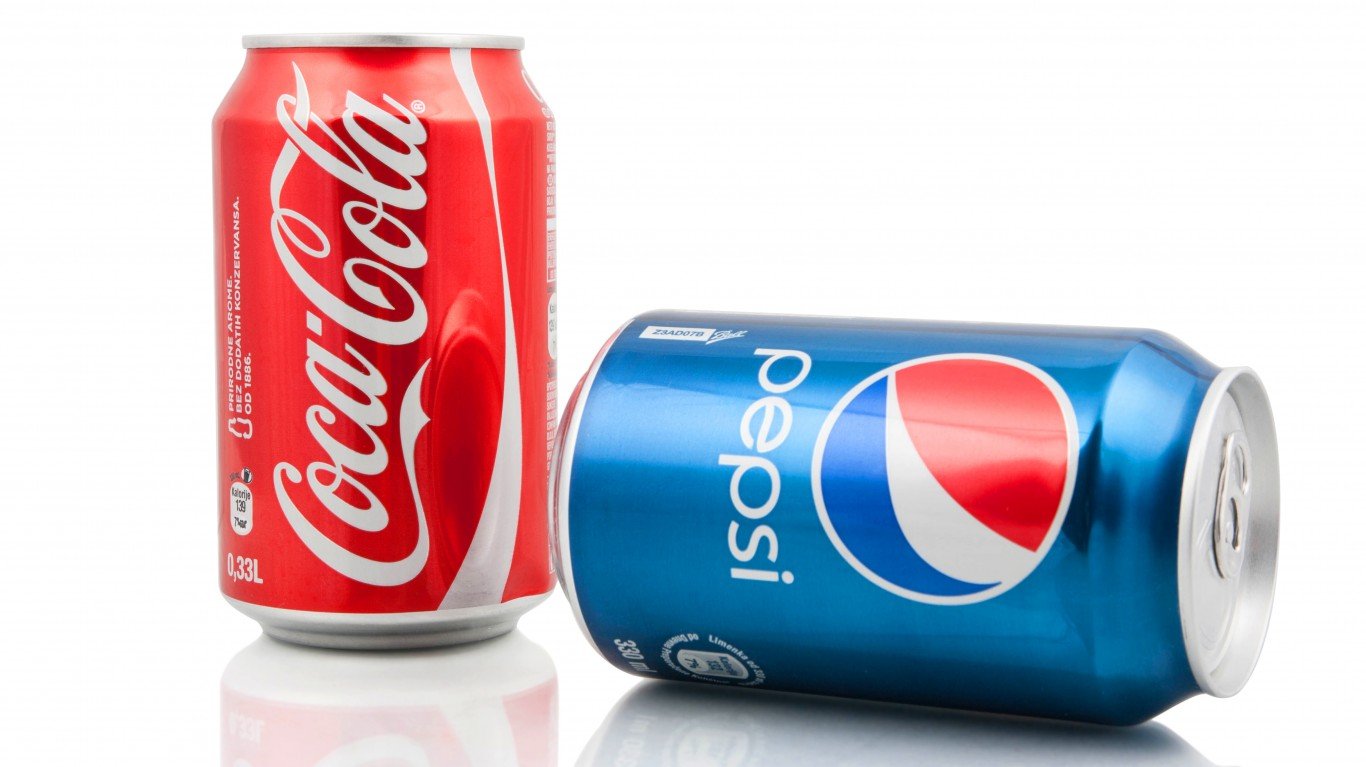
PepsiCo sells Lay’s, Doritos, Gatorade, Pepsi and Quaker in more than 200 countries and territories. Over the past decade, most of its growth came from outside the U.S. International now accounts for 45% of year-to-date profit. In Q3 2026, LatAm Foods grew 14% organically, while EMEA and Asia Pacific each grew 9%.
The home market got harder. North America snacks core operating profit fell 12% in Q3 2026. Fiscal 2025 net income dropped 13.97% after $1.993 billion in Rockstar impairment charges. Management responded by buying newer brands like poppi and Siete. Chairman and CEO Ramon Laguarta didn’t sugarcoat it: “We are not satisfied with the performance in the U.S.”
Your $1,000 Became $1,776, With Dividends Doing the Heavy Lifting
PepsiCo figures assume reinvested dividends. The S&P 500 figures track price change only.
1-Year Return
- Initial Investment: $1,000
- Current Value: $1,015.30
- Total Return: 1.53%
- S&P 500 (same period): $1,083.20 (8.32%)
5-Year Return
- Initial Investment: $1,000
- Current Value: $987.10
- Total Return: -1.29%
- Annualized Return: -0.26%
- S&P 500 (same period): $1,566.50 (56.65%)
10-Year Return
- Initial Investment: $1,000
- Current Value: $1,776.30
- Total Return: 77.63%
- Annualized Return: 5.91%
- S&P 500 (same period): $3,443.30 (244.33%)
On price alone, the stock went from $106.96 to $139.40. That’s a 30.33% gain. Reinvested dividends added roughly $473, which is about 47 percentage points of the total return. Over the same stretch, the quarterly payout rose from $0.7525 to $1.48, up 96.68%.
Timing mattered a lot. Shares traded as high as $196.88 in May 2023 and closed at $123.73 on October 7, 2026. Even with dividends included, PepsiCo trailed the index’s price-only gain over every period.

Dividend Checks Keep Growing While the Share Price Lags
PepsiCo fits investors whose goal is a reliable, rising income stream and who can live with lagging the index. It fits less well for investors who need strong capital growth over the next five years.
The bull case: PepsiCo just raised its dividend for the 54th straight year, to $5.92 a share annualized. That works out to a 3.92% yield, and the stock trades at about 24 times earnings. The company also has a $10 billion buyback authorization running through February 2030, plus structural cost cuts on the way.
The bear case: Management cut its fiscal 2026 core EPS growth guidance to 2.5%-3.5%, down from 5%-7%. Input costs are also climbing. As Laguarta put it, “As a general trend, commodities continue to ramp up.” GLP-1 weight-loss drugs are another threat to snack demand.
If PepsiCo repeats the last decade’s dividend growth, a retiree’s income from this stock would roughly double again by 2036. For income-focused investors, the dividend is likely to keep doing more of the work than the share price (we walked through how to build a dividend ladder that lets you live on the checks without ever selling a share in a free guide here).
Contact [email protected] for any questions or corrections.
Chris Lange is a financial and geopolitical writer with more than a decade of experience covering a myriad of topics. He has published thousands of articles for 24/7 Wall St., with past coverage focused heavily on stocks, IPOs, healthcare, defense, global affairs, and technology.
His work has been quoted, or referenced by a number of outlets including Business Insider, USA Today, Yahoo Finance, MSN, The Motley Fool, and many other publications. A graduate of Southwestern University, he studied business with a focus on investments and has previous experience in banking and startups.
When not reading or writing the news, he is following his passion for Lacrosse, playing chess, or building solar projects with his dad.