Had You Invested $1,000 in Coca-Cola or PepsiCo 10 Years Ago, Here’s What You’d Have Today
On the surface, PepsiCo (NYSE: PEP | PEP Price Prediction) might appear to offer more diversification. It sells beverages and snacks, with iconic brands like Frito-Lay, Doritos, Gatorade, and Quaker sitting alongside its cola lineup. More diversification should mean more…

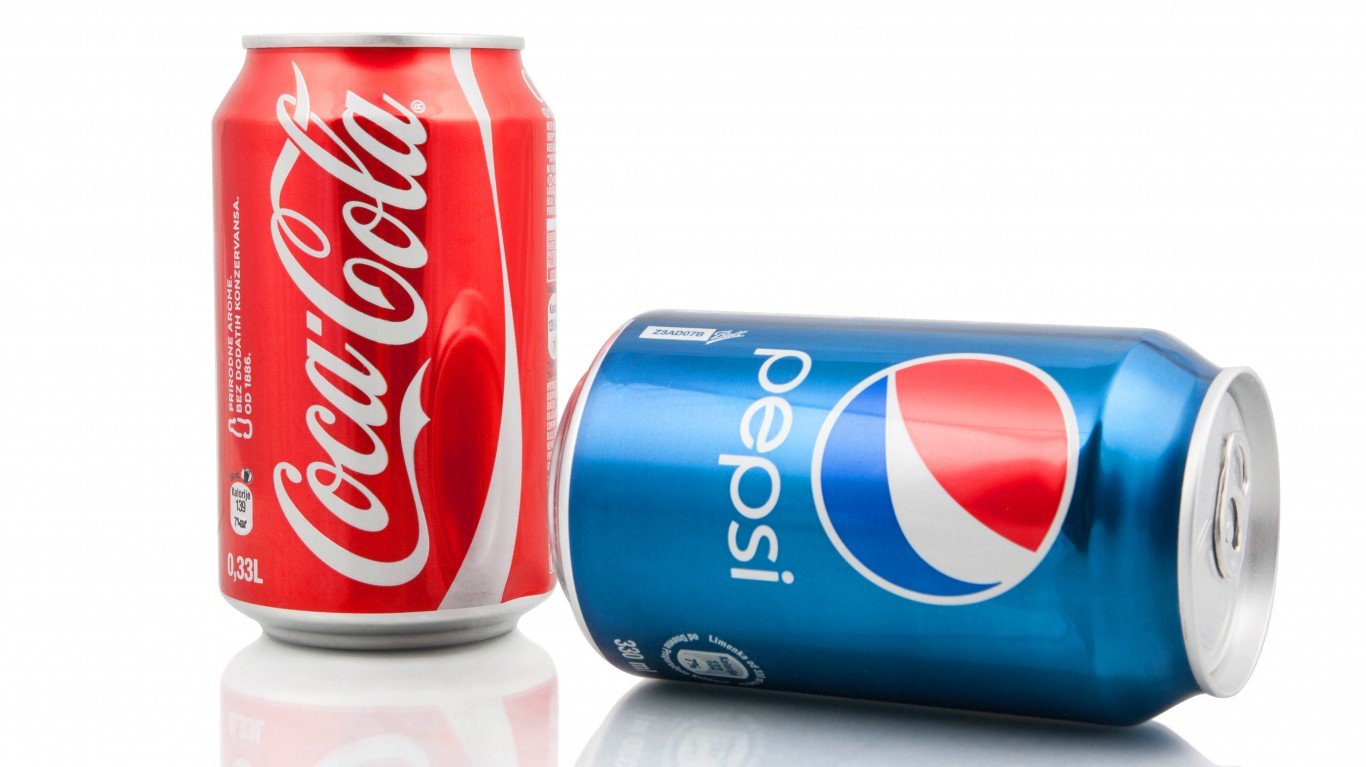
On the surface, PepsiCo (NYSE: PEP | PEP Price Prediction) might appear to offer more diversification. It sells beverages and snacks, with iconic brands like Frito-Lay, Doritos, Gatorade, and Quaker sitting alongside its cola lineup. More diversification should mean more resilience. Over the past decade, though, that logic has not held up at the stock level. Coca-Cola (NYSE: KO) has quietly outperformed its rival across every meaningful time horizon.
Coca-Cola’s story over the past 10 years is one of disciplined simplification. CEO James Quincey pushed the company toward an asset-light franchise model, refranchising bottling operations and focusing capital on brand and marketing. Zero Sugar became a genuine growth engine, with unit case volume up 14% for full year 2025. Pricing power held firm even as volumes wobbled in select markets. PepsiCo, meanwhile, absorbed write-downs on Rockstar ($1.993 billion in intangible asset impairments) and faced volume pressure in its North America snack business, partly from growing GLP-1 obesity drug adoption weighing on consumer appetite for salty snacks. A weak Q1 2025 forced PepsiCo to slash its full-year EPS guidance from mid-single-digit growth to approximately flat.
Your $1,000: Coca-Cola Wins at Every Turn
Here is what a $1,000 investment in each stock would look like across three time horizons, using adjusted price data as of March 5, 2026:
1-Year Return
- Initial Investment: $1,000
- KO Current Value: $1,134 (+13.44%)
- PEP Current Value: $1,100 (+9.98%)
- S&P 500 (same period): $1,169 (+16.85%)
5-Year Return
- Initial Investment: $1,000
- KO Current Value: $1,767 (+76.71%)
- PEP Current Value: $1,416 (+41.55%)
- S&P 500 (same period): $1,776 (+77.6%)
10-Year Return
- Initial Investment: $1,000
- KO Current Value: $2,403 (+140.27%)
- PEP Current Value: $2,200 (+120.04%)
- S&P 500 (same period): $3,397 (+239.65%)
Neither stock matched the S&P 500 over 10 years, which is worth acknowledging plainly. But for income-focused, lower-volatility investors, the dividend streams matter enormously here. Coca-Cola has raised its dividend for 63 consecutive years, while PepsiCo has delivered 54 consecutive annual increases. Both are Dividend Kings. Warren Buffett’s decades-long hold of Coca-Cola remains one of the most cited examples of patient dividend compounding in investing history.
Comparing These Two Stocks Today
Investors focused on low-volatility dividend income may find Coca-Cola’s metrics worth examining. The 2.6% yield, 2026 guidance of 7% to 8% comparable EPS growth, and Zero Sugar momentum give the bull case real substance. Its beta of 0.33 reflects far less volatility than the broader market. Key risks include currency headwinds and the potential for an unfavorable resolution to the IRS tax litigation.
PepsiCo presents a different risk/reward profile. Its forward P/E of 19x looks cheaper than Coca-Cola’s 24x, and the 3.4% dividend yield is attractive. However, analysts note that North America snack volume headwinds and GLP-1 uncertainty remain unresolved, and until those pressures stabilize, the diversification premium PEP once commanded is harder to justify. So, Coca-Cola has delivered stronger total returns over the past decade.
Contact [email protected] for any questions or corrections.
Trey has been an editor and author at 24/7 Wall St. for more than a decade, where he has published thousands of articles analyzing corporate earnings, dividend stocks, short interest, insider buying, private equity, and market trends. His comprehensive coverage spans the full spectrum of financial markets, from blue-chip stalwarts to emerging growth companies.
Beyond 24/7 Wall St., Trey has created and edited financial content for Benzinga and AOL's BloggingStocks, contributing additional hundreds of articles to the investment community.
Trey's editorial expertise extends across multiple publishing environments. He served as production editor at Dearborn Financial Publishing and development editor at Kaplan, where he helped shape financial education materials. Earlier in his career, he worked as a writer-producer at SVE. His freelance editing portfolio includes work for prestigious clients such as Sage Publications, Rand McNally, the Institute for Supply Management, the American Library Association, Eggplant Literary Productions, and Spiegel.
Outside of financial journalism, Trey writes fiction and has been an active member of the writing community for years, moderating workshop sessions at regional conventions.