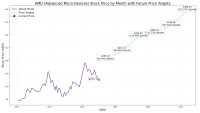
AMD Shed Nearly 30% in 30 Days: This Respected Wall Street Team Expects 75% Gains For Those Who Act Now
AMD posted a record quarter, then watched sellers wipe out nearly a third of its value. Analysts kept raising earnings estimates anyway, but one weak number in the report could decide whether their bullish bet pays off.

This post may contain links from our sponsors and affiliates, and Flywheel Publishing may receive compensation for actions taken through them.
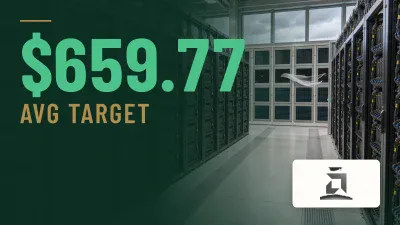
Advanced Micro Devices (NASDAQ:AMD | AMD Price Prediction) currently trades at $449.04. The average analyst price target is $659.77, which means about 46.9% upside from the current price.
AMD makes CPUs and GPUs, and its data center business now drives the stock. That segment made up 64% of total revenue last quarter, up from 47% a year earlier. Major AI customers already have the first Helios racks running.
It opened right after a quarter that beat expectations on revenue and EPS. CLSA has the Street-high target of $800.00 with an Outperform rating. That target is about 78.2% above the current price.
A 30% Plunge That Followed a Record Quarter
The main cause was a sector-wide retreat from the AI trade. Chip stocks fell hard as investors turned skeptical on artificial intelligence, and weak Qualcomm earnings and concerns about AI spending deepened the selloff. AMD lost 30.47% over the past month, falling from $645.86. The stock fell 11.05% in the past week alone.
The quarter itself beat expectations. Revenue came in at $13.38B against a $13.08B consensus, and non-GAAP EPS was $2.09 versus $1.94 expected. The details still gave sellers material to work with. Inventory rose to $11.46B, up 35% from the prior quarter. Free cash flow fell 71% to $554M. GAAP EPS of $1.46 included a $1,097M customer warrant charge, and gaming revenue dropped 40%.
Buyers came back quickly. Shares rose 11.04% in the latest session, and StoneX analyst Yi Fu Lee told MarketWatch the selloff created an “obvious reflex opportunity” in AI chip stocks.
Wall Street Keeps Raising Estimates as the Stock Falls
Of the 55 analysts covering AMD, 5 rate it Strong Buy, 39 rate it Buy and 11 rate it Hold. None rate it Sell. Earnings estimates kept rising through the drop. The 2027 EPS consensus increased from $15.2543 to $16.3023 over 90 days, with 10 up revisions and 1 down revision in the past month.
Guidance supports those estimates. AMD expects fourth-quarter revenue of about $17.0B (+/- 3%), or roughly 66% growth from a year earlier. It also expects data center revenue to grow about 50% from the third quarter. CEO Lisa Su went further: “Based on our current visibility, we now expect revenue to grow more than 80% in 2027.” She added that “demand is higher than supply.”
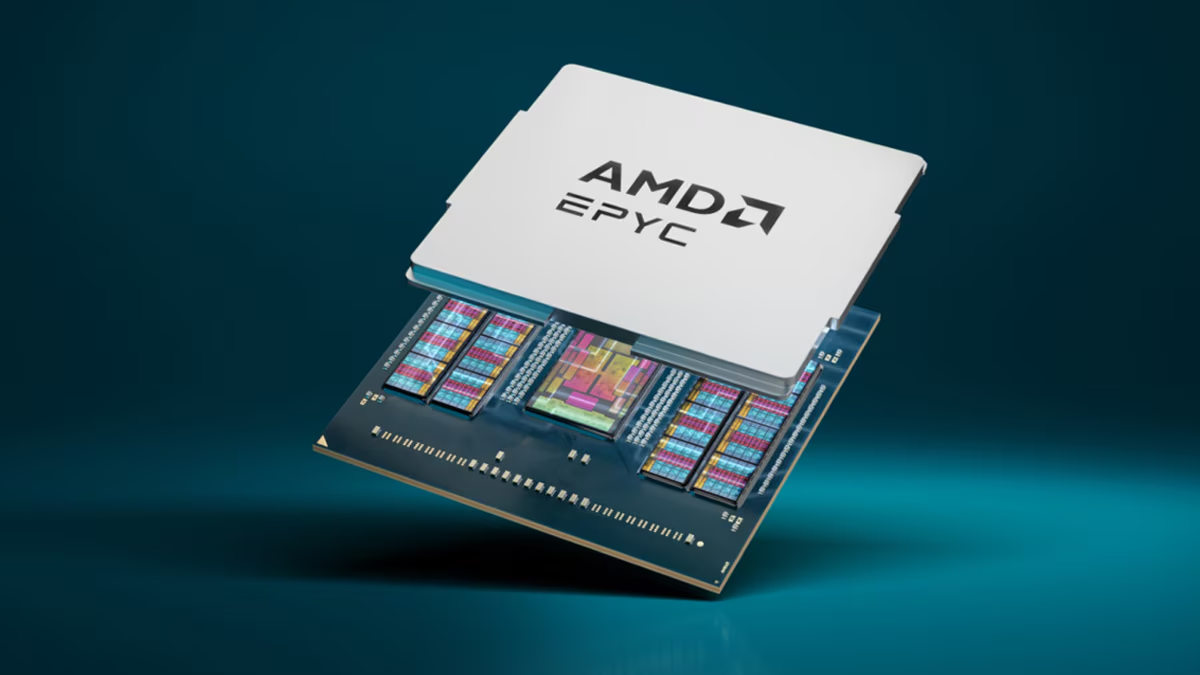
CLSA’s case rests on three points. It expects hyperscalers to favor Instinct over NVIDIA (NASDAQ:NVDA) chips, seeking alternatives to Nvidia. It expects EPYC to keep taking server share. And it expects free cash flow to scale as high-margin revenue grows faster than costs.
That third point is the weakest so far, since cash flow fell last quarter. Estimates also vary widely. Forecasts for 2027 EPS run from $9.60 to $23.66, which means analysts disagree widely about how big AMD’s AI business will get. The stock trades at about 27 times forward earnings.
Intel Fell Harder and Nvidia Offers More Consensus Upside
The whole chip group dropped alongside AMD.
Nvidia lost 21.4% over the past month and trades at $186.64. Its average target of $327.14 means 75.3% upside. Analysts are nearly all bullish: 59 of 62 rate it Buy or Strong Buy. Nvidia also looks cheaper, at about 12 times forward earnings. Its consensus upside is larger than AMD’s.
Intel (NASDAQ:INTC) fell 50.25% in a month to $56.28. Its average target of $91.12 means 61.9% upside. Analysts are much less positive here: 36 of 49 rate it Hold, and trailing EPS is -2.35.
Nvidia has the largest consensus upside of the three. AMD has the smallest gap to its average target, but its growth guidance is the most aggressive in the group. As with any price target, these figures are one input and offer no guarantee.
AMD Is Still Up More Than 100% This Year After a 30% Drop
At $449.04, AMD has about 46.9% upside to the $659.77 average target from 55 analysts. That target is close to the $658.52 52-week high. In effect, analysts expect the stock to return to its peak.
Even after the drop, the stock is up 109.68% year to date. The S&P 500 is up 7.83%. Over the past month, AMD fell 30.47% while the index fell 5.39%. AMD’s beta of 2.542 shows how much more it tends to move than the market.
Cash Flow Recovery Will Decide Whether AMD Reclaims Its Highs
Bulls get more support if Helios shipments match the guidance for 50% sequential data center growth and the inventory build turns into revenue. The bear case gains weight if free cash flow stays weak next quarter or AI spending cuts reach its biggest customers. The high-end targets would then depend on a 2027 that never shows up.
The data leans bullish. Estimates kept rising while the stock fell, and guidance was raised during a selloff. That pattern points to a short-term sentiment problem. Fourth-quarter cash flow is worth watching, because CLSA’s thesis depends on it.
Contact [email protected] for any questions or corrections.
Alex Sirois is a financial writer with experience spanning both retail and institutional investing. He has written for InvestorPlace and held roles at BNY Mellon and Bernstein, giving him a perspective that bridges Main Street portfolios and Wall Street analysis.
Alex holds an MBA from George Washington University and has built his career across multiple industries, including e-commerce, education, and translation — a breadth of experience that informs how he breaks down complex financial topics for everyday investors. His writing is conversational, actionable, and grounded in long-term, buy-and-hold investing principles.
At 247 Wall St., Alex focuses on delivering analysis that is both accessible and useful, with a clear emphasis on helping readers make more informed decisions with their money.