Bloom Energy Jumps 8%, FuelCell Energy Rises 3% as Fuel Cell Stocks Rebound; Plug Power Holds Steady Ahead of Earnings
A 900 megawatt overseas deal has Bloom Energy pulling away from its fuel cell rivals, but Texas politics and one looming earnings report could decide whether the rebound lasts. Which names stand to lose the most if the selling returns?

This post may contain links from our sponsors and affiliates, and Flywheel Publishing may receive compensation for actions taken through them.

Fuel cell stocks are rallying from last week’s post-election sell-off, and the group’s AI-power leader is setting the pace. Bloom Energy (NYSE:BE) stock is at $187.18, up 8% early in the session. That gain puts Bloom Energy well ahead of its fuel cell peers as traders return to companies that sell onsite power to data centers.
Last week’s slide followed midterm election results that raised fears of tighter rules for AI data centers. The bounce arrives as mega-cap tech stocks rally, even as NVIDIA (NASDAQ:NVDA | NVDA Price Prediction) slides on a controversy surrounding its CEO. Early-session moves can shift, so Bloom Energy’s lead over the group may change as trading develops.
Bloom Energy’s NTT DATA Deal Returns to Center Stage
Bloom Energy’s rallying comes as investors refocus on its biggest overseas win. NTT DATA announced on November 5 an agreement to deploy 900 megawatts of onsite power across data center projects using Bloom fuel cells. The company describes the agreement as its largest international project to date, with shipments starting in 2027.
A deployment of that scale also brings execution risk for Bloom Energy. Cash is the pressure point, since the company reported negative operating cash flow of $27.1 million in Q3 2026. Delivering on time across several international sites could test Bloom Energy’s supply chain and permitting work while large deployments tie up working capital.
FuelCell and Plug Power Trail Bloom Energy’s Bounce
FuelCell Energy (NASDAQ:FCEL) stock is at $10.27, up 3%, recovering part of last week’s post-election losses. The sticking point for FuelCell is Texas policy. As of November 5, FuelCell’s first Capacity Reservation Agreement covers a planned 75 megawatt project in Texas. Gina Hinojosa, Texas’s incoming governor, has promised a moratorium on new data center approvals, which leaves that project exposed.
Meanwhile, Plug Power (NASDAQ:PLUG) stock is at $1.44, down 0.5%, essentially flat as its earnings report approaches. Results for Q3 2026 are expected after the close on November 9, though Plug Power hasn’t confirmed that timing. Plug Power faces a key question: whether its target of positive earnings before interest, taxes, depreciation, amortization and stock-based compensation (EBITDAS) in Q4 2026 stays on track. Plug Power CEO Jose Luis Crespo stated in the company’s Q2 2026 report, “We believe we are on track to achieve our positive EBITDAS target in the fourth quarter of 2026.”
Ballard Power Systems (NASDAQ:BLDP) stock is at $1.54, up 0.3%, barely moving alongside Plug Power. Both of those names sit well behind Bloom Energy and FuelCell, the two companies most closely tied to data center demand.
How Bloom Energy’s Business Differs From FuelCell and Plug Power
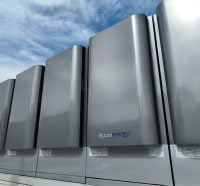
Bloom Energy sells solid oxide fuel cell Energy Servers to hyperscalers, artificial intelligence computing sites and commercial and industrial customers, and it’s now scaling that business profitably. FuelCell builds carbonate fuel cell systems sold as standardized, utility-scale Energy Blocks for behind-the-meter data center power, while it’s still posting losses as production ramps. Each company sells straight into the AI power trade (we covered seven suppliers behind this expansion, from power to cooling, in a free report you can grab here), which explains why both swing hardest on data center headlines.
Plug Power’s core business looks different. Hydrogen fuel cells for warehouse forklifts, sold to large retailers, sit at the center of the company, alongside electrolyzers and a hydrogen fuel network. That mix ties Plug Power less closely to the artificial intelligence computing trade than Bloom Energy or FuelCell, which helps explain the gap in the group’s moves.
What Plug Power’s Report Means for Fuel Cell Stocks
Data center policy remains uncertain as Plug Power’s earnings report approaches, making it the group’s next scheduled test. The bulls have a case. They can point to Bloom Energy’s NTT DATA agreement as evidence that demand for onsite power is still growing outside the U.S. Bears, meanwhile, note that FuelCell carries negative gross margins and a share count that grew from 46 million to 80 million since October 2025, which leaves the company exposed to any slowdown in approvals.
A steady Plug Power quarter and clearer Texas rules could extend the rebound across fuel cell stocks. Tighter permitting or a weak report might resume the selling that hit Bloom Energy and FuelCell last week. Investors may want to stay cautious until the policy outlook for AI data centers resolves.
Contact [email protected] for any questions or corrections.
David Moadel is financial writer specializing in stocks, ETFs, options, precious metals, and Bitcoin. David has written well over 1,000 articles for leading online publications, helping investors understand markets, income strategies, and risk.His work has appeared in The Motley Fool, InvestorPlace, U.S. News & World Report, TipRanks, ValueWalk, Benzinga, Market Realist, TalkMarkets, Finmasters, 24/7 Wall St., and others.With a master’s degree in education, David has taught at the elementary, high school, and college levels. That teaching background shapes his writing style: clear, educational, and practical. David has also built a loyal social-media audience by providing trustworthy financial content on YouTube, X/Twitter, and StockTwits.